



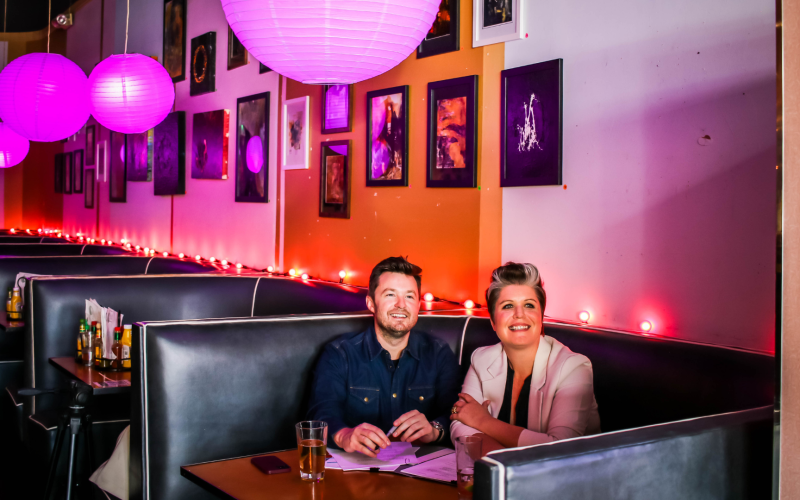
On Tuesday, July 1st, 2025, beloved local music festival the Underground Music Showcase (UMS) announced that this year would be the festival’s last. Running from July 25th to July 27th, the weekend will serve to commemorate the festival’s 25 year lifespan with hundreds of sets from local artists and nationally recognized names alike. It will not be a weekend of sorrow or mourning — though those feelings are valid when faced with the prospect of an event as beloved and ingrained into this city’s very fiber coming to an end — but a grand celebration meant to send the festival off in style. As it is every year, UMS is an invitation for our entire beautiful city to come together and dance and sing and laugh and love, something so desperately needed in the world these days but this one will be just a little bit more special, something you carry with you wherever your journey through this life takes you, a sweet remembrance to hold always.
Since the announcement, UMS has committed to the motto “Get Loud,” intending for festival goers to raise their voices in support of festivals and other artistic spaces so that they may get the attention of fundraisers and policymakers and remind them just how much our community needs events as dynamic and focused on expression as UMS. UMS co-manager Jami Duffy hopes that by “Getting Loud,” we can shake the earth, raise mountains, sing so loud that those on high have no choice but to listen.
303 Magazine recently spoke at great length — and occasionally through tears — with Duffy about exactly why the Underground Music Festival is coming to an end, the importance of community, the melding of beauty and grief, what the future might hold and much, much more.
READ: Underground Music Showcase 2024 Recap: Our 23 Favorite Sets
303 Magazine: Hello Jami! I’m glad we were able to connect once again after our interview last year. We also met briefly in person at UMS last year when you helped me get into the late night Colfax Speed Queen set at the Hi Dive.
Jami Duffy: I remember! It’s nice to talk to you again!
303: Well, I’m sure you’re busy so I don’t want to take up too much of your time so I’ll just hop into it. First off, I’d like to start this conversation off by asking you to tell me in your own words what your role at Youth on Record is and how you became involved with the organization in the first place as well as how you became involved with UMS.
JD: I’ve been the Executive Director of Youth on Record for 16 years now. I became the Executive Director because I was working with college students in a social justice program at Denver University and they were really into this band Flobots and I wanted to make that introduction for them. This was in 2008. I connected with the band on behalf of my students and then from there I got to know them and was pretty quickly brought in as a board member and then hired full time as their Executive Director. The organization at the time was flobots.org which evolved pretty quickly into what you know as Youth on Record and I’ve been at the helm of the nonprofit ever since.
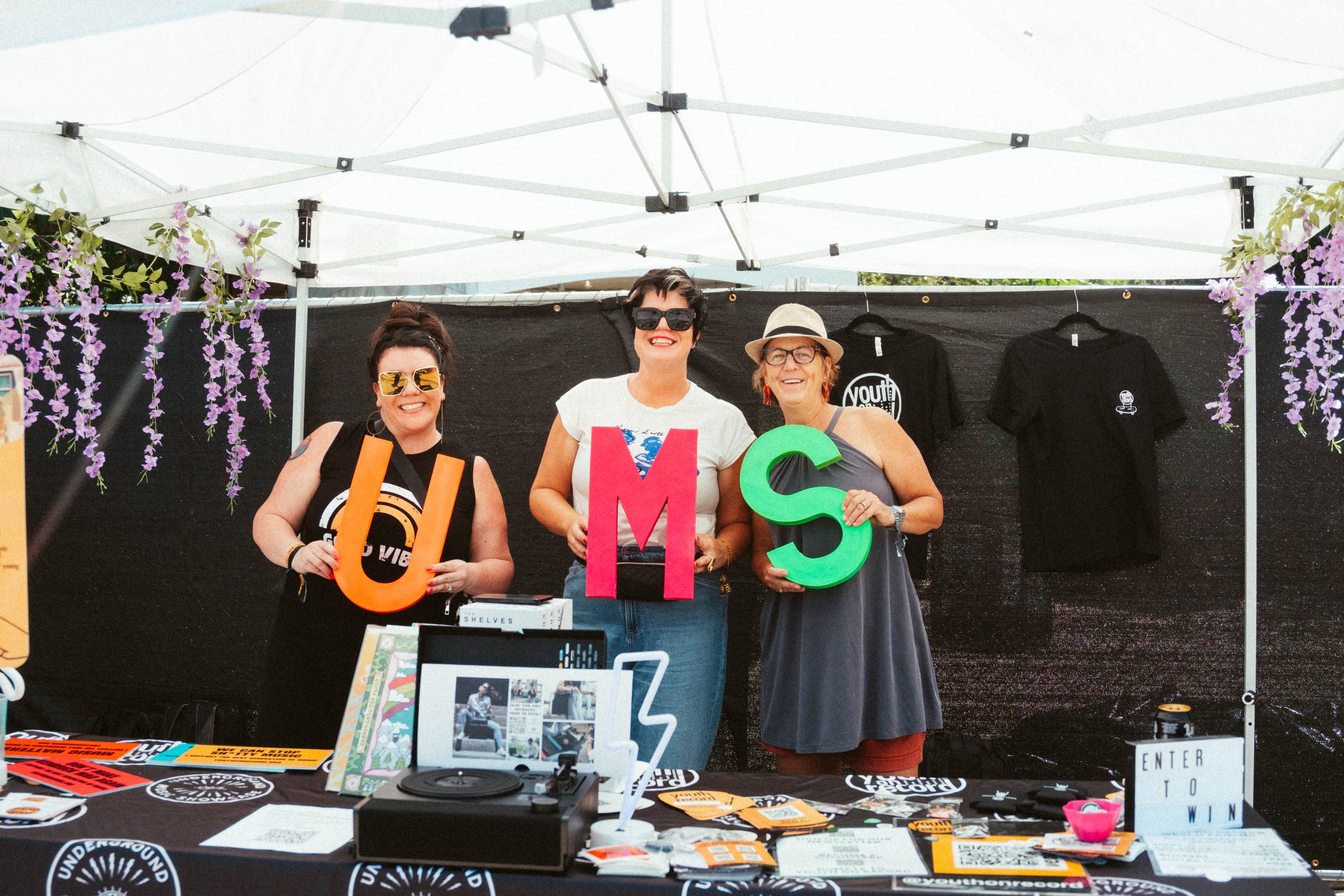
We joined with UMS four years ago. Well, it’ll be more like four and a half years, maybe closer to five years now. I approached Casey Berry (owner of Two Parts Creative Agency and co-manager of UMS) to see if Youth on Record could buy or buy into the festival. I saw an opportunity to share our central mission and the festival was wildly cool with an incredible edge. I personally am a big UMS fan. I’ve been going for as long as I’ve been Executive Director of Youth on Record, but I did see an opportunity. Youth on Record’s work is so much about impact. I saw an opportunity with UMS with as much time as it was going to have left. It was rough at that time. It was really hard to keep the festival going through COVID. So I saw a little bit of a Hail Mary pass to come in and see if we could align our mission with it and possibly get some government and philanthropic funding to support with the good work we were bringing to the table. Two Parts agreed and we became the minority owner. They’re the majority owner, but we own 30% of the festival. I serve as the co-manager and I’m the first woman to hold that position. The guys who have run this are Ricardo Baca, John Moore, Kendall Smith, Will Dupree and Casey Berry.
303: I’m curious what that looks like day to day.
JD: We start post festival, August 1st. We have leadership throughout the entire year. My personal role as co-manager is I’m really focused on the mission alignment so thriving artists’ wages, the musician conference, the accessibility work, artist care, community care. I’m also in charge of our strategic partnership. I’m really wanting to work with everything from the city, the state, the council districts to Indie 102.3 and really broaden what it means to be a strategic partner. That’s all language we use in nonprofits. That’s not necessarily “music festival” language. I’m also in charge of all PR for the festival, so any kind of public relations, crisis communication, interviews. That was the labor divide that we chose as co-managers, Casey and I.
Then, there’s the workforce pipeline, making sure that young people have access to work at the festival and participate in it. I feel in some ways that I have two full time jobs, though. It’s all really only possible because we have an extremely strong and gifted Deputy Director at Youth on Record, Andrea Viarrial-Murphy, and she runs the day to day operations of Youth on Record. I do long term strategic partnerships, strategic vision and a large portion of our fundraising for both UMS and Youth on Record.
303: Sounds awesome and exhausting all at the same time.
JD: That’s exactly what it is. I mean, it’s something I’m committed to and and believe in and I believe in it as a critical part of our society because it does so much more than entertain. It can bring people together. It can heal us in hard times. But something that people may not be aware of is it’s a tool for public safety. There’s actually a safety in numbers. So gathering people and putting the resources to make it really safe actually can improve public safety. It’s an economic development arm. So if we look at the difference between maybe, let’s say, putting up a public art sculpture and putting on a public art activation, the activation actually is an economic driver. You’re paying for labor. You’re paying into the city’s tax base and then all the businesses around UMS do better, because UMS is there, which is hard, because then people will go, “What is happening? Why is UMS calling it quits?”
303: I will get to questions about the festival’s end in just a second but first, there’s a couple things I want to get into leading up to them. You’ve said that you’ve been attending the festival as long as you’ve been a director for Youth on Record. In your own words, what does UMS mean to you personally?
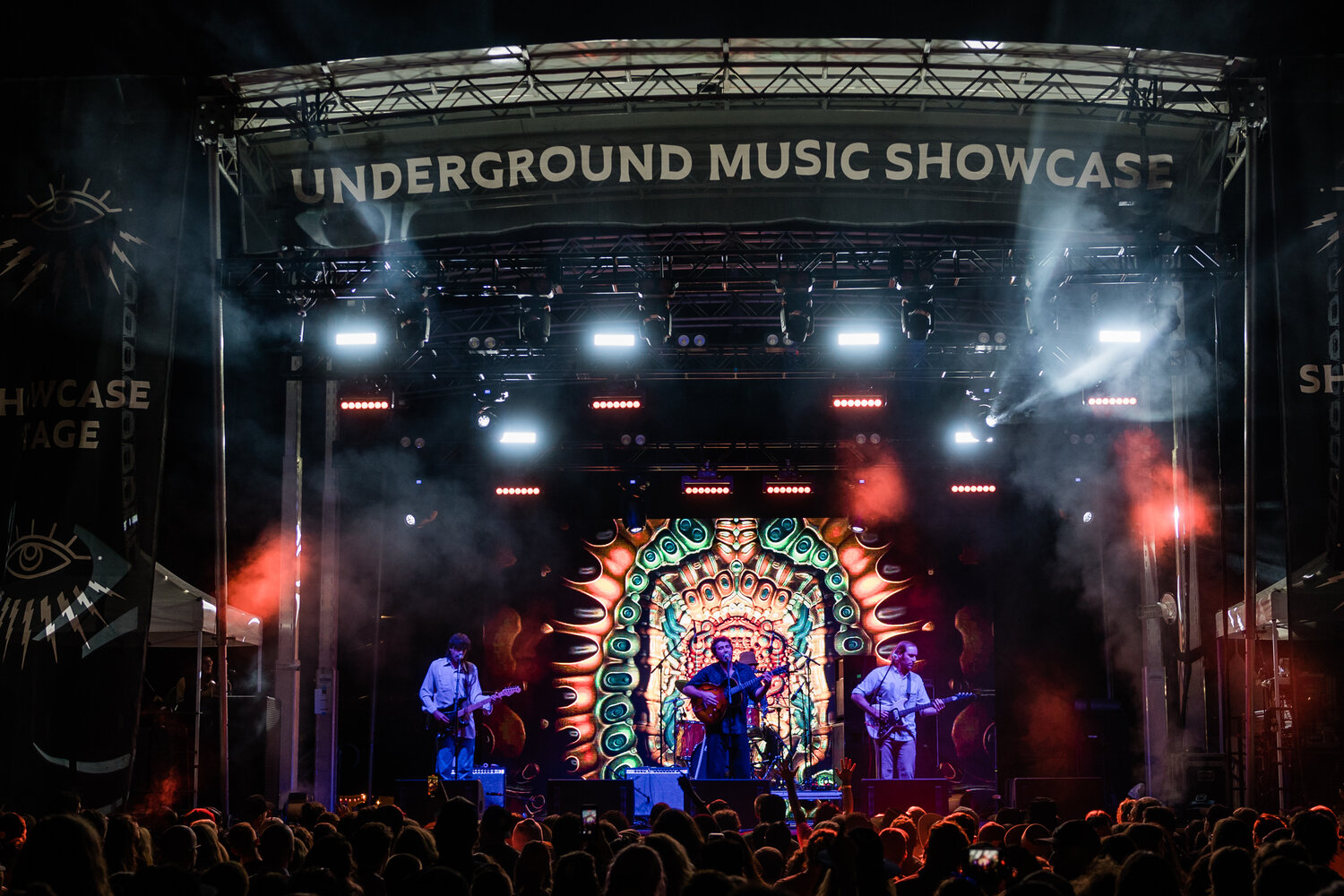
JD: UMS makes me want to live in Denver. I appreciate everything that the city has to offer in terms of arts and culture. I love all of the varied experiences that we get to have together, from the Denver Art Museum to Meow Wolf to all the galleries on Santa Fe to what’s happening in the Westwood neighborhood, all the way up to Morrison road. I love it. But UMS is totally and wholly original in the city, and I think the reason is because it is not too overly produced. It is the only time in Denver where you’re allowed to loiter on the streets for three days and nobody pushes you along. You get to see Denver’s arts lovers who aren’t at the big arts galas. There’s such a realness to it. There’s such an authenticity to it. And I would say, I think for that reason, it is overlooked because it’s fans are not as influential politically as the fans in the other arts institutions.
303: It really is a display of the best of this city. Everything that I love about this city is on display during UMS. And it does have this authenticity and this unpretentiousness to it that makes you feel like such a part of something bigger.
JD: There’s some events out there that know that there is a grit and grime that is a necessity for art. When you try to manufacture that in and make it seem more gritty or more grimy than it is, we can smell that, right? UMS doesn’t try to do that. UMS has the perfect combination of all those things, plus we get to get our local artists on stage with some of these national artists. Where else do we get to do that? We don’t get to put our artists as openers at every venue, right? They get some chances to do that, for sure. And I’m so excited that UMS artists DOGTAGS just got to open up for Lake Street Dive. So there’s some opportunities like that, but never at this level.
This is by far the largest convening of Colorado musicians in the state, year round. And that vibe is undeniable. It makes me sad how many people in positions of leadership and power haven’t been in 25 years. They’ve never been. I’m not going to necessarily say who those folks are. I’m welcoming them all this year. We have welcomed them. But I think to lead in arts and in culture, you have to see every single sub-ecosystem in this arena. This is a huge one and it’s been overlooked.
303: Well, I’ll go ahead and ask it straight up. Why is this UMS’s final year?
JD: It’s combination of rising costs and industry wide trends about ticket sales, like ticket sales are down across the nation and across the world. People are still going to music. Let’s not pretend that people don’t love music. But ticket prices have increased across the board. UMS tickets have not increased that much, despite what you might see online. You could get a UMS ticket for 70 bucks. That’s the cheapest ticket in town for the event of this size. We do that intentionally. Our tickets are $125 right now but that’s because they’ve been on sale since December. You have many chances to hop in there and get the cheaper tickets. You also can come to us for free if you volunteer. If you’re a die hard fan, you can get in for free. But all that is to say, we’ve kept our tickets accessible. The same cannot be said for other major venues. Say someone has got for their entire year $500 disposable income to spend. They may have been able to go to eight shows in the past but now they can go to three. They’re having to make choices.
There are so many things that you have to do as an event organizer that we want to do but we’re not forced to do this in a begrudging way. We also believe it, right? You’ve got to pay the artists. You have to put in public safety standards. One thing people don’t talk about, or maybe don’t know about, is the potential impact of severe climate events — weather events and climate change — the amount of money that we have to pay for climate insurance just in case. If you’re going to do everything right, the security barricades, all the things, and not gouge the shit out of everybody, somebody’s gonna have to come in and support totally and that support, it cannot just be ticket holders and it cannot just be sponsors. It has to be a combination of government and philanthropy who say there’s value in this. There’s economic development value. There’s public safety value and there’s just quality of life value for this city’s citizens. And if these things are not where these people want to prioritize their money, then we can’t have them. This is why we can’t have nice things.
303: That leads me to ask about timeline. Did you see this coming for awhile or was it more of a blindside?
JD: I think we were holding out hope. I think for the last four years — look, Youth on Record didn’t buy into this festival thinking, “We’re gonna make a killing!” We cared about mission and we wanted to mission align and create all those opportunities for our artist community. I’ve been watching this trend in the music industry and it’s this tidal wave. I’m like, “We’re gonna outrun it. We’re gonna outrun it. We’re gonna outrun it.” Denver’s special. UMS is special. Our fans are special. I really thought, even with the numbers, I thought “We’re gonna do it. We’re gonna do it.”
Then this wave started to come this year. Casey and I have been talking about this since August of last year and it finally came to a head where we needed to be at a certain place at a certain time. It’s not just one bad year. And here’s the thing, UMS is amazing so it’s like really hard to be like, “Wait, what do you mean? UMS rules.” Like UMS does rule. The sustainability, it finally hit us financially and we had to start asking some questions about whether or not it’s it’s possible, labor, time, money. Look, we’re small businesses. Two Parts is a small business. Youth on Record is a small nonprofit. It doesn’t mean that we’re not strong in what we do — and Youth on Record certainly seems a lot bigger than we are — but it can’t rest on our shoulders only. There’s only so much bailout money that these two organizations and companies can throw into it. We were forecasting with a real optimism, hoping something’s gonna turn around and it just didn’t turn around. I at some point would love to be able to show people who we asked for sponsorship, money, grants, support from and how many “no’s” we got will blow your mind. So if we’re going to invest $20,000 into accessibility, but we can’t get any accessibility grabs year over year over year, even though we lead on this, we’re not going to cut the accessibility program. That’s not our values. You either do it right or you don’t do it at all.
303: That’s brutal but unfortunately sounds rather unavoidable.
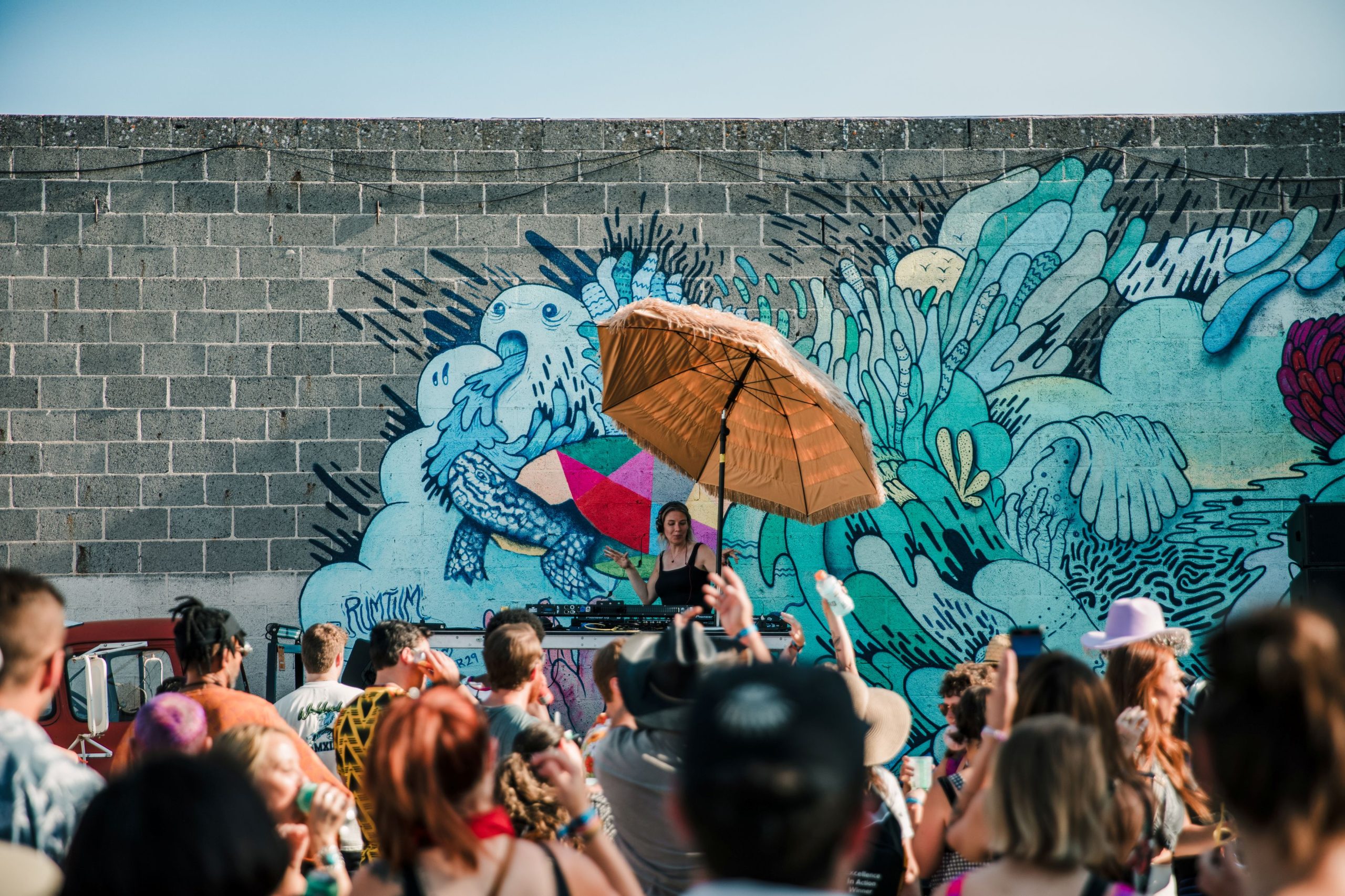
JD: We love everything about this festival. We love the artists so fucking much. We love South Broadway. We love the venues. We love our sponsors. We love this event so much. It’s not ending because we got tired of it. It’s not because we’re bored of it. It’s not because we were making a killing and we’re no longer making enough profit. There’s no profit in this. We had to be the owners who are honest about the sustainability.
303: I think the honesty in commendable. The past couple of years, we’ve seen this wave of festivals that have been around for forever — specifically independently run festivals — being shut down or being forced to move forward with extremely stripped down versions.
JD: Here’s the truth: Like most people, most independently owned event groups and experience groups are genuinely trying to provide something beautiful to the community. However, there becomes an interesting dynamic in the community, because then community starts to feel like, in some ways, maybe that’s either a foregone conclusion or owed to the community. I would argue that joyful experiences are owed to the community. I think the bigger question that we need to answer in this time is “Who owes that to the community?” Is it small, tiny businesses? Is it the government? Is it big corporate America? Is it philanthropy?
I would argue that life, liberty and the pursuit of happiness are equal. These sorts of things are the pursuit of happiness. Who pays for this pursuit of happiness, right? What starts to happen is there gets this kind of negative talk that happens online. “Why would UMS do this to us? We’re owed this experience.” I would say, “I’m with you, babe. You are. But is that small business owner and a nonprofit morally obligated to provide that to you at their own detriment?” Or do we need to do a broader call as a community and say, these kind of experiences, and only these kind of experiences, will keep me in this city so you, as our elected officials, our leaders, our policy makers, our money people, you need to come to the table and help us pull these things off? I think that’s where the conversation’s going.
303: I find it quite sad but also fascinating that it comes down to that response where some people online point to Youth on Record as if to say “Why are you taking this away from us?” when the case is much more complicated than that.
JD: And that’s okay, but I think that’s where I can help people understand. I’m going to be doing a town hall about this on Saturday, July 26. Our Get Loud Music Summit will be the kickoff session at 11am. Everyone, I want to talk to people about this, because here’s the thing, I’m fucking on your side. I’m with you. I have been doing this work for 20 years in this community, advocating for us. We are not trying to rip something from us but we do need to all enter into this next phase with some real curiosity and camaraderie about what our goals are as an arts community and really start to advocate. That is why we called it 25 Years Loud and the Get Loud Music Summit. We got to get loud about this now. This is the moment and UMS might be the very thing that pushes to get loud about this shit now.
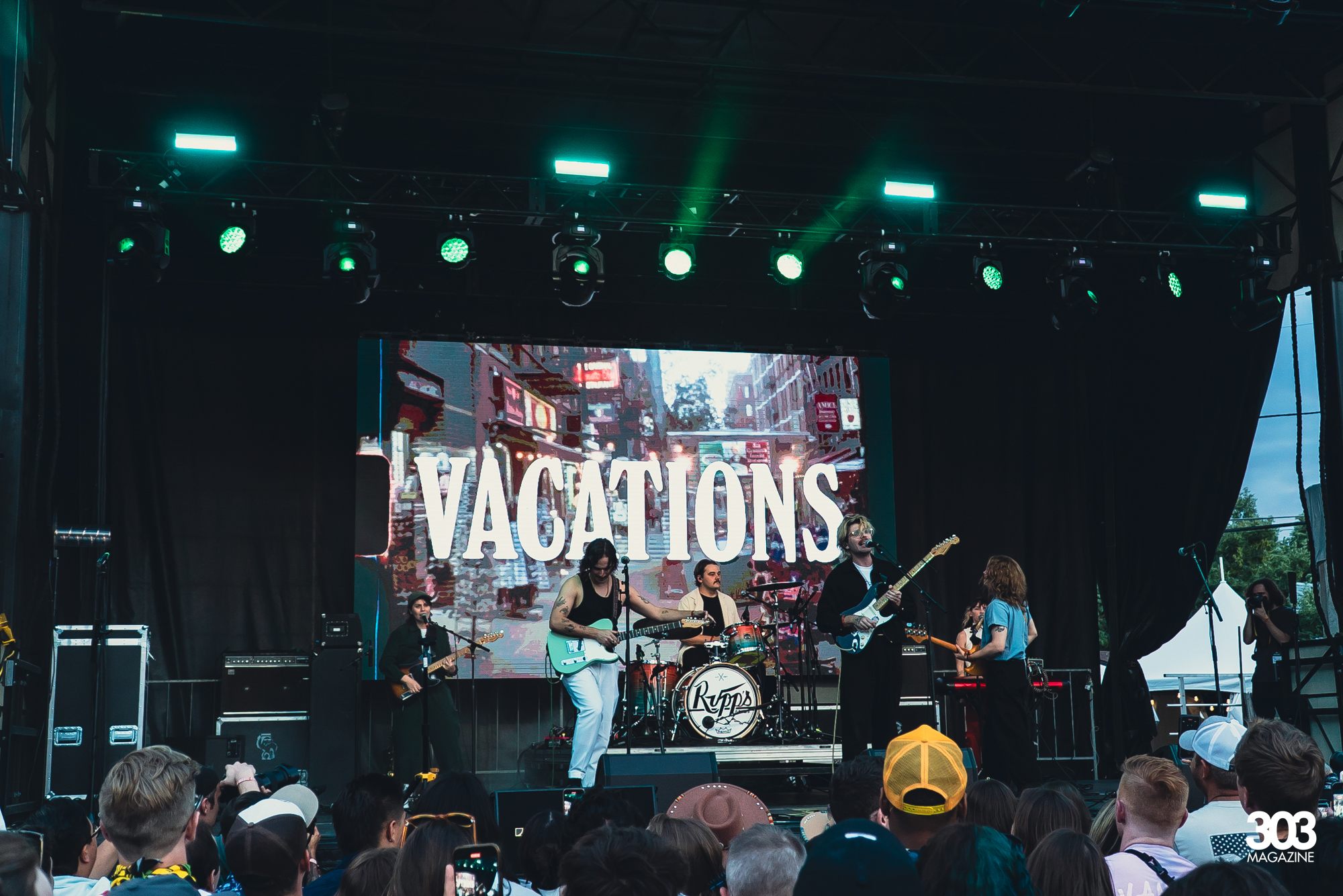
303: I have to imagine that’s it’s pretty hard for UMS to go unnoticed.
JD: My hope is we can start during UMS weekend this year. I will be there every second, every step of the way. We’re doing a town hall. We’re going to have a killer time. We’re going to go listen to music. We’re going to have the best time. We’re going to hug a little bit longer and maybe give out more high fives. That’s the start of a conversation that is long overdue. Power in numbers. There’s all the artists, all the fans, all the venues, all of us who grew up on this festival, the newbies. There’s a lot of young folks at this festival too, right? We need to come together and advocate and get loud about what we need moving forward. I think this might be a really magical moment for us to rally around. And I’m not talking about just UMS, of course. I mean, in general, what do we want the city to look like? We have a seat at the table. We got to get loud about our future here. Nobody’s going to do that for us. So now I’m like, “Maybe, UMS is the wind beneath our wings?” That’s the best thing that could come out of this. We’re going to build back, bigger and stronger in some way, but we have to come together to do that and we’ve got to get out of the muck of like “your fault, your fault, your fault, your fault, your fault.” While we’re fighting over here about dumb shit decisions are being made without us at the table.
303: That does lead me to ask about what the future could look like for UMS? What needs to happen to ensure the UMS has any sort of future? Is there a chance for a stripped down version in the coming years?
JD: It’s definitely going to change in some way, right? Otherwise we wouldn’t have led with this. So the likelihood that we do a three day festival the last weekend of July with Two Parts and Youth on Record as the owners in 2026 is like zero to 1%. People are not going to like this answer, but it is the truth and I’m not trying to be evasive. Look, my background is and my life’s work is community work, and it’s truly a genuine “Nothing about us without us.” I don’t know what the future of UMS is because I haven’t had that conversation with you all. I haven’t heard from you about what you want it to be. I also know this: Youth on Record is in a great position to have those conversations because UMS was started by people in their 20s 25 years ago, and that’s who our base is. We certainly cannot have that conversation without Gen Alpha and Gen Z meeting. What are they looking for? What do they want? Because we’re building a future for them and us, I really think it’s a multi-generational conversation.
So what I can tell people is this: I don’t know what the future of the festival is. I don’t know what the future of the UMS brand is, but I do know that there will be multiple opportunities for conversations about this very thing that I will help host. The first one is on July 26 at UMS. I’m not running away from these conversations. I’m not afraid to have them. I want to hear from folks.
We gotta be open to the fact that we might be like, “It’s too hot. I don’t want to do a festival outside anymore.” Let’s be open to that. Maybe we’ve all decided that we don’t like music festivals anymore. You know, we outgrew silent film. I don’t know, culture grows. We need to be open to that. I don’t think that’s the case, but who knows? I can promise you all and my community of musicians and artists and fans and everyone in this ecosystem that I am going to be at the table with you, setting up opportunities to really have conversation, to dialogue, to community organize. There is no future of UMS without all of you at the table. It cannot just be a couple of us figuring it out. We have to organize now. UMS is bigger than just a couple folks.
303: I think the emphasis placed on community is why UMS is so beloved. It feels familiar, like home, and it feels like that home grows every year. As such, UMS’s absence will inevitably be creating something of a void. I could see many of these younger artists that are heavily involved in the community stepping up to create something new maybe. Do you have any thoughts on what might arise to fill the void UMS leaves behind?
JD: I hope that happens. One piece of advice that I always give our young creatives (ages 18-26) at Youth on Record is please don’t wait for our permission to do cool shit. We started flobots.org and Youth on Record when I was in my 20s. Let’s be clear, I’ve been the Executive Director since I was 28 years old. We had $100,000 and we had Flobots to help us sort with a sort of visibility, right? But those guys didn’t have any money. Love those guys. They were living in basement apartments in Aurora, even though they were on The Tonight Show. The music industry is so jacked up that way but UMS was founded by people in their 20s. I hope our 20-somethings in this town start to do the weirdest stuff in the safest way, right? I am in my 40s now so I’ve got a little bit of those “auntie” vibes. I’m like, “Weird and safe, weird and safe.”
I don’t know, please start like, a music, roller-skating, nudist club that goes down 16th Street Mall. You don’t have to ask our permission but what you can ask for is our support and guidance. I think Youth on Record’s in a really great space to help with that, too. We can play the advisor role, so that you can start on second base, instead of in the batter’s space. I don’t know, I don’t pay attention to baseball, but like, we can give them a head start.
I hope things pop up to fill the void. I hope that we’re a part of those conversations. I hope that we can share everything we’ve learned in an open source way, so that people don’t have to start with nothing. That’s how we’re going to grow mutual aid, open source, supporting each other, not in wild competition. I hope that stuff happens. We don’t always have to be the biggest thing on the block, right? Like, we don’t have to be. It’s fine if we’re not. Actually, it’d be great if we’re not.
303: I think there’s so much potential there. There are so many young people in this city starting art and music collectives that it’s just a matter of time.
JD: I’ll say this: I believe the coolest things stuff in Denver music for the next 25 years hasn’t even started yet. But look at all these incredible young artists we have like Mango Slushy, Neoma, DOGTAGS, and so many more. They’re doing so much cool shit and are really just getting started.
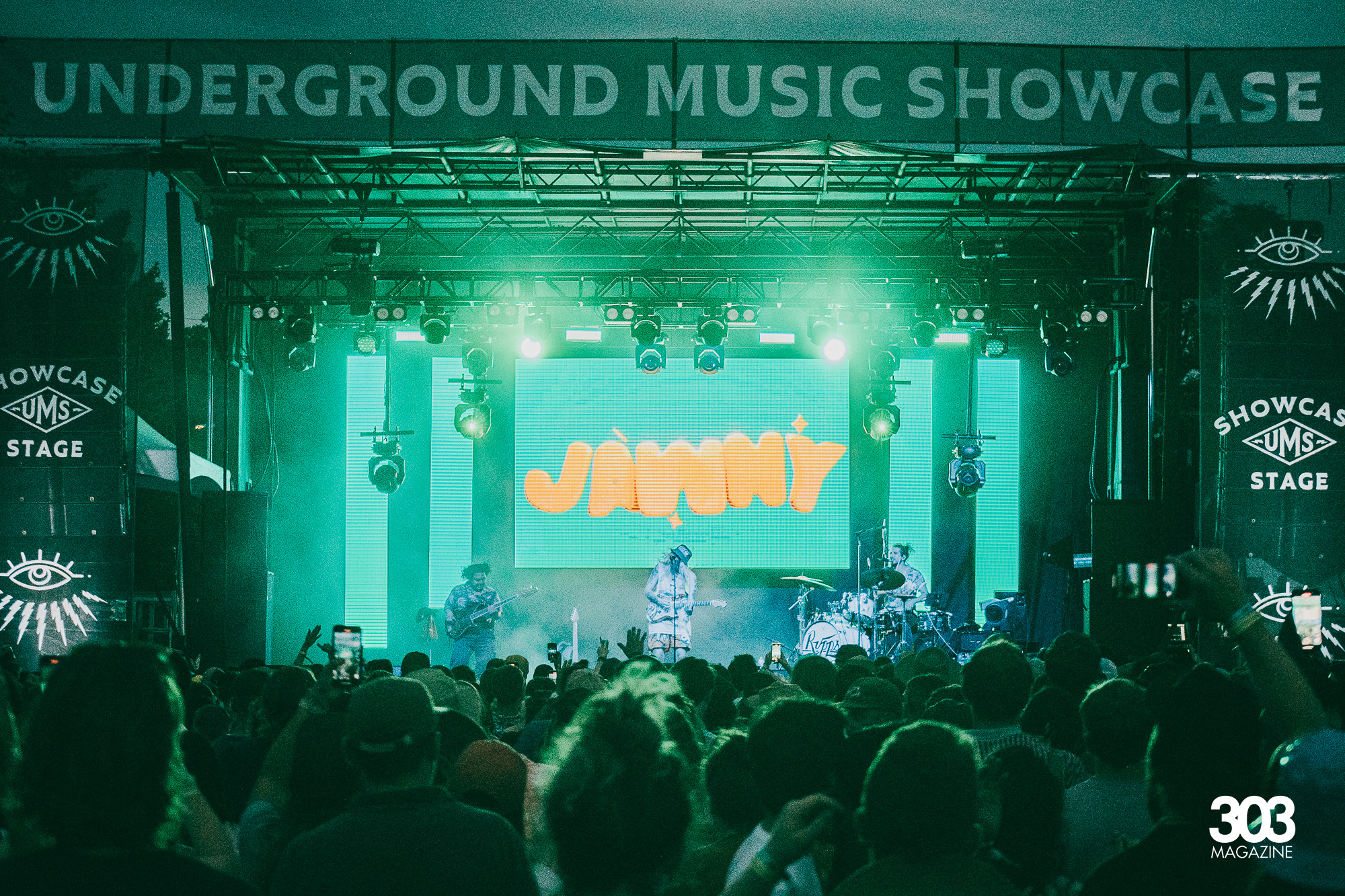
303: Any artists you’re particularly excited about this year?
JD: I love that we’re honoring this 25 year legacy. I love that these folks, some of them are getting back together. What I love about it is it honors the multiple eras of UMS, right? Those are some things to be really excited about. I personally am excited for our announcing of the Get Loud for Good Party on Sunday. So that’s from 2pm to 4pm and that lineup’s really good. It’s folks who have been supportive of doing good work with youth in the community. So this is a party that benefits Youth on Record. The lineup is Keddjra. You’ve got to watch her. She is on the cover. She is so good. Then AJ Dallas, also amazing. He started in our programs when he was 15 years old. We’ve got DOGTAGS and then Spells. It’s gonna be so fun, right?
I’m like, silly excited for the dunk tank to come back. Really excited about that. Of course, I’m excited about Devotchka, who were part of the initial UMS, ending this era. I think that’s going to be a beautiful moment for all of us. And of course, I’m excited about All Them Witches and Flyanna Boss. I love that the three headliners couldn’t be more different musically. Where else do you get that? Like, that is an insane difference between artists. I’m just excited to see everyone and spend the weekend together with you all.
303: Finally, I just want to ask. How are you doing with all this? Are you okay? There must be some level of grief associated with UMS ending.
JD: There’s definitely grief. In some ways, I didn’t want to rip it from people so abruptly. We didn’t have time. We didn’t know. Some of that, for me personally, came from I lost my brother really unexpectedly about a year ago and I would have given anything to know that our last conversation was it and I didn’t know. It speaks to a larger part of all of us that if we could, we would. We would want the time to grieve. Grieving is private but it’s also communal and I don’t think we’ve done a good enough job as a society to grieve things in public. We haven’t done that for COVID still and we lost a lot during that era. So I also wanted to honor the the spirit of everybody. My own spirit is in multiple places right now.
I’m sad. I really, I really thought I could make this work for everybody. I really thought my model would save it. But I also have to be open to maybe it did. Everything changes form. I’m also trying to be open to the sort of like alchemy and rebirth of it that may be this is all happening perfectly for our community, so that we can rebuild together. I’m just kind of managing that personally. I never want to disappoint my community and so I’m feeling the weight and I’m sorry, guys. We tried.
This is how life grows. You take all the things that have happened in your life and they start to influence how you move forward. That really was on my mind and it is because I really do love this community and this arts community and our musicians on South Broadway. I actually pitched the idea that we do like a mass funeral procession for UMS down Broadway. I will say that got the “No” but I want to do it anyway. Who knows? But I did want us to come together and have the chance as a community to celebrate and grieve. And in my own Irish tradition, that’s why you have a wake. It’s both grieving and celebratory. And even at my my brother’s wake, we did a lot of singing and we listened to a lot of music. And that is a part of grief or a tool to get through it, is music. That’s how I’m doing.
303: I appreciate you sharing that with me, Jami. This has truly been a great conversation and I appreciate you taking the time.
JD: Thank you and you take care!
Get tickets to the final Underground Music Showcase here!
Check out Youth on Record’s website here!