





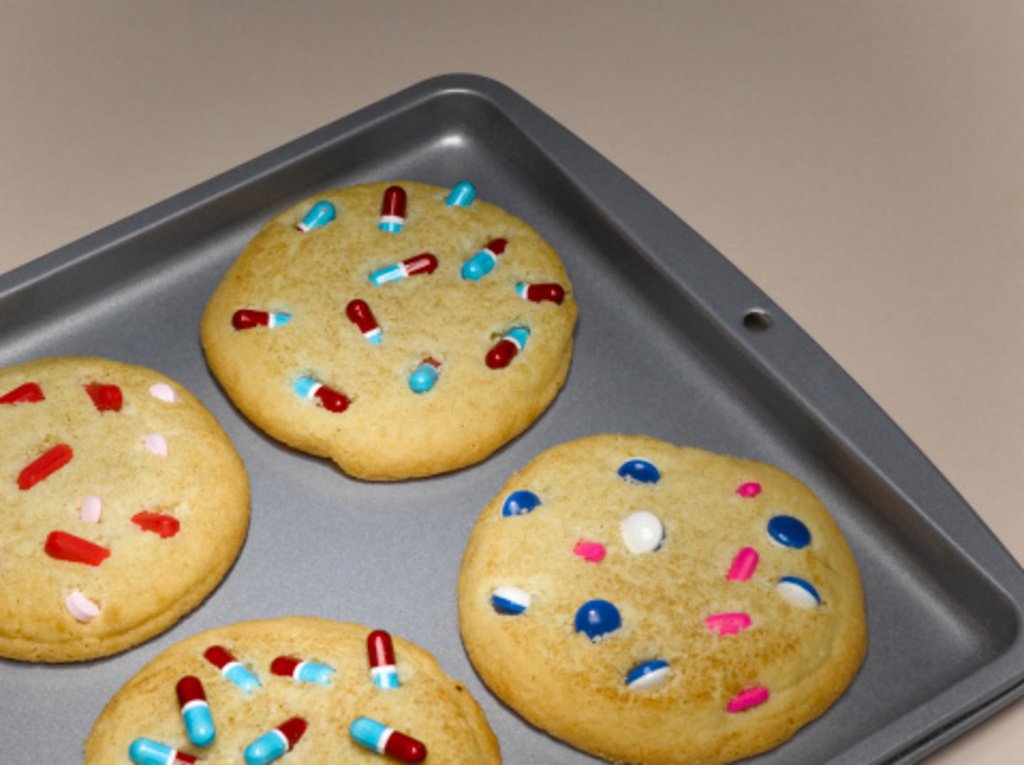
 For some, addiction to alcohol or drugs, or even non-substance things (like porn or Facebook), requires intervention, rehab or a 12-step program to overcome. Staying clean often requires a zero-tolerance approach– you’re not around people who use, you can’t consume the object of your addiction, no matter how small of an amount it is, and you generally stay away from it, whether it’s drugs or alcohol. But what about when the thing you’re addicted to is something you need to live?
Christine*, for example, was addicted to food. She’s a part of a 12-step support group called Food Addicts in Recovery Anonymous (FA) and has been a member since 2006. There a six different meetings in Denver, similar to the way Alcoholics Anonymous (AA) works. There are no group leaders, and members are really accountable to each other. You can find a meeting here. FA is also having a public informational session tomorrow, October 12, at 10 am inside of Christ Episcopal Church on 2950 S. University Blvd, 80210. The meeting is open to anyone who wants to learn more about the program, whether for themselves or a friend or family member.
“The disease of addiction can show up in many different ways,” says Christine. “Some people come underweight or overweight, some people look just fine but are bulimic or addicted to overexercising.”
Anybody who has a problem with food is welcome. FA focuses on addiction as the core cause of illness in regards to food. Whether the symptoms that come from that are overeating, undereating, or physical expressions of those issues. As a twelve step program, the first step is admitting that one can’t control their own addiction. For example, “When I eat some kinds of food, I can’t stop.”
Jolene*, a transplant from San Francisco, also started the program in 2006. At 23, she was suffering from exercise bulimia and constantly overeating, grazing throughout the day.
“I was in that mentality that you eat to give fuel to your body, but I was eating too much and wasn’t able to stop,” Jolene says. “I would binge, graze throughout the day, and eat other’s people food. I would be secretive about it and try to replace their food.”
Jolene came into the program and did lose weight, she says. She’s been roughly the same size for seven years, and was able to get clarity around her fears and insecurities. She says through FA she ws able to figure out why she turned to food to deal with emotions.
 Recovery, of course, is different for everyone. With around 4200 members worldwide, FA has been providing support to those with an addiction to food for 15 years. Christine, a 43 year-old mother who recently moved to the Denver area, said she had a problem with being overweight and was bulimic for 20 years of her life.
“When you talk about the disease affecting you, it’s physically with weight, mentally with food, or obsession, or how your clothes fit, and spiritually,” she says.
When she came to her first meeting, she was amazed by how open everyone was and how others had experiences similar to hers. She wasn’t alone.
“I decided to try the program out,” she said. “Almost immediately when I started and followed the suggestions, in a couple of days, my physical cravings were gone. That is such an incredible experience.”
Jolene has since recovered from over-exercising, as well.
“I had to stop exercising for four months, it was too hard to manage,” she says. With the help of FA and her higher power, she is now able to exercise in a healthy way.
Another part of participating in a 12-Step program is about helping others who suffer from the same addiction. Jolene says she’s inspired to help others because she doesn’t want to see people suffer the way that she did.
“I have such a better life now, and have so much joy and freedom from obsessive thoughts,” she says. “My sponsor just passed her experience on to me and I can pass it to others– it helps me have a purpose in the program.” It also helps her to stay abstinent from trigger foods when life gets rough.
Christine takes recovery one day at a time and shares her experiences with others. She says it keeps her going.
“Talking to other people helps me feel not alone,” she says. She sees other people where they are at– “scared, skeptical,” and wanting to be free from obsession and living a full life. Recovery and helping others, for Christine, is about taking things day to day.
 “I’m really never recovered from food addiction,” she says. “[Recovery] just continues for me, one day at a time.”
She recalls a time when she would drive down the street and want to pull over at every single fast food joint. One day, she noticed that she could drive down that street and not even care. Freedom, but through a gradual process. One day at a time.
*Names have been changed to protect the members of FA that have chosen to share their stories. One of the tenets of FA is the principle of anonymity.
 Elle Groves is a freelance reporter, writer and blogger bent on deconstructing diet culture and keeping her life full of food, fitness, family and friends. She is currently writing a novel that spans the rise and fall of a girl’s struggle with eating disorders and her DIY-recovery. Contact her at elle@dev-303magazine.pantheonsite.io or follow her on Twitter @ellegrows.
Don’t miss the ’13 fall Denver Fashion Weekend on November 9 + 10 – buy tickets HERE.