



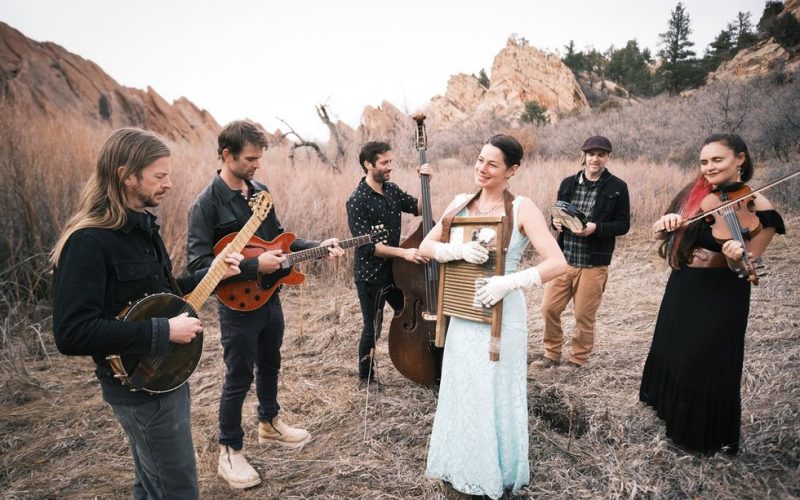
Beloved folk innovators Elephant Revival’s music feels like being caught in a warm summer’s rain, the water slowly rolling down your arms and your face and your chest, causing every nerve to illuminate within you, the fiber of your being turned to stars. Referred to as “transcendental folk” due to its tendency to transcend convention, theirs is music that attunes your soul with the world around you, the people blowing by, the wind at your back pushing you forward, the trees and their whispers. Elephant Revival’s songs wrap themselves around your soul so you may carry them through this life and into the next. They are guidance and strength, stars illuminating the path forward when the night grows dark.
On Friday, April 11th, Elephant Revival will be coming to the Mission Ballroom for the first time in two years for a show that promises to meld spectacle with emotion, a showcase of sonic and visual beauty that’s sure to be something truly special. 303 Magazine recently sat down with founding Elephant Revival member, vocalist, and multi-instrumentalist Bonnie Paine to talk about the show, her musical origins and evolution, how Elephant Revival came to be, drawing inspiration from the cycle of life and much more.
READ: Review — Billy Strings Fills Ball Arena With Hope and Joy
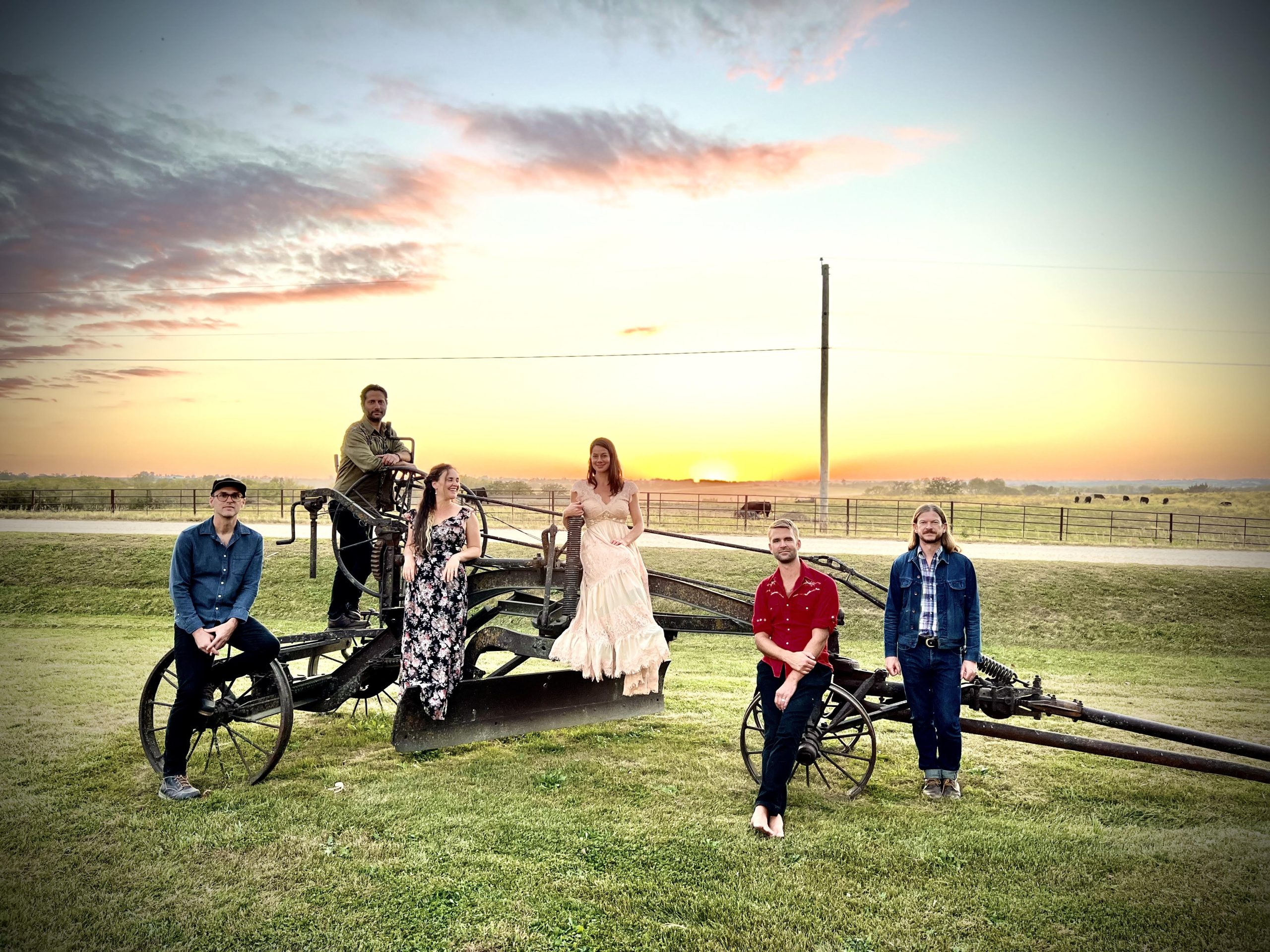
Bonnie Paine first found music when she was young and wild. She recalled growing up in the Oklahoma countryside and hearing her mom sing around the house, saying that her first musical memories stem from this. Paine described her mother as “quite shy” when it came to singing and as such never took her voice outside of their home.
Eventually, the family moved into town, where Paine said music truly took hold for her. One day, Paine, her brother and sister were playing across the street from their home. Their eldest sister was learning to play the drums and they could hear her through the open window all the way across the road. Curious, the three of them climbed the big tree that grew outside their home to get a closer look. Their sister took notice and invited them to climb in through the window and she quickly let Paine play the kit. This ignited a lifelong passion for rhythm that Paine shares with her three other sisters and that Paine carries to this day.
It wasn’t long until Paine began branching out into other instruments, saying, “I think I was about nine when I got hold of a guitar.” However, her true exploration of multi-instrumentalism came a few years later. She spoke about a man named Randy Crouch, a musician her family knew who “looked like an old wizard.” Paine and her siblings became his backup band when they were just entering their early teens.
Since there wasn’t exactly room for four drummers in the band, Paine played electric guitar, at least until Crouch encouraged her to start taking solos. She found this daunting then and decided to take a step back and return to hand percussion, which she said “felt more natural,” starting with congas and bongos but eventually branching out into the washboard and the musical saw. She even returned to strings by learning the cello, all of which she still plays today.
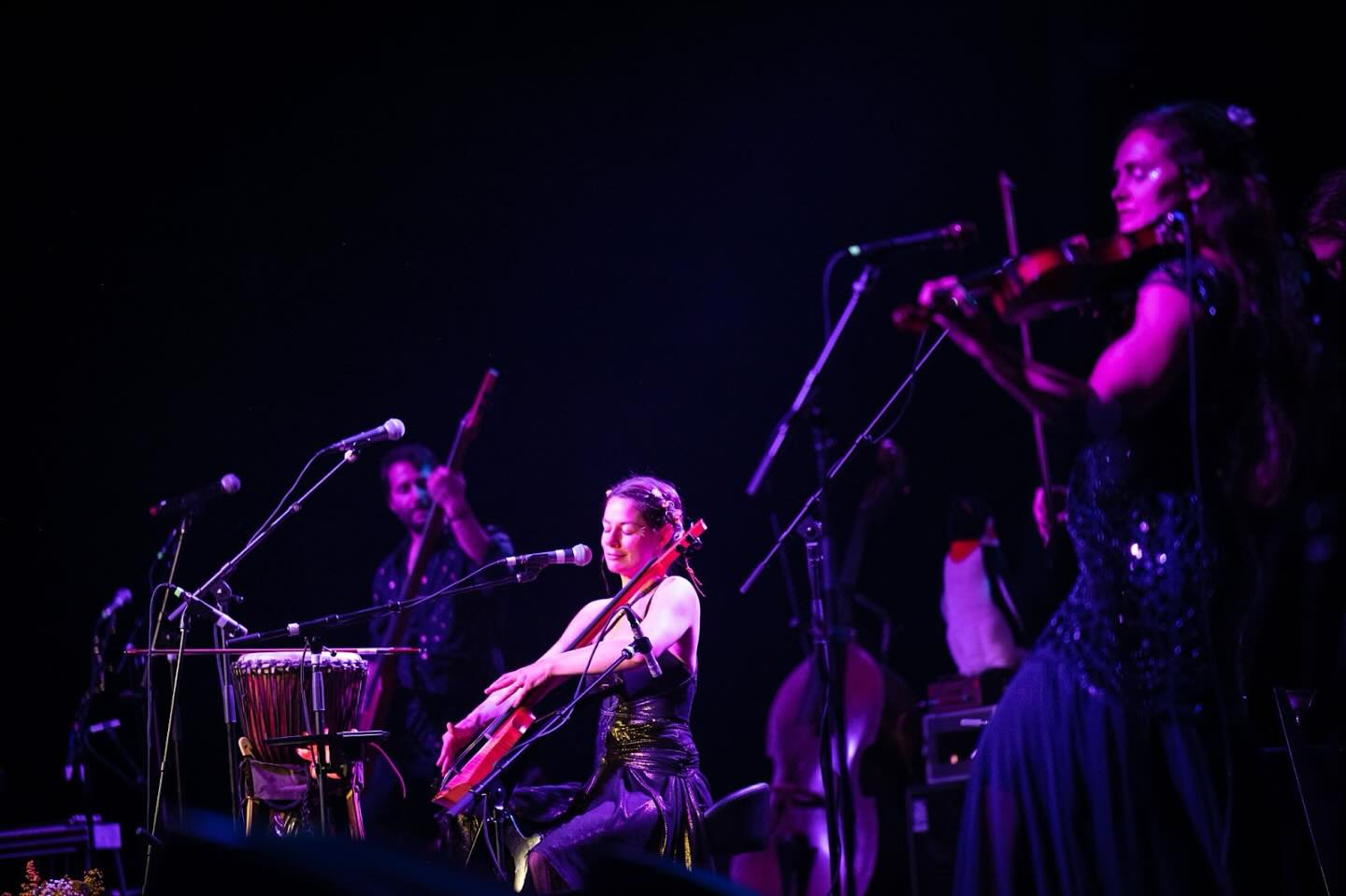
Paine credits this period with beginning a foundation she would continue to build upon throughout her life. She never thought of turning music into her profession, but said that’s just how life happened. She said, “You end up spending most of your life doing whatever your job is, so sure, if [music] needed to be a job, so be it. But I never wanted to take the fun out of it. My reason for doing it is to be inside music and I didn’t want to lose that. I’m a little protective of music in that way sometimes. I don’t want it to become contrived, which happens all the time.”
This is a quandary that many creative people face: What happens when you commodify your passion? When you turn what you love into your job, you risk losing the love you once held. It’s a delicate balance that takes diligence to maintain. Paine has maintained this balance by holding on to the love of creation itself, playing to immerse herself in music rather than for financial gain, keeping the passion burning in her heart.
These thoughts, dealing with the balance between the purity of creation and commodifying it, hadn’t yet crossed Paine’s mind when Elephant Revival first came together. She said the band “came together from many different directions,” but that she first met fellow founding members Dango Rose and Bridget Law at the Winfield Bluegrass Festival in Kansas.
Paine was there with her family, enjoying the festival. She recalled at one point that “someone noticed [her] constantly tapping along to the music,” as all percussionists subconsciously do, and handed her a washboard. Her dad then convinced her to sit in with “a bunch of bands that were playing at the stage [her family] was camping next to.” At first, she was merely humoring her father but quickly realized how good a time she was having. It was her first time really playing with other people outside of her family band with Randy Crouch and it was a world-opening experience.
Later that weekend, Paine said she had a moment where she “let [her] ears go really far out to see if [she] could hear something that sounded a little different because [she] just wanted to experience something with a different rhythm.” In the distance, she heard a particularly funky bass line and “wove [her] way towards it.” When she arrived, she found Dango Rose playing with his band High on a Hog. Bridget Law was also present at the set and she and Paine hit it off. After the set, the three talked, connected, exchanged information and the first steps towards what would become Elephant Revival began.
A few years passed and the future bandmates kept in touch. Paine remained loyal to her family bands, the one with Crouch included but also one formed by her and her sisters and a man named James Townsend called Mighty Kind. As this band was finding its footing, iterations of Elephant Revival would open for them. In 2006, Paine received a text from Rose that said “Elephant Revival Concept,” which was the band’s original name, and Paine realized that it was an invitation to start a band.
Two years later, the band dropped the “Concept” from their name and released their first album, the self-titled Elephant Revival. The album featured early hits such as “Ring Around the Moon” and the beloved “Sing to the Mountain” and served to catapult Elephant Revival into the national conversation. Though technically a folk band, they found themselves surrounded by the bluegrass and jam scenes, a home ready-made for them.
As the years rolled on, Elephant Revival became almost mythical, a band spoken about with reverence. It was as if they wandered onto the scene with the rolling early morning mountain mist, ethereal and unbound by time. They became incredibly sought-after artists and members have performed with legends like John Paul Jones, P-Funk, Little Feat, Yonder Mountain String Band and so many more. As of 2025, they have released five full-length albums and one live album, with the last released being 2016’s Petals. In 2018, the band announced a hiatus due to personal reasons before returning in 2022 with a show in Lyons, Colorado.
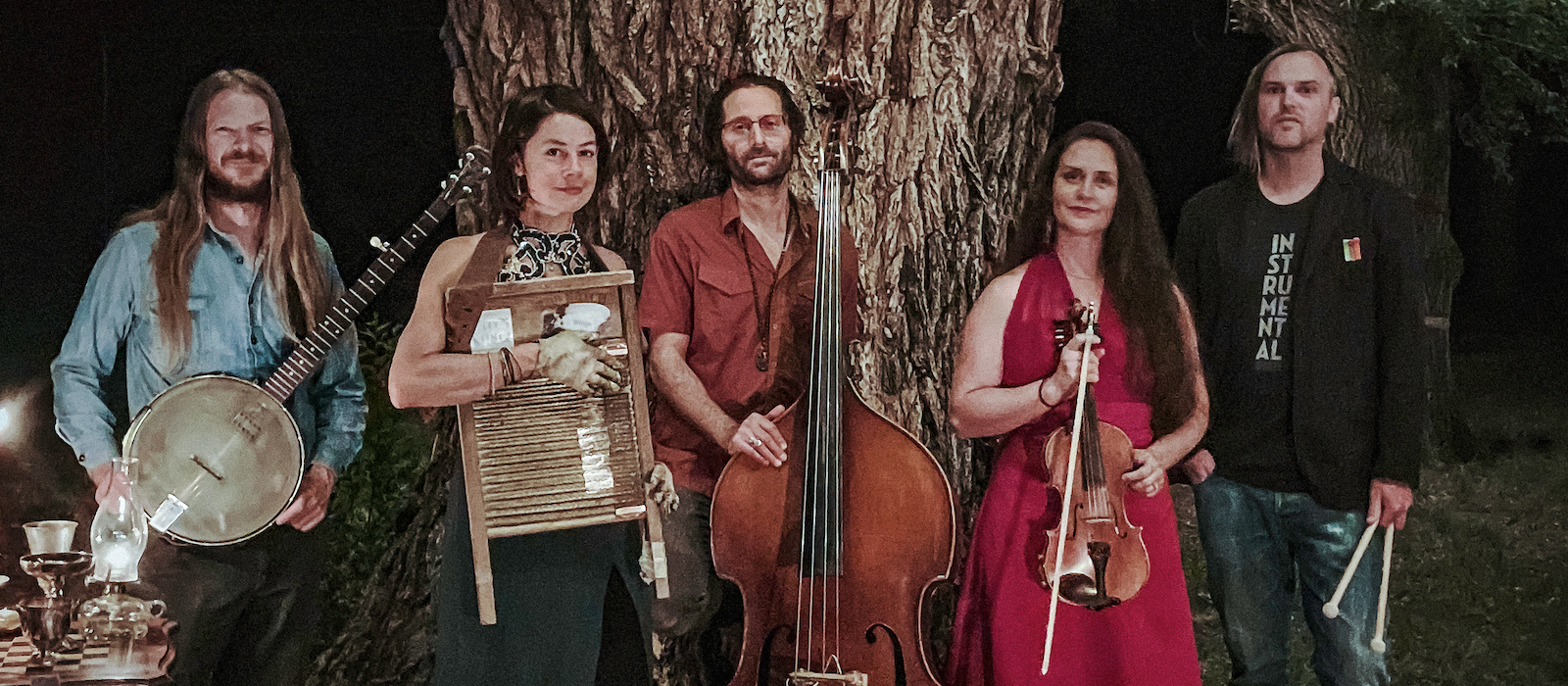
After all this time and experience, Paine says the band has largely created music together in the same way. While each member contributes to songwriting, Paine says she prefers to write alone, mostly while in nature. “I usually hear things pretty fleshed out in my head,” she said. She then brings these fully formed concepts to the band to shape and configure to fit the band’s sound. It creates an environment that Paine described as “quite collaborative” and contributes to the band’s incredible cohesion, seen when they play live.
For Paine, the main thing that has changed is what she draws inspiration from. She ruminated on the expanding and amorphous nature of influence, saying, “We’re always being influenced, right? Which is just good to realize. I always want things to feel like they’re expanding the songwriting because I notice a lot of friends trying to hone in, and then say, ‘This is how I do things’ with the songwriting process. But that songwriting process can happen in so many infinite ways and it feels like it can continue to expand. Ideally, there is an expansion of influence so that you can relate with more of the world that you’re a part of, where I think, oftentimes, people define themselves more and more and more until they’re this very solid thing and then there’s only so far you can go with that.”
Paine also said that lately she’s been inspired by the cycle of life and death. She’s seen both firsthand, having played on several occasions while a person gives birth and during a person’s passing. She said, “We have played a few births, and I’ve played a few deaths — played in the room while people were passing — and orchestrated a few funerals. And I think that that’s part of what we need music for. What I found, just in my experience I’ve had recently, is that these are such different experiences without it. It’s important to have that to create a sense of continuity and harmony and flow in the midst of something that feels so jolting, whether it’s birth or death.”
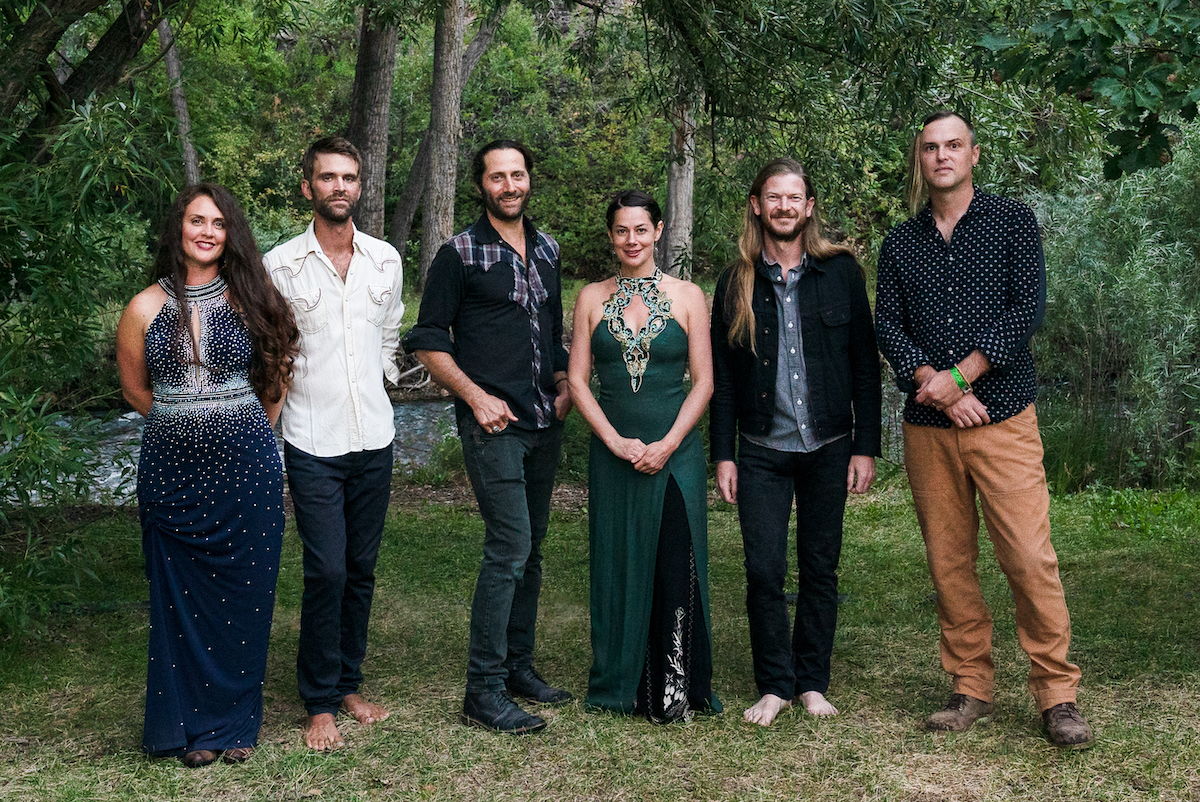
On Friday, April 11th, Elephant Revival — which is currently made up of Paine; Law on fiddle and vocals; Dango Rose on standup bass, mandolin and banjo; Charlie Rose on horns, pedal steel and banjo; Darren Garvey on percussion and Daniel Sproul on guitar, with all members contributing vocals — will be bringing their legend to the Mission Ballroom. Since their hiatus, Elephant Revival performs rather sporadically. Paine said this is partly due to the members’ schedules but also because they wish to ensure every show they play now is something special, “something we do when it feels really, really, really right.” With fellow folk trailblazers Rising Appalachia opening, Paine promises the show will be a spectacle replete with aerial performers and an appearance from Father Time Drumline. This will surely be a show overflowing with beauty and affirmation and, given that it’s likely going to be the only show Elephant Revival will be playing for some time, is not one to miss out on.
Elephant Revival shows those who hear them how much beauty can exist in this world. They can call the very stars down from the night sky, cause them to pour around us like summer’s rain that seeps beneath the skin. The path may grow dark at times and we may inevitably stray but at least we have Elephant Revival to guide us safely to our destination.
Get tickets to Elephant Revival’s 4/11 show with Rising Appalachia at the Mission Ballroom here!
All photography courtesy of Elephant Revival.