



“In the spring of 2023, the state legislature of Tennessee began passing a series of anti-LGBTQ laws that became known as the ‘slate of hate,'” explained Bertha: Grateful Drag bassist Jacob Groopman. These “ambiguous” laws, Groopman continued, “sought to outlaw public drag performances and any gender nonconformity on a stage in Tennessee.” Groopman’s response? To get together with a group of musicians for a one-time “Grateful Drag” show to protest these laws and raise money for local LGBTQ+ organizations. That show occurred at their favorite local bar — Dee’s Country Cocktail Lounge — and gained unexpected national attention. “With folks demanding we come to their town,” Bertha: Grateful Drag was born and set out runnin’.
READ: Review — Dead and Co. Say “Fare Thee Well” to Folsom Field During Final Shows
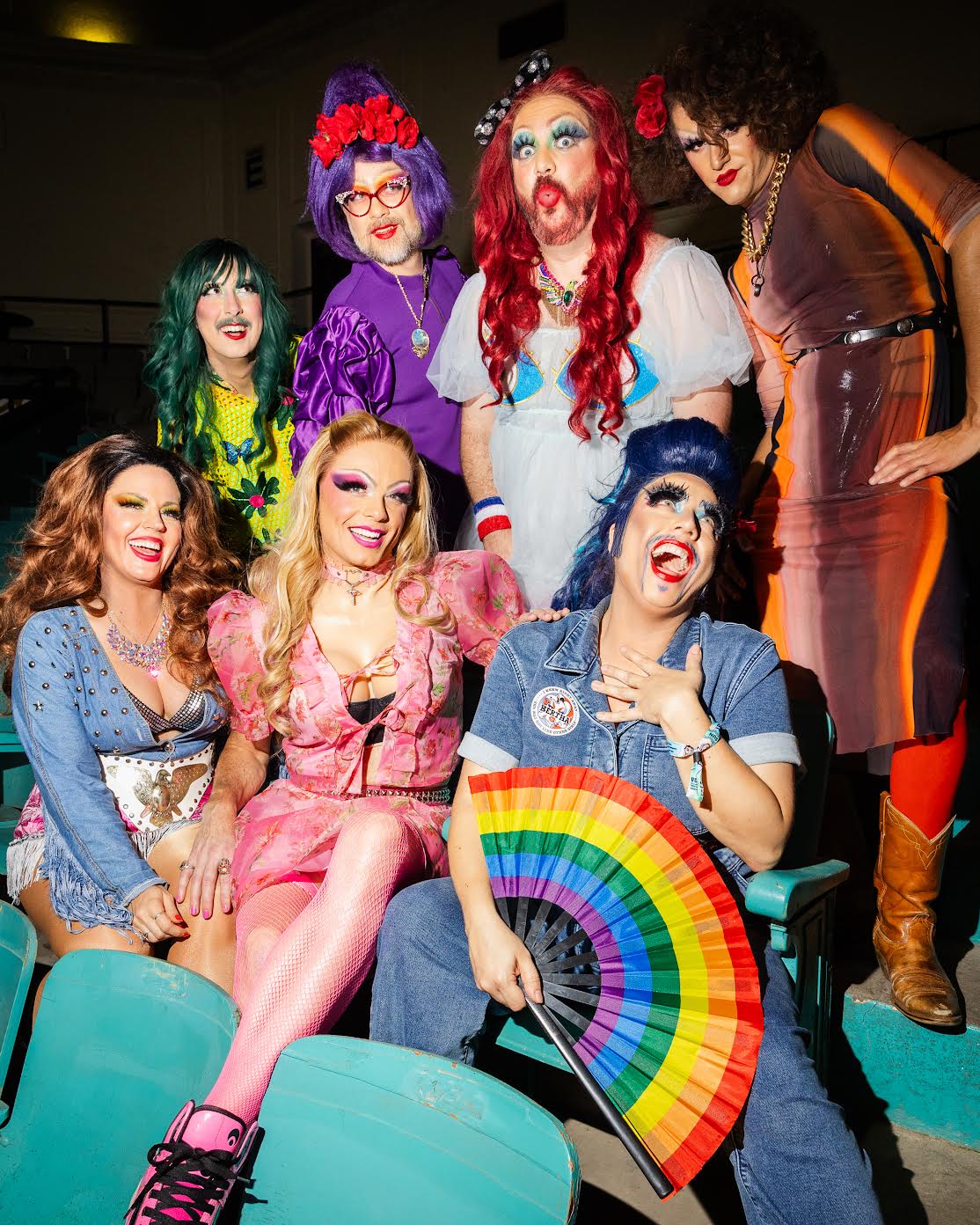
Groopman has been a fan of the Grateful Dead since high school, played in Dead cover bands in college, and “always had a toe in the Dead scene” when he lived in the San Francisco Bay Area. “Most of the members are equal to me in their lifelong borderline obsession with the Dead,” he said. Growing up in the Bay Area, vocalist Melody Walker remembers how “the tape deck in my car was just Workingman’s Dead and American Beauty on repeat.” A professional songwriter and 2025 Grammy nominee, Walker said she “always wanted to start a Dead cover band that had female voices up front, that nailed the harmonies, and that could play up the theatrics and camp of much of their lyrics and lore.” Furthermore, she felt she could bring certain characters to life — “Scarlet,” “Loose Lucy,” “Cosmic Charlie,” and “Casey Jones” — with guest performers embodying those iconic characters.
Entirely new to drag themselves, the band’s members — Groopman, Walker, guitarists Thomas Bryan Eaton and Mike Wheeler, vocalist Caitlin Doyle, drummer Justin Vorp, and keyboardist Hank Long — quickly embraced the art form as something that is “available to everyone,” Walker said. “It is important to me, however, that we are not encroaching but rather enriching the drag scene wherever we go.” In doing so, Bertha: Grateful Drag hires a local drag artist to emcee every show, with each show benefiting a local LGBTQ+ organization.
To Groopman, the idea of combining the Dead with drag made a lot of sense. The Dead’s “music and community has always been about free expression,” he said. “We’d like to think that we’re continuing this tradition while taking it to some new, and most definitely queer, places.”

This Thursday, Friday, and Saturday, they’ll be in Boulder, Denver, and Fort Collins, bringing their peaceful protest performances to the Front Range. While Grateful Dead cover bands are a dime a dozen, the difference with Bertha: Grateful Drag is when you come to a show and feast your eyes on a “rainbow full of sound,” accompanied by elaborate makeup, wigs and costumes. The shows will be a “slammin’ two-set, three-plus-hour Grateful Dead show, played by queer and allied Nashville musicians, all in drag,” Walker guarantees. “My hope is that we can add value to this tradition and contribute to the long strange trip of it all” — all while “deeply caring for the community, for queer people, and for our rights.”