



What do I do?
In one way, I want to do what I have always been told I “should” do. The path that others have laid out and deemed best. It feels safer, but it doesn’t mean it’s the “right” decision. On the other hand, I want to go down the harder route. Yes, to push those limits, but also because it hasn’t been taken. It feels truer to me, despite how terrifying it is.
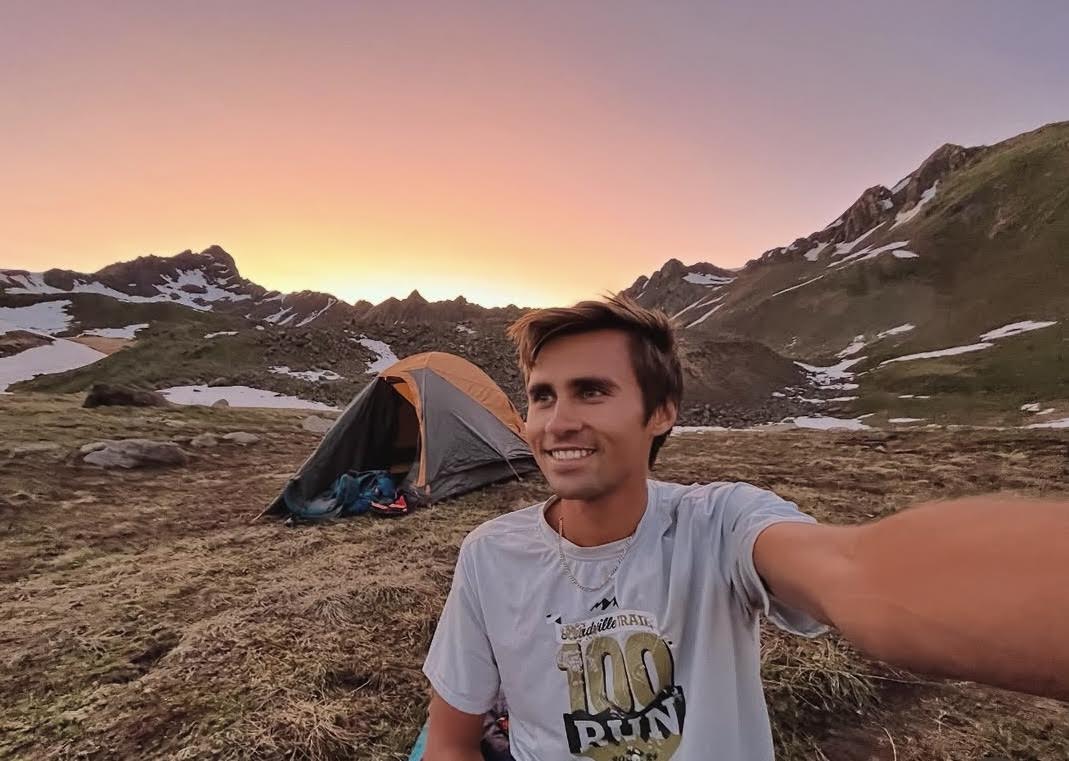
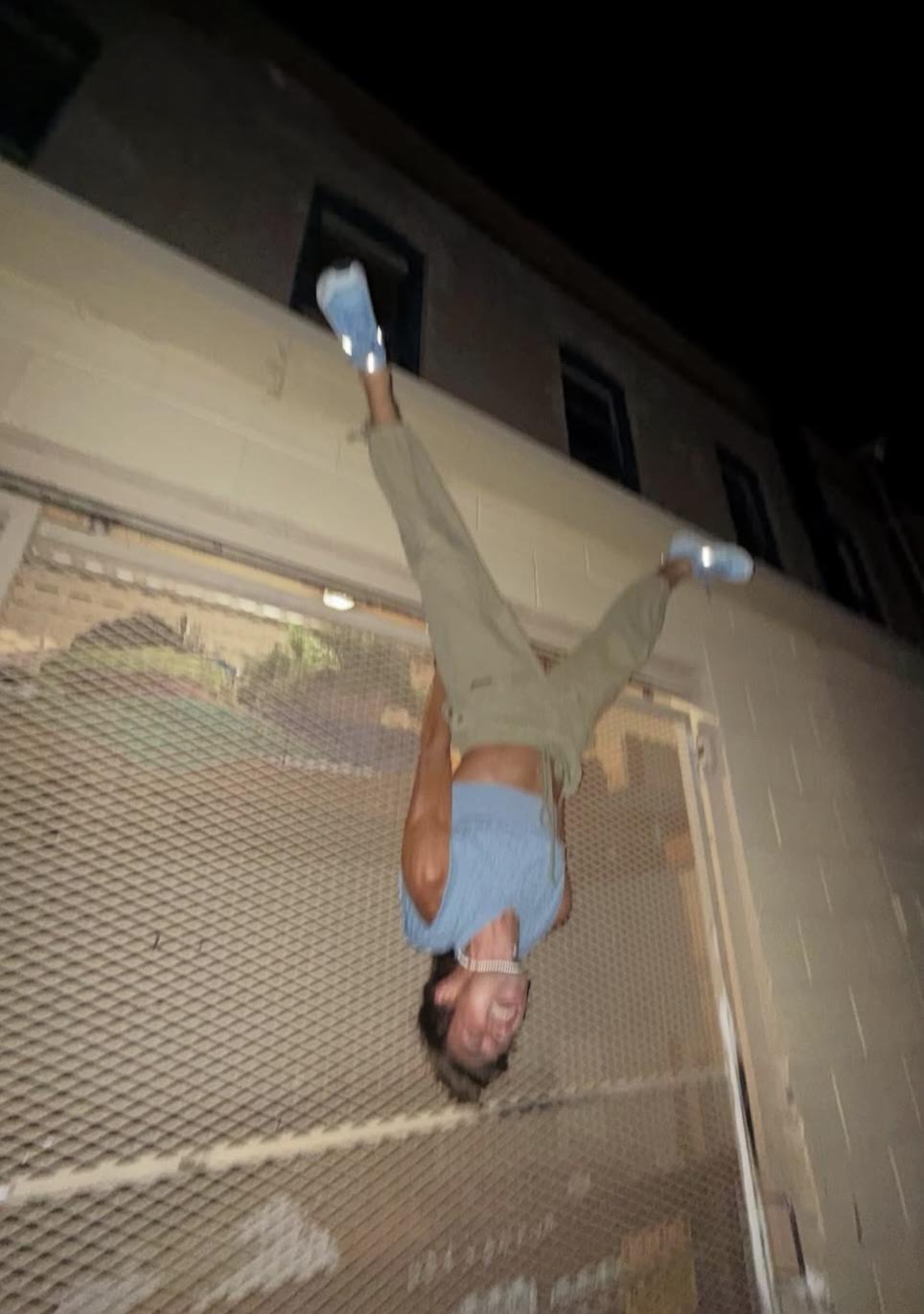
And yet, the path that feels most true is where ultrarunner, mountaineer and social media personality Michael Mitchell, better known as Mikey Mitch or “Rave Twink,” has been taking his whole life. Over the past year, Mitchell has exploded on social media, posting trail runs at blazing speeds, hitting EDM shows that same night and hiking 14ers the next morning. He stands apart, glitter and short-shorts included, from the decades of runners and mountaineers who’ve held their sports close, often resisting outsiders from entering a once quiet community.

The people who built those rigid bars will always have something to say. I hear their damning voices still, urging not to make waves and begging to keep the peace. Mitchell never seemed to care, though. How?
Mitchell grew up in Minnesota and played sports his whole life, starting with ski racing before joining his cross-country team in the seventh grade. “I just fell in love with it from there,” he shared. He was already competing at a high level, making varsity from the jump, but it was the camaraderie that really sold him on the sport.

Mitchell continued his running career at Lehigh University, competing in Division One track and cross-country while also pursuing a degree in Journalism. Collegiate athletics, especially at the Division One level, demand relentless commitment. Early morning practices, weekends sacrificed for competition and little time outside of the athletic social circle are the norm. Running in particular is a year-round endeavour – cross-country in the fall, indoor track in the winter, outdoor track in the spring and summer conditioning to keep it all grooving.
His Journalism studies held significant weight, too. In one class, a question lingered, “How do you ethically tell someone else’s story, objectively, when you yourself are subjective?” For Mitchell, that was an earth-shattering realization. He loved storytelling and hearing others’ experiences, but he also recognized that no one can ever fully understand another person. Ultimately, we are all unique, shaped by our own subjective realities. Still, Mitchell believes that opening up narratives and expressing yourself is “very humanizing,” a way to create common ground and engage in vulnerable dialogues, despite differences.
I’ve spent so much time searching, trying to replicate a feeling, person or certainty that can’t be duplicated. No one can be another, a truth equally frustrating as it is freeing. Mitchell calls this humanizing, yet for me, it’s haunting, even if it brings in new crowds.
As Mitchell moved through college, he began expanding his social circle beyond his cross-country and track teammates, something he noted was “pretty rare.” The community aspect of those sports can be unifying, yes, but also isolating. So, Mitchell made friends with Non-Athletic Regular People, or “NARPs,” a choice that some of his teammates questioned, wondering why he would spend time outside the athletic bubble.
That choice, to step out of the bubble, is more complicated than it sounds. Mitchell makes it look like strength, but what if I lose everything? Even more horrific, what if that risk proves worthy? Subsequently, shattering every self-protective mechanism that once held the posts of my mind?
Mitchell never bought into the one-track mindset many athletes have, and he admittedly “has an issue with people telling [him] what to do,” which created friction among teachers and coaches growing up. Mitchell recognizes that he knows his body best, resisting the temptation to drink the Kool-Aid that promises the formula for perfect athletic outputs. For him, balance is key, and even though he loves the sport, “running is not my entire identity,” he noted.
Formulas are easy. They are expected. But maybe Mitchell’s right. Perhaps the balance means refusing to be reduced to one thing, allowing every part of your identity to speak. How scary it is to let the other parts of you show – including the fun ones.
Mitchell moved to Denver, the so-called “Bass Capital,” four years ago. A big fan of EDM, especially bass and dubstep, he counts artists like Subtronics and SVDDEN DEATH among his favorites. The move also gave him space to embrace his sexual orientation as a gay male even more fully. He had come out at 18 and had long been proud of that identity, but since graduating from college, Denver’s queer community has held a special place in his heart.

He isn’t the proclaimed “Rave Twink” for no reason, after all. This beloved social media nickname encapsulates many of Mitchell’s identities, including his bubbly and gregarious online persona. Mitchell’s social platforms started as a way to have fun, but have quickly grown into something with real impact. Some followers say he’s helped them feel more comfortable in their own sexual identity. Others have been inspired to sign up for their first 5K or marathon. The rest share that he’s just as excitable in real life as he is online.
Mitchell’s reach stretches across every corner of the outside world, even as he actively embraces a new community centered around mountaineering in Snowmass, Colorado. Just a few weeks ago, he ran social media operations for the Leadville 100. A race he knows well, having competed in it in 2021 with a simple pair of non-trail Nike Pegasus shoes, right after graduating from Lehigh. Mitchell understands the Leadville spirit firsthand – that despite the growth and changes in the ultrarunning community, the race remains rooted in the belief that anyone can do it.

I am a part of ‘anyone,’ just like Mitchell. It seems like it’s as simple as showing up. Trusting yourself with decisions, despite the odds stacking up, and following the self-made path forward.
As Mitchell continues to grow both athletically and on social media, his training has only sharpened. For him, success in running comes down to knowing how your own body functions – you are the expert, after all. This fall, Mitchell continues his hot streak by running the Pikes Peak Marathon in September, followed by the Chicago Marathon in early October, where he hopes to hit a 2:16 Olympic Trials qualifying time. Later that month, he’ll take on the Javelina Jundred – a 100-mile race known for its rave-like atmosphere, fast course and coveted Western States qualifier spots for the top three finishers.

The “safe” path never gave me what I truly wanted, anyway. The unknown might hurt, yes, but it also may heal. It is unwritten, and I hold the pen, which Mitchell seems to know too.
Mitchell acknowledges that the running community is now bigger than ever and rapidly expanding, commenting that “some people definitely don’t like me,” despite the sport’s general acceptance and encouragement. But, in true Mitchell fashion, he’s here to stay. Telling those who push back, “You can’t ignore me anymore.”
I am choosing the unknown.
[give_form id="772002"]