



East coast jam band Dogs in a Pile are becoming something of a phenomenon. In the last few years, they have been blowing up astronomically, becoming one of the young bands on the scene poised to become the next big thing. This is for good reason. Their music feels like filling your lungs with fresh air, cleansing and heartening. Mixing funk and jazz motifs while focusing on improvisation, the band melds deep, intricate jamming with this sense of exploratory wonder, whimsy, almost mischievousness in a way that feels refreshing, comforting in these ever-darker days. They feel like this beacon of light inviting you to follow them to greener pastures, as if they wish to take you along with them as they continue to rise higher and higher above the ground. It’s music everyone could use as they attempt to navigate this ever more confusing world, a way to escape for a while and remember that wonder still exists.
In recent years, Dogs in a Pile have come to love coming to Colorado, having recently played the legendary Dillon and Mishawaka Amphitheaters, their third and fourth shows in the state this year alone. 303 Magazine recently talked to Dogs in a Pile keyboardist and vocalist Jeremy Kaplan about finding a home in Colorado, the band’s origins, their rather meteoric rise, what’s coming next for them and much more.
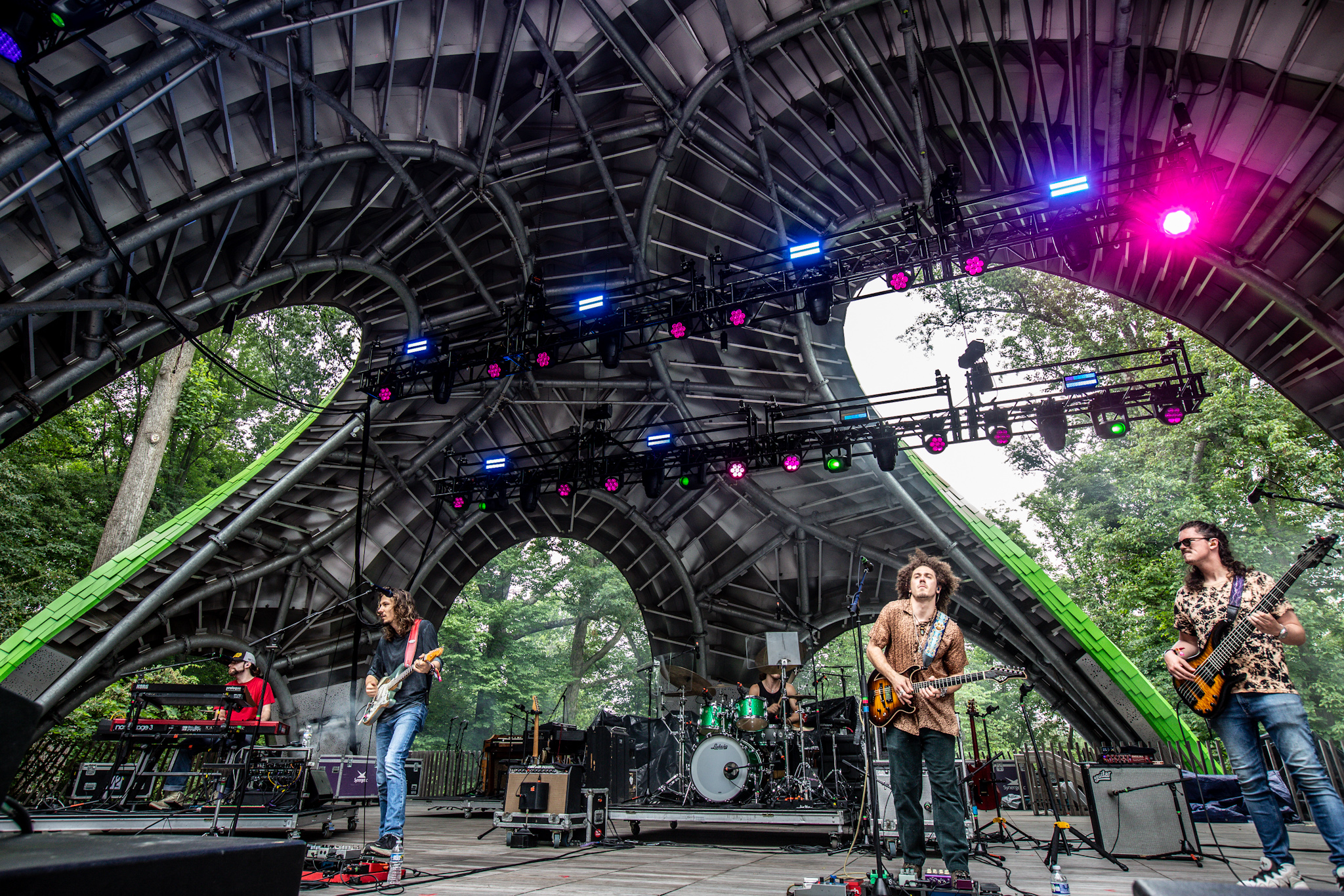
Kaplan grew up in Long Island, New York interested in music but found that his early tastes were largely out of his hands, mostly influenced by his older sister and his father. As such, he grew up listening to an incredibly wide range of music, saying that when he was really young he was “really into Gwen Stefani and Britney Spears” based on his sister’s tastes and Frank Zappa tunes like “Baby Snakes” and “Why Does It Hurt When I Pee?” based on his father’s. He started finding out his own interests when he was about 10 when we was given Guitar Hero and Rockband, thus being exposed to a large variety of new music. These games also instilled in him a sense of wonder regarding playing music. He said, “I remember banging on those plastic drums thinking to myself ‘Huh, this is it. This is all I want to do.'” He was given a real drum kit not long after and his passion and willingness to pursue music was born. Eventually, he discovered keys and they would ultimately carry him to Berklee — where he met his fellow Dogs in a Pile band members — and beyond.
This large variety of musical influences makes a lot of sense given how eclectic Dogs in a Pile is. The band — composed of Kaplan on keys and vocals, Brian Murray on guitar and vocals, Joey Babick on drums, Jimmy Law on guitar and vocals and Sam Lucid on bass and vocals — draws on a huge range of influence, each member bringing their own interests to the table so that the sound never remains the same. It changes constantly, evolving as they do as people, growing and learning with every note. It lives comfortably within the jam world but isn’t so easily classifiable, an amorphous thing that refuses to stay stagnant.
For Kaplan, it’s never been about the recognition or fame or reaching for greatness. Instead, it’s always just been about the music, pure and simple. But as he got deeper into his musical exploration, he realized its potential, how far reaching it could be. He said, “I never had that dream of like, ‘Oh, I want to be in a band and on stage every night.’ That was never my thing. I just love music. And I put all this time into it, and I kind of ended up falling into it. As I got deeper into music, I realized how much was really on the table.”
This exploration eventually landed Kaplan at Berklee where he would meet his fellow bandmates. Save for Lucid — who is from Boston, each member grew up in either New Jersey or New York City which helped them to bond quickly. After a few different projects together over the years, Lucid, Kaplan and Murray started to play “crummy bar gigs” covering Grateful Dead tunes, with Kaplan describing this period as the first days of what would become Dogs in a Pile. He said this period “threw [him] through a loop” as he hadn’t really spent much time with the Dead or any kind of jam music by that point. He said there really wasn’t a scene for it where he grew up, with most of the music around him focused on pop-punk and hardcore music. He also said this was almost intentional as his dad was a great lover of jam music, The Grateful Dead, Phish and more being played around him as he got older. However, he said he always wrote it off as just “his dad’s music” that wasn’t cool. It wasn’t until those crummy bar gigs that he realized the power and freedom that jam music can elicit.
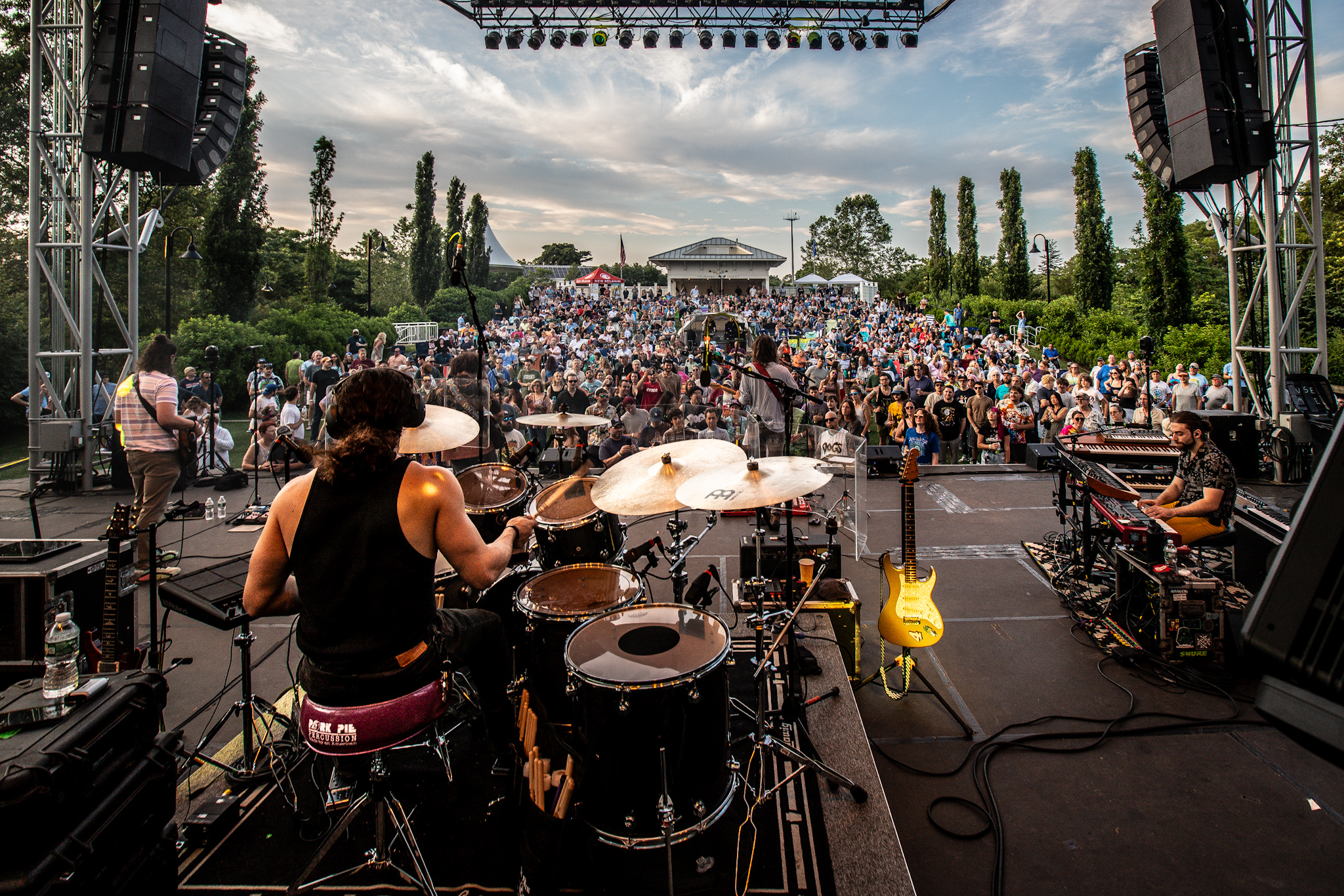
As time went on, Law and Babick joined the others and they eventually began shifting away from the Dead covers and started writing their own music. Slowly, they’d start slipping in an original song or two amongst the covers until they felt confident enough to play wholly original sets. Kaplan said that at this time they really honed their craft, learned how to lock in with each other because of just how often they were playing. He said, “We were playing a lot. We kept ourselves very busy. And luckily, being based out of New Jersey/ New York, there’s a lot of playable places in a small area. We were really getting around. We started taking our weekend road trips and going to upstate New York and playing little Podunk festivals and tiny bars. But it was a lot of fun to pile into the van and load up the tiny, little trailer and just do the thing.”
This period taught Kaplan a lot but one of the biggest lessons he learned is how the songwriting process differs depending on each project. He said, “Every circumstance is extremely different. People always talk about a songwriting process and it kind of confuses the hell out of me because I don’t really understand my own. It just happens how it happens. You do have to work at it. You do have to consistently write stuff and and do it over and over again to create something that you might eventually like.”
It wasn’t long before people started to take notice of Dogs in a Pile, their improvisational abilities, consistency and work ethic proving their place as one of the most exciting young bands in the scene. Kaplan said there was a moment where, as much fun as they’d been having playing Dead bars and lower-tier festivals, they decided they did want to take themselves and where they might be going more seriously. Now, as they continue to skyrocket, they continue to find a balance between the fun and purity of just playing with the business side of things. “We’re essentially a small business,” Kaplan said. He said that this greater spotlight that has been on them the past couple years has added some pressure to the band’s shoulders. However, Kaplan credits his bandmates and their team as helping to lighten the load, describing everything as collaboration and making the point that no one gets to where Dogs in a Pile is and is going to alone.
Kaplan also takes heart from the success of many of his contemporaries, a sentiment indicative of how collaborative the American jam scene is as a whole is. While jealousy and the like might arise from time to time, at the end of the day, most bands that bands like Dogs in a Pile are sharing the bill with understand what they are experiencing and try only to lift each other up. For Kaplan, it also points to the fact that the sky’s the limit for bands just like his. He raised the example of Goose, a beloved jam band who has also experienced an incredible, meteoric rise, who just sold out Madison Square Garden. Kaplan takes this as “If they can do it, why can’t we?” He said, “I totally want to do that, too.”
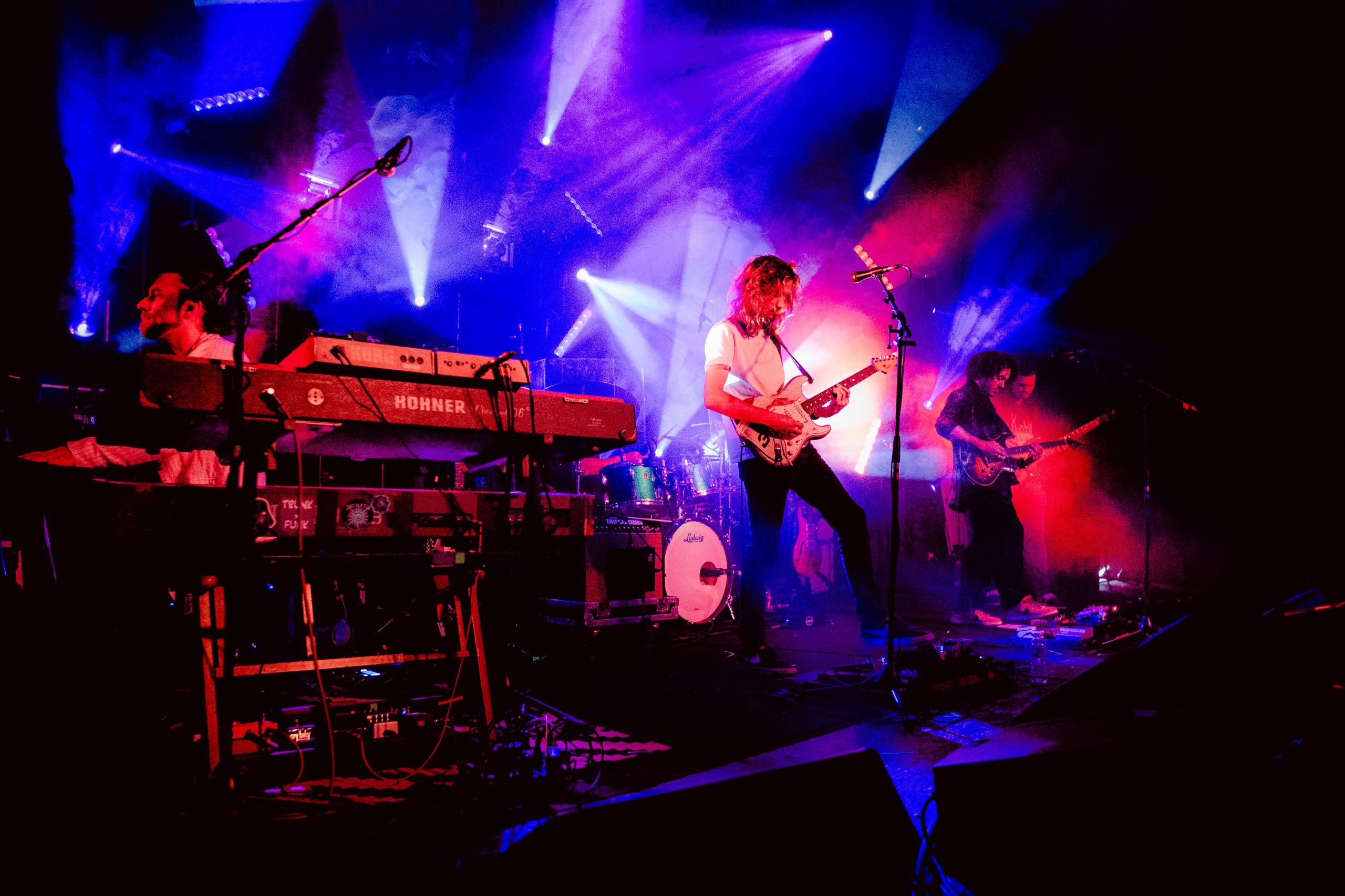
Kaplan attributes most of their success to how much they tour, how many shows they play. “We’re road warriors at the end of the day,” he said. “We work hard and a lot and I think it’s paying off.” He did mention the importance of social media in this day and age, how their manager pushes them to create content and engage with fans online. This helps spread the word, tell people where Dogs in a Pile will be next, amongst many other benefits.
Dogs in a Pile are almost always on the road and they always make sure to add a few stops in Colorado each tour. Kaplan said that’s because of Denver’s reputation as something of a “jam band mecca,” a promised land for those who seek out extended improvisation and high vibes. As such, they recently played some incredibly well received shows at Dillon Amphitheater and Mishawaka Amphitheater, shows that took place mere months after their last stop at Cervantes’ Masterpiece Ballroom in Denver. Kaplan said he feels warm and accepted here especially “as an initial outsider to Colorado and the jam thing” and will continue coming back as long and as frequently as possible.
As for what’s next, Dogs in a Pile are only going up. They have their third studio album almost in the bag, which Kaplan referred to as “our finest effort.” They’ll have a headlining set at this year’s Beanstalk. They’re a band that improves the world with every note they play and deserve all the success they are experiencing and much more. If the weight of the world ever becomes too much to bear, throw on some Dogs, close your eyes and breathe deep.
Stream Dogs in a Pile’s music here!