



In a world full of people pleasers, Alicia Rau is comfortable being despised.
She was the hometown outcast with the dyed hair and facial piercings; the student with the attitude that teachers warned each other about; the young girl learning lessons the hard way, carrying experiences that most others couldn’t relate to.
Yes, Alicia Rau is just fine being your bête noire. In fact, it’s kind of her whole brand.

In French, the phrase bête noire translates to “black beast.” In our vernacular, it’s come to mean a person or object of aversion, who is particularly disliked or avoided. It’s someone or something that is generally despised. Bête Noire is also the name of Rau’s gothic couture label.
But for Rau, being disliked is not always a bad thing: and the beauty in the despised is the symbol on which she bases her garments.
“I’ve always been someone’s bete noire, and it does mean to be despised but in a good way,” Rau shared. “I’ve always been completely unique and it was always a problem until I learned to harness it.”
In harnessing this power, Rau is not only making art that heals a younger version of herself, she’s bringing quality alternative fashion to the mainstream industry and showing others how to harness the power in their darkness.
Her latest runway collection at Denver Fashion Week’s Spring 2025, which premiered on Bête Noire’s seventh anniversary, was a visceral representation of her devotion to that ethos.
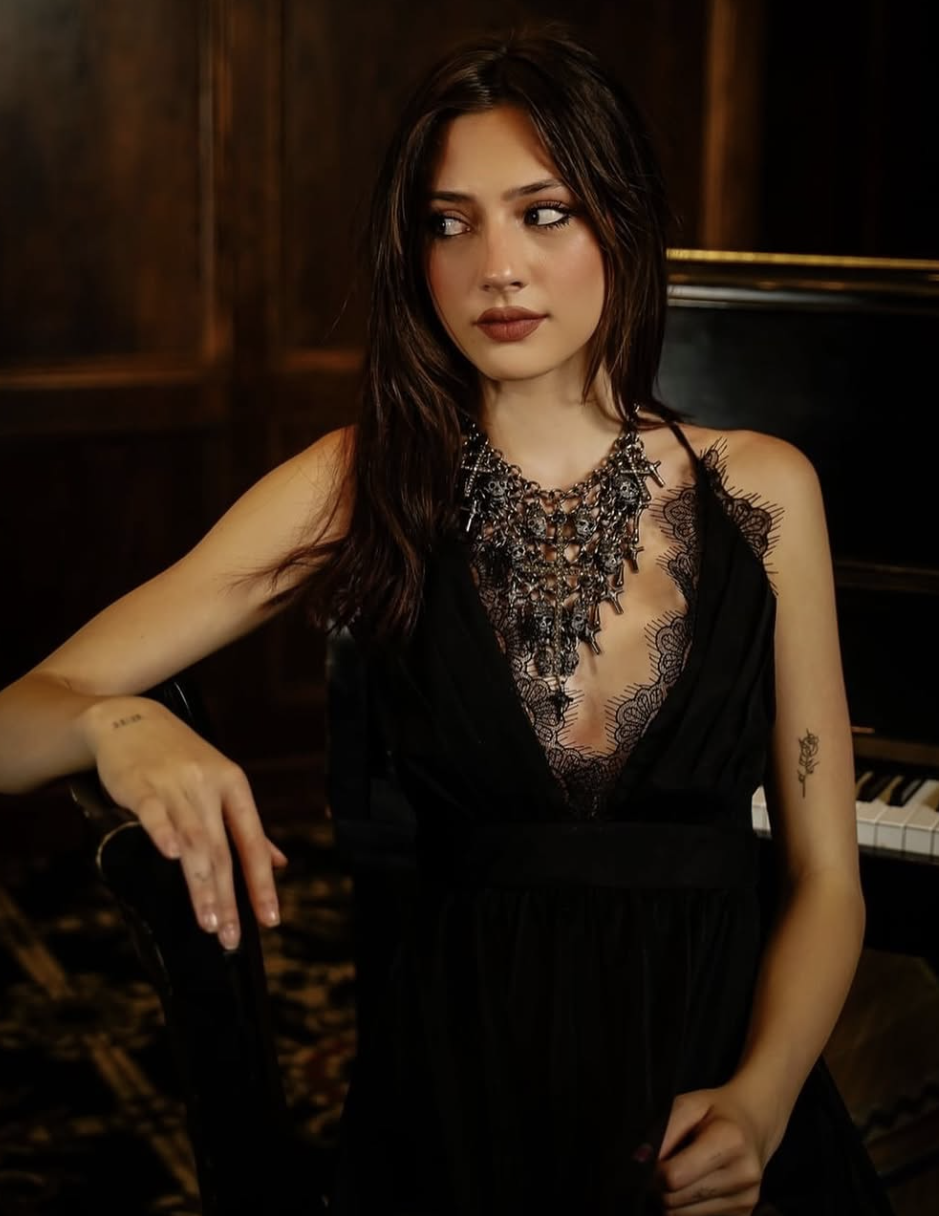
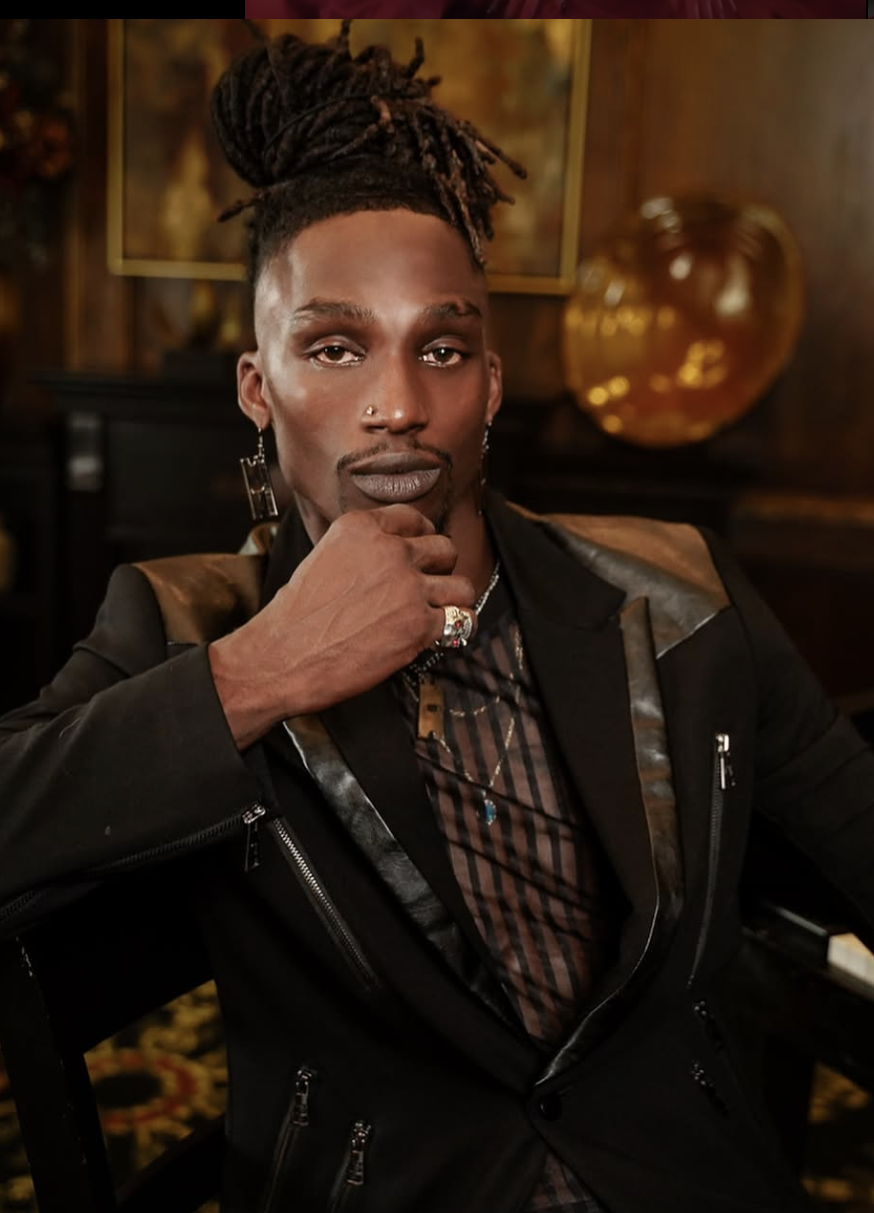
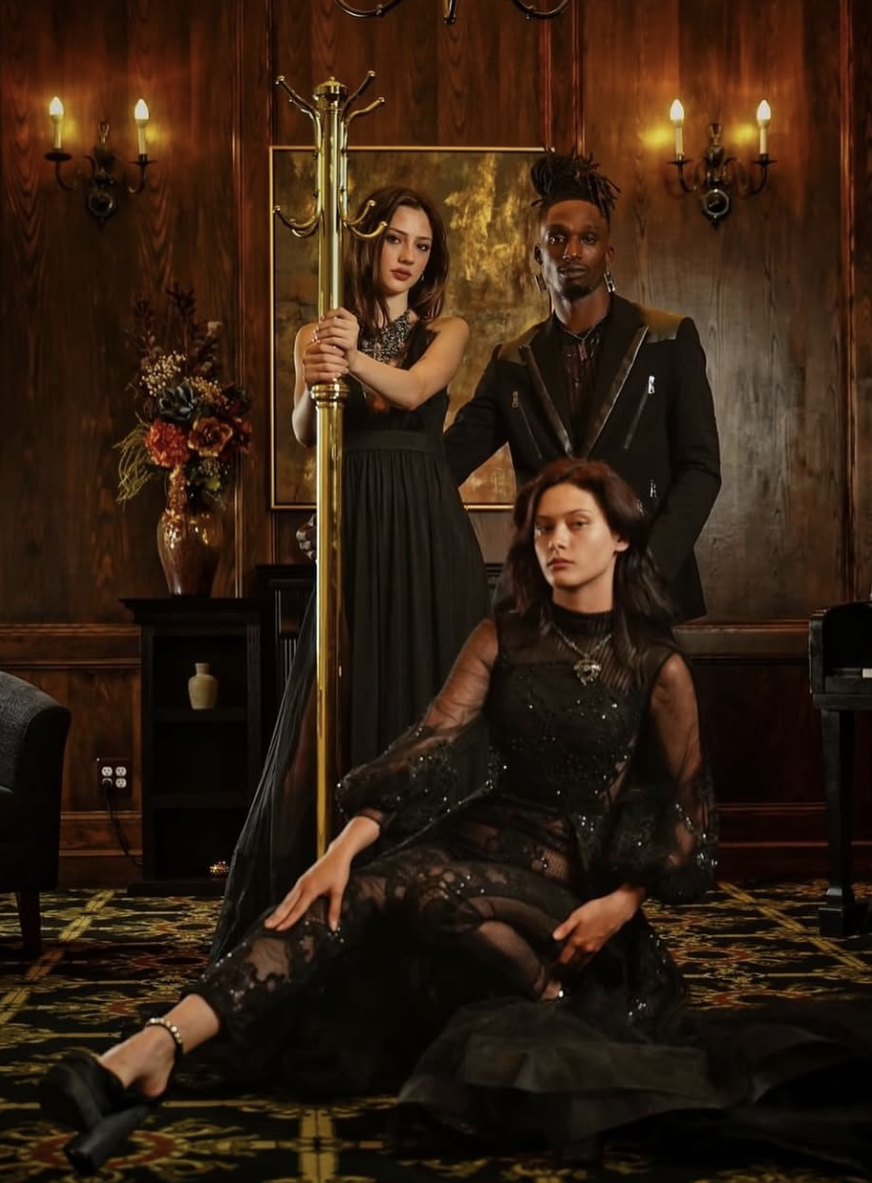
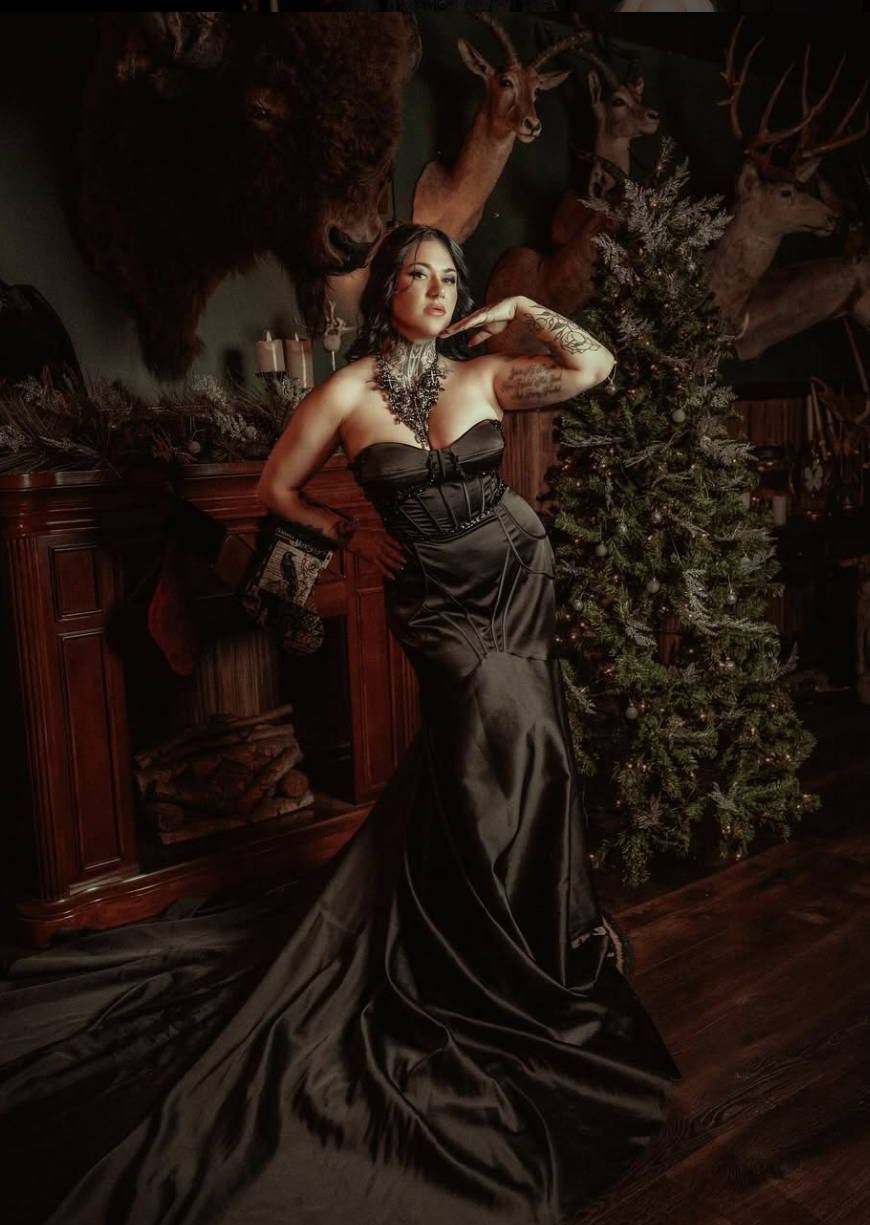
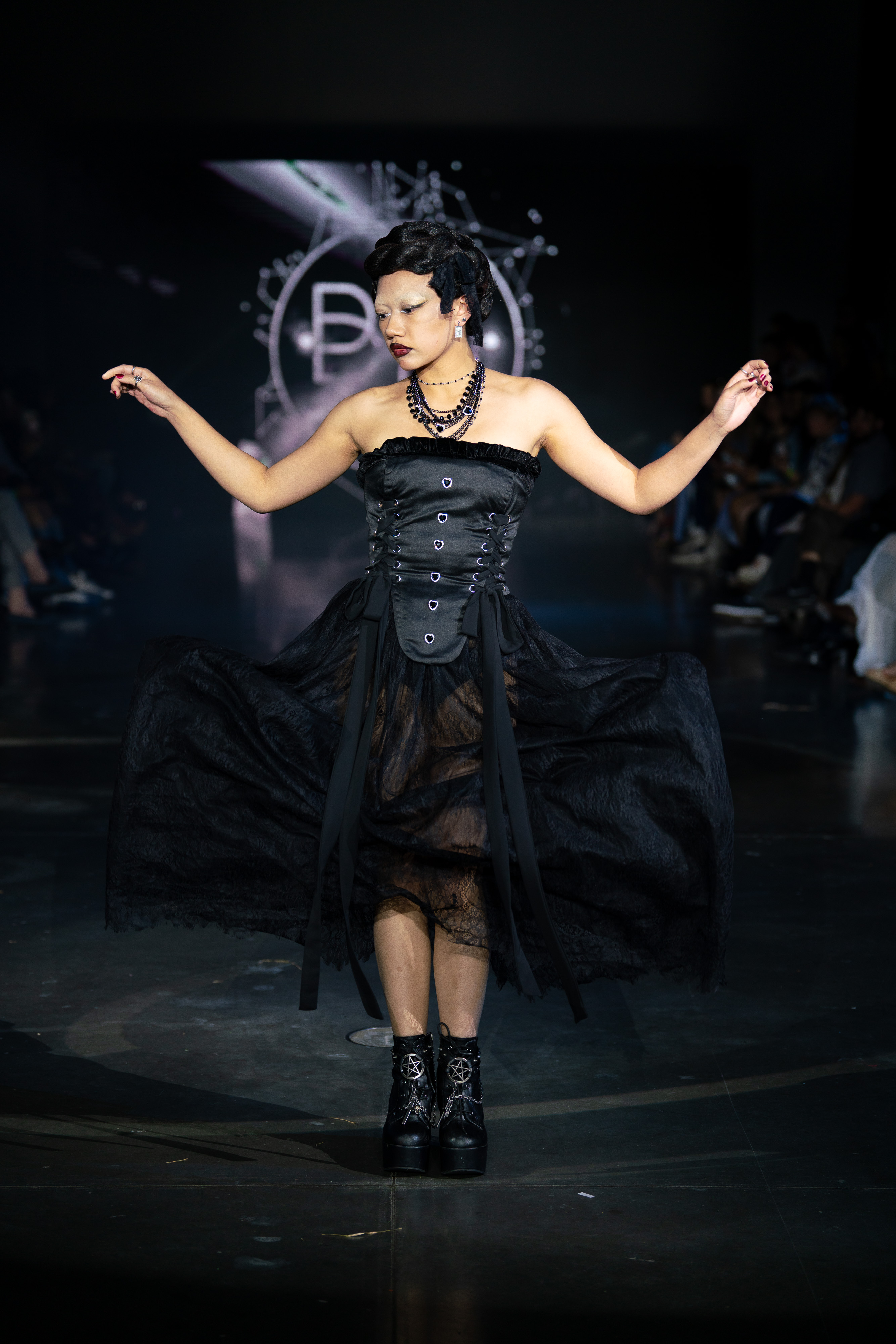
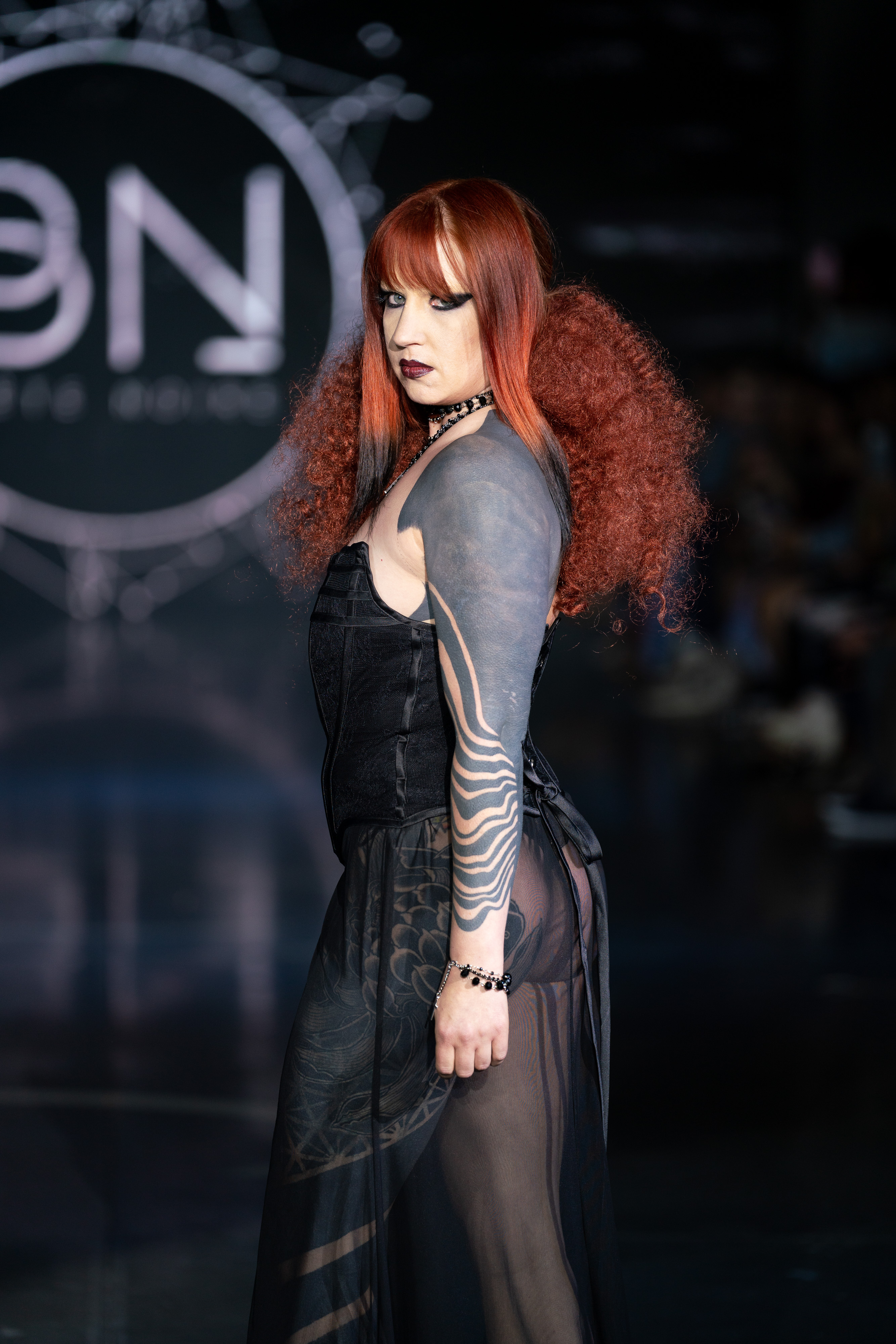
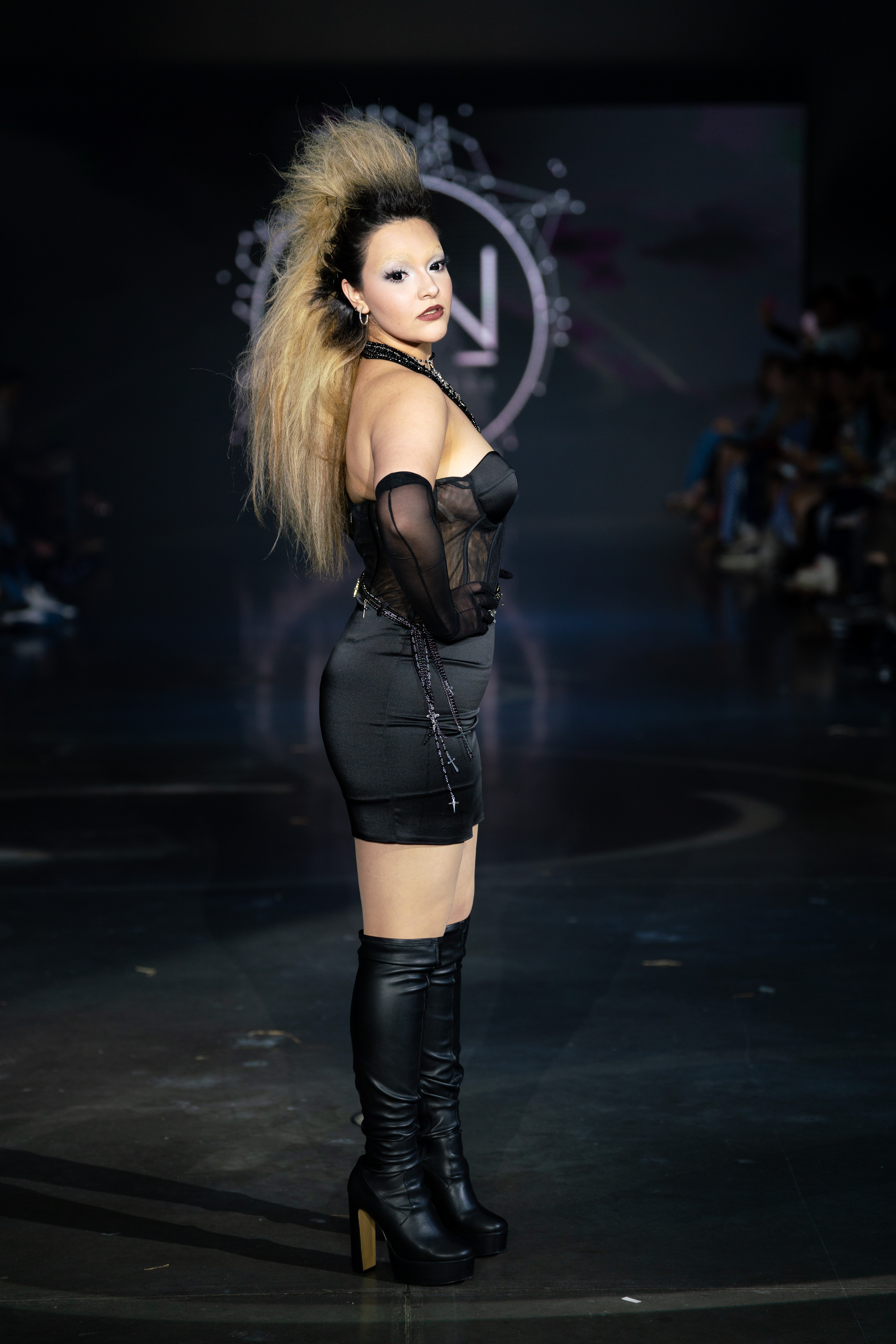
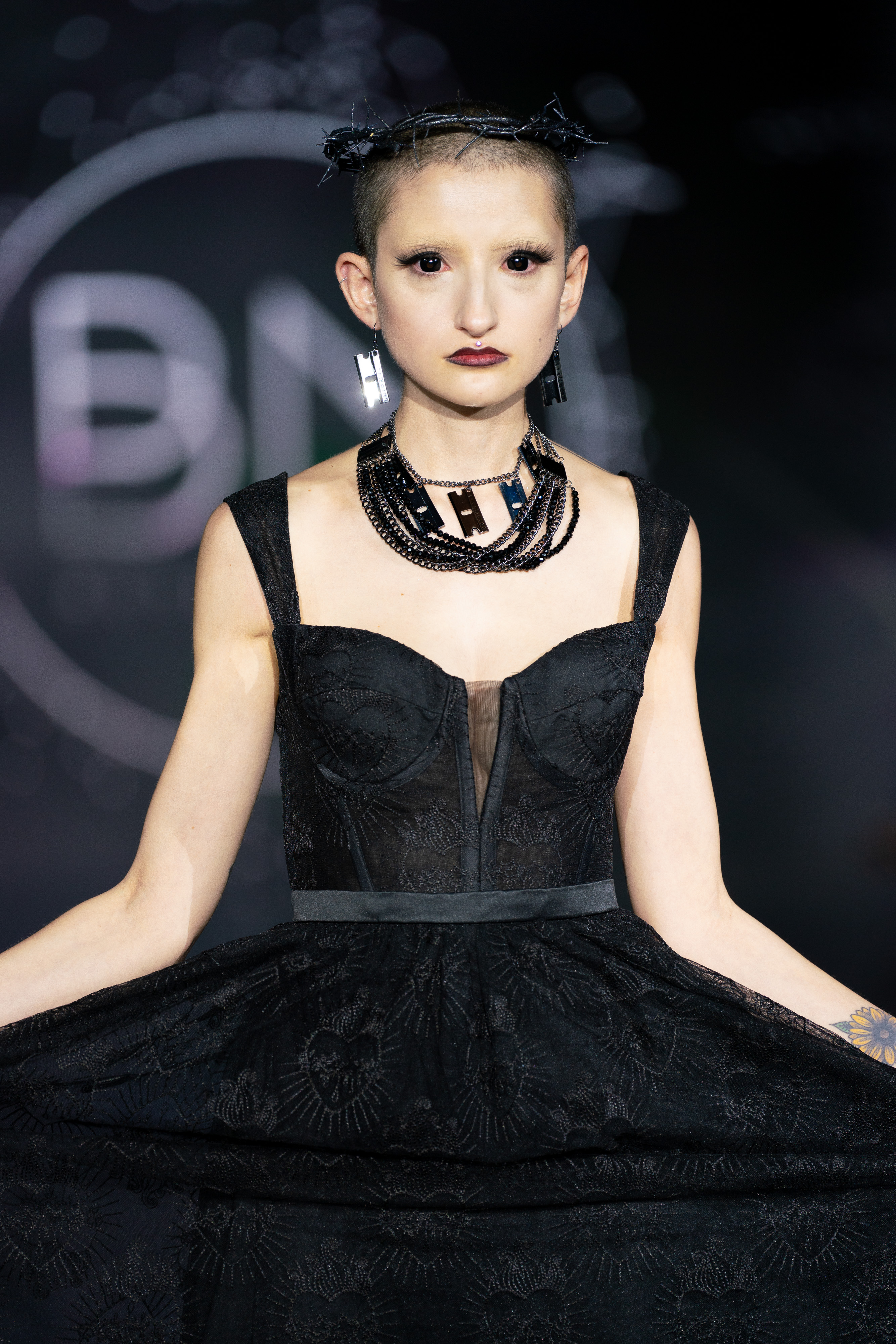
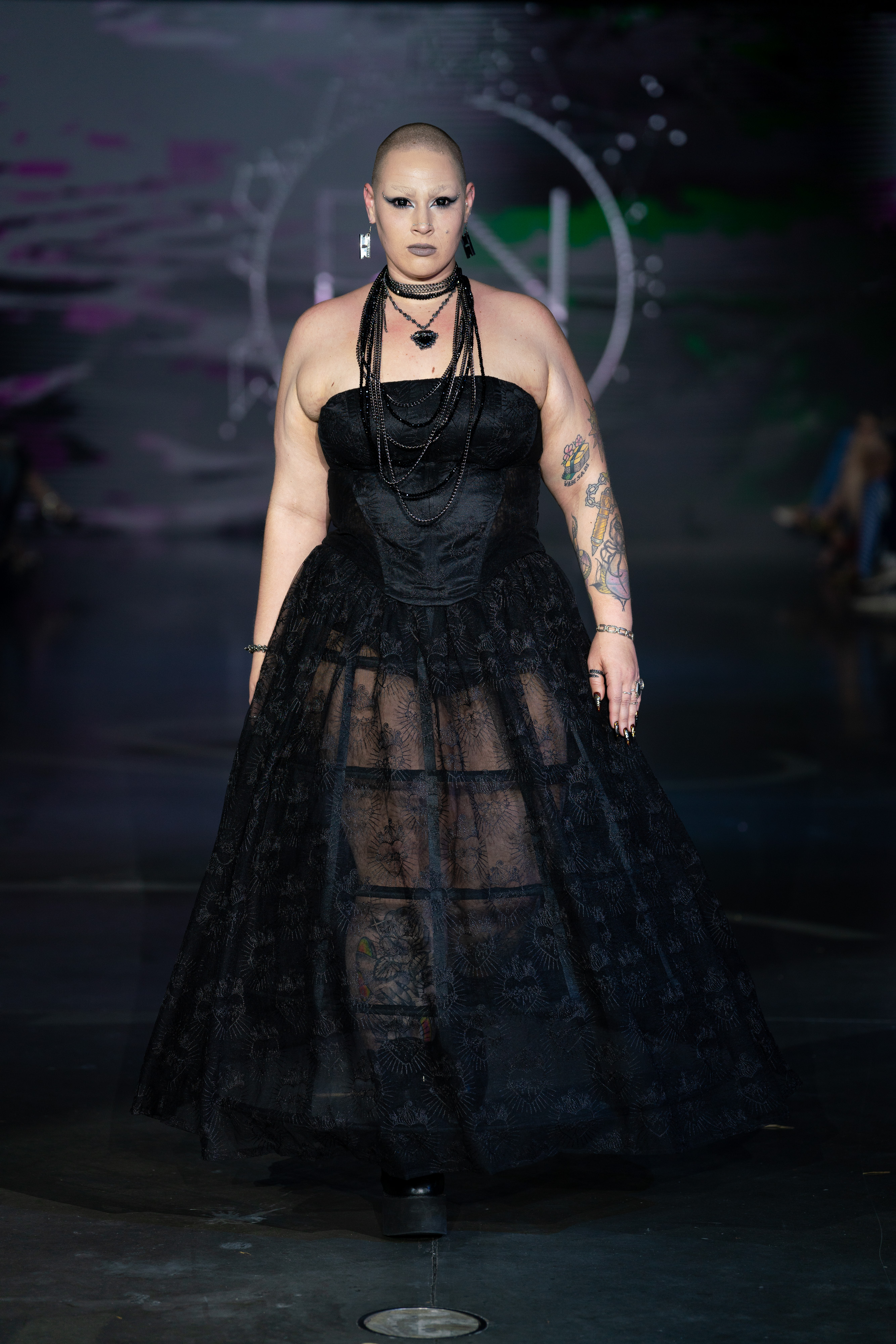
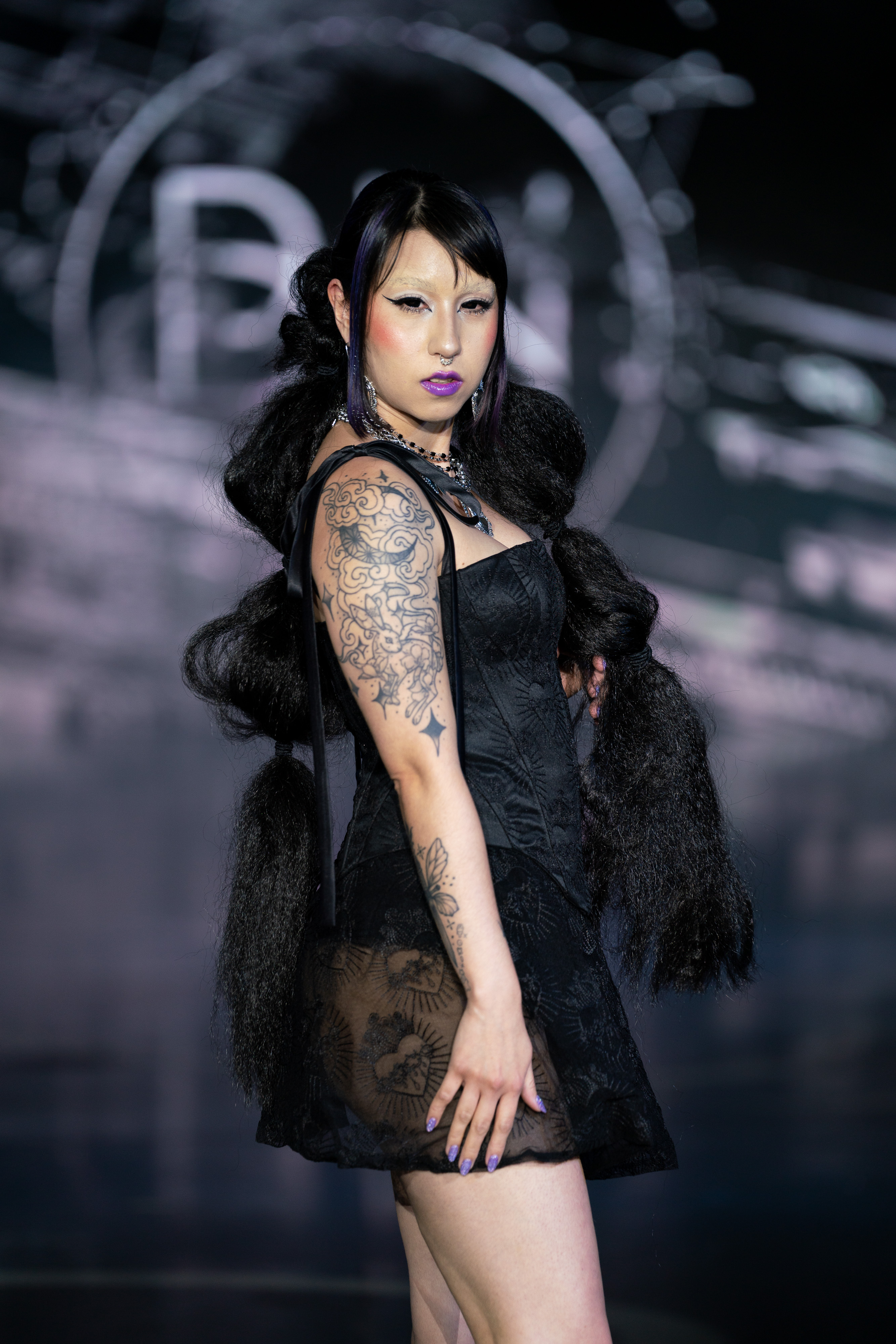
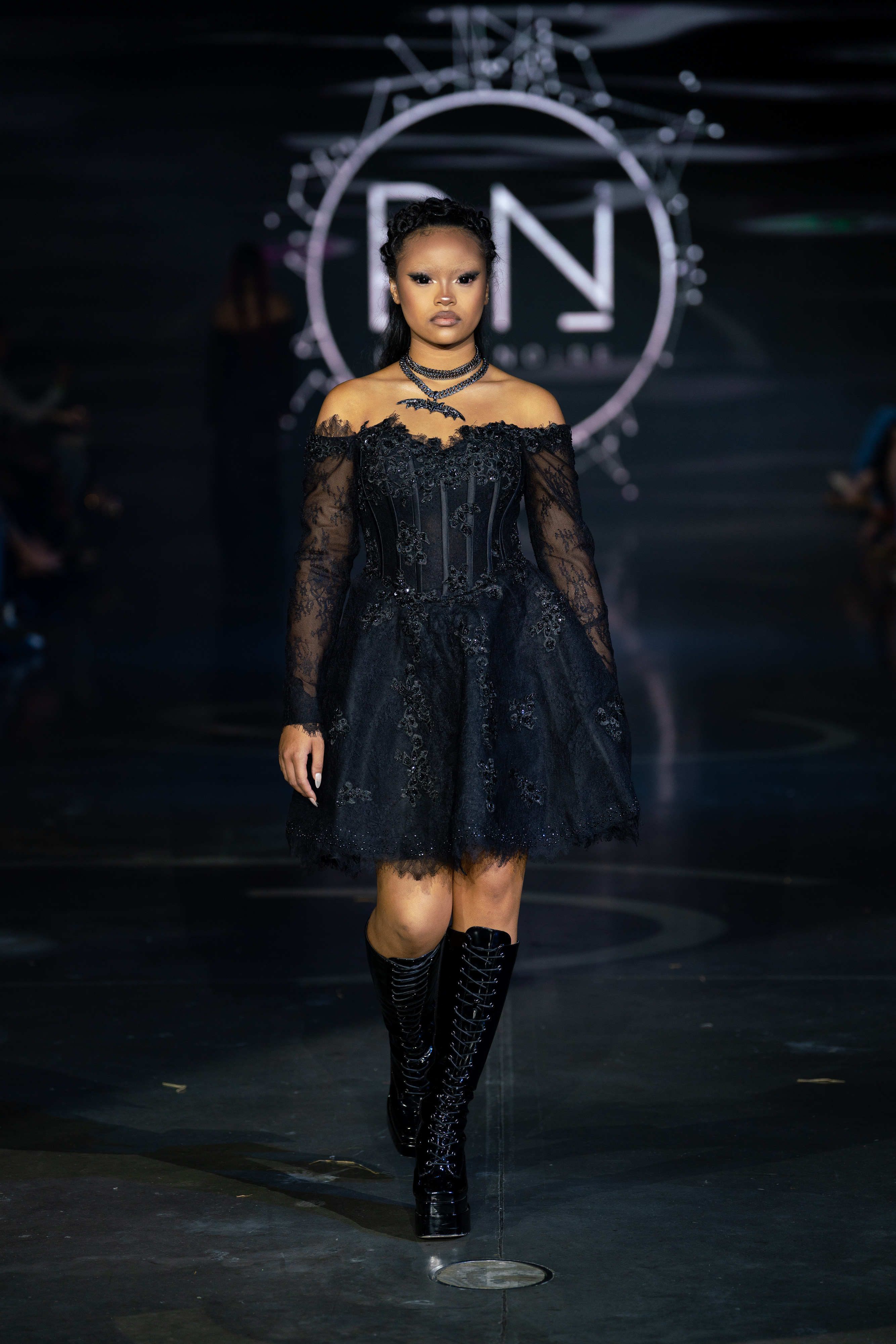
Titled “Eternal Darkness,” the collection was fully immersive from start to finish. Models moved slowly down the runway, pausing midway to lock eyes with the audience and revealing striking all-white or all-black contact lenses. Each garment was intricately sewn with satin and lace, pairing the traditional tailoring of corsets and full skirts with non-traditional elements, like skin-baring sheer tulle, jewelry made of razor blades and crowns of thorns.
Behind each look, a cinematic back track appealed to a different sense. The score included music from Baz Luhrmann’s adaptation of Romeo and Juliet, a personal favorite of Rau’s. And as Shakespeare’s most well-known more-bitter-than-sweet tragedy, the track perfectly underscored the suspense of the collection. Paired with the models’ slow pace and unearthly features, Bête Noire’s spring collection was truly chill-inducing, feeling as though it was taking place in a different time and space.
The collection reached its haunting climax as the final look descended the runway. As the music swelled to its cinematic peak, model Marisa Cannon reached the end of the runway in a white gown that stood apart from the all-black looks before it. But then came the reveal: black dye began to ooze from within the dress, slowly bleeding through the fabric and dripping down, turning the white fabric black as it went. As the darkness spread, the gown transformed, aligning itself with the others — its stark white overtaken and its true nature unveiled.
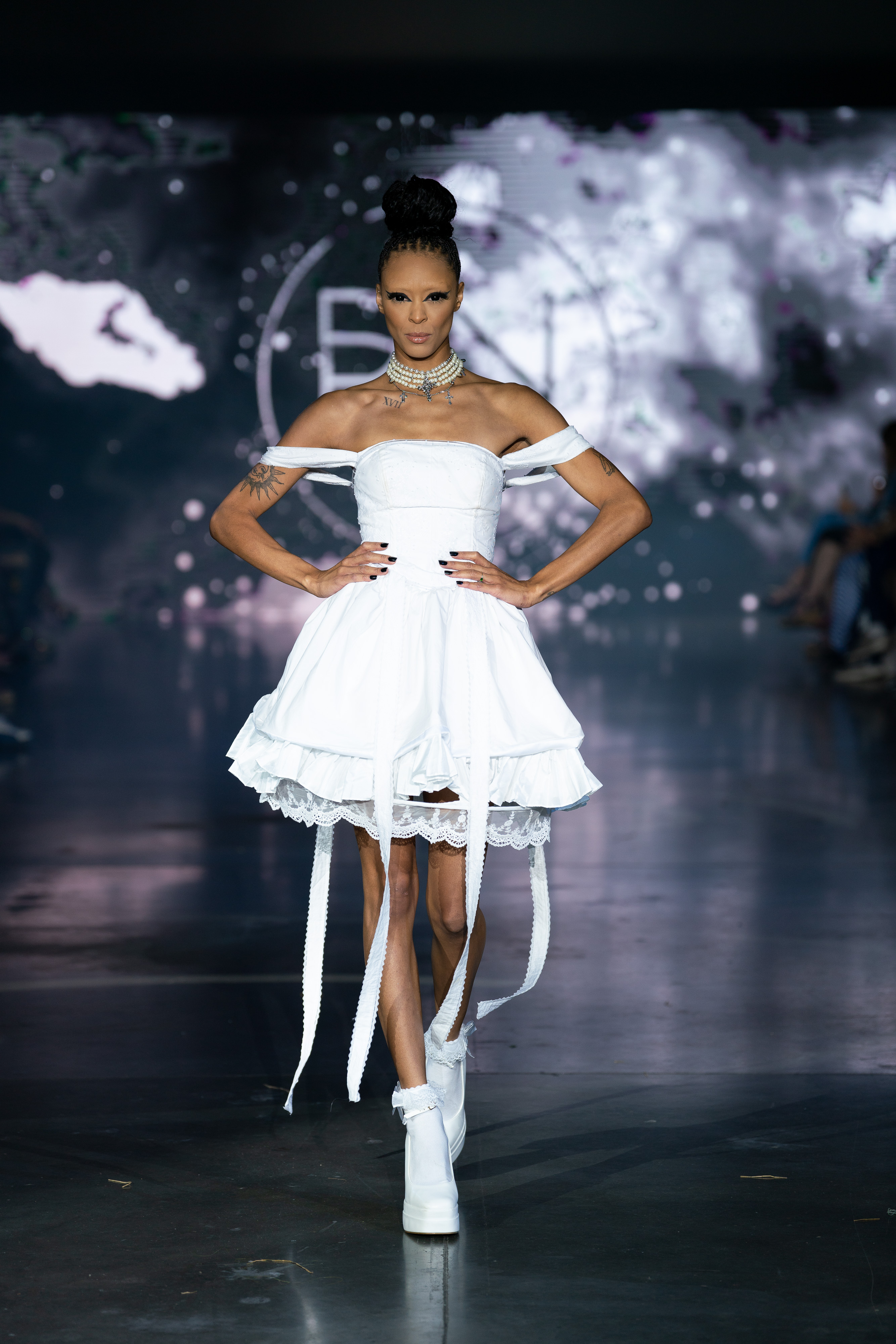
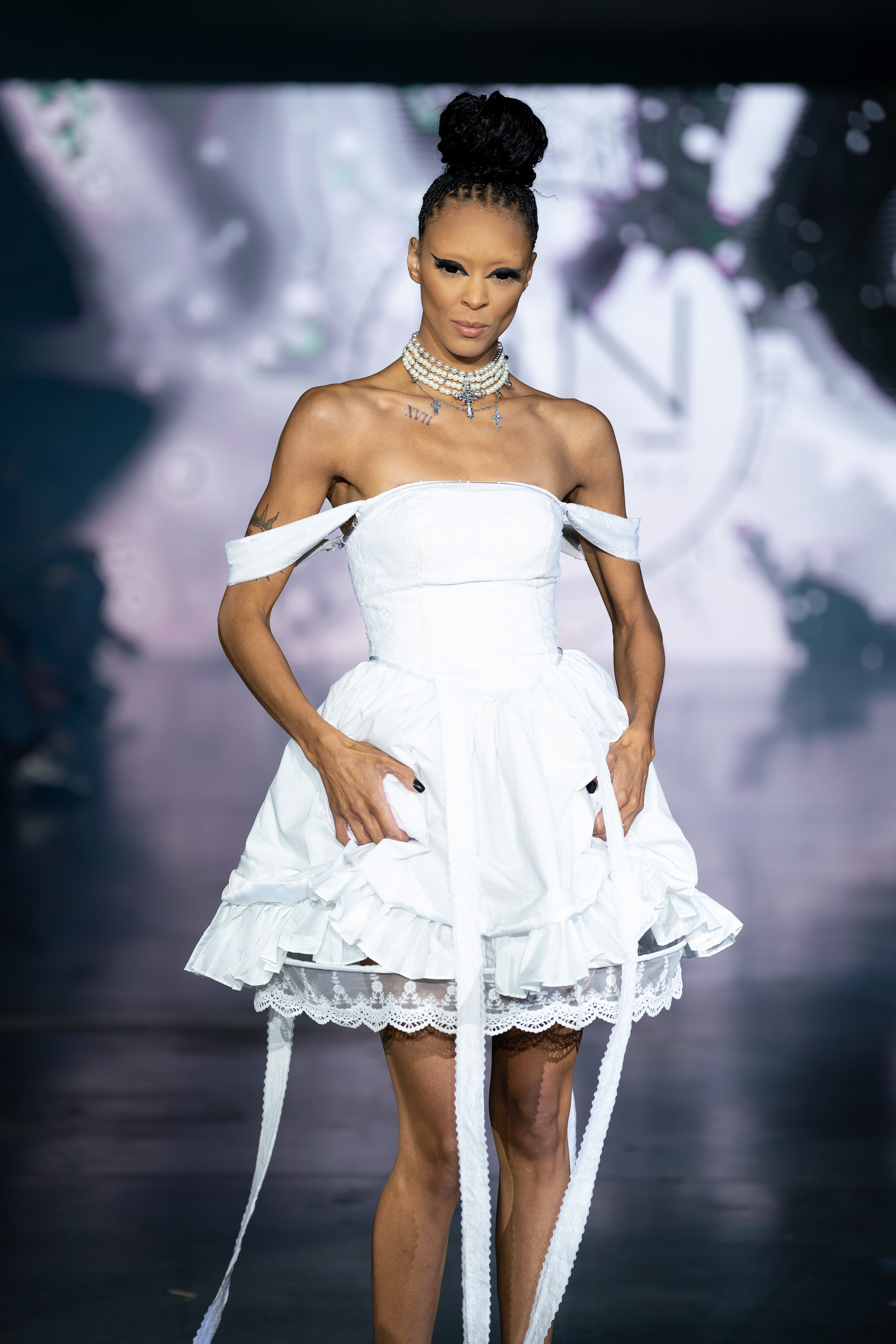
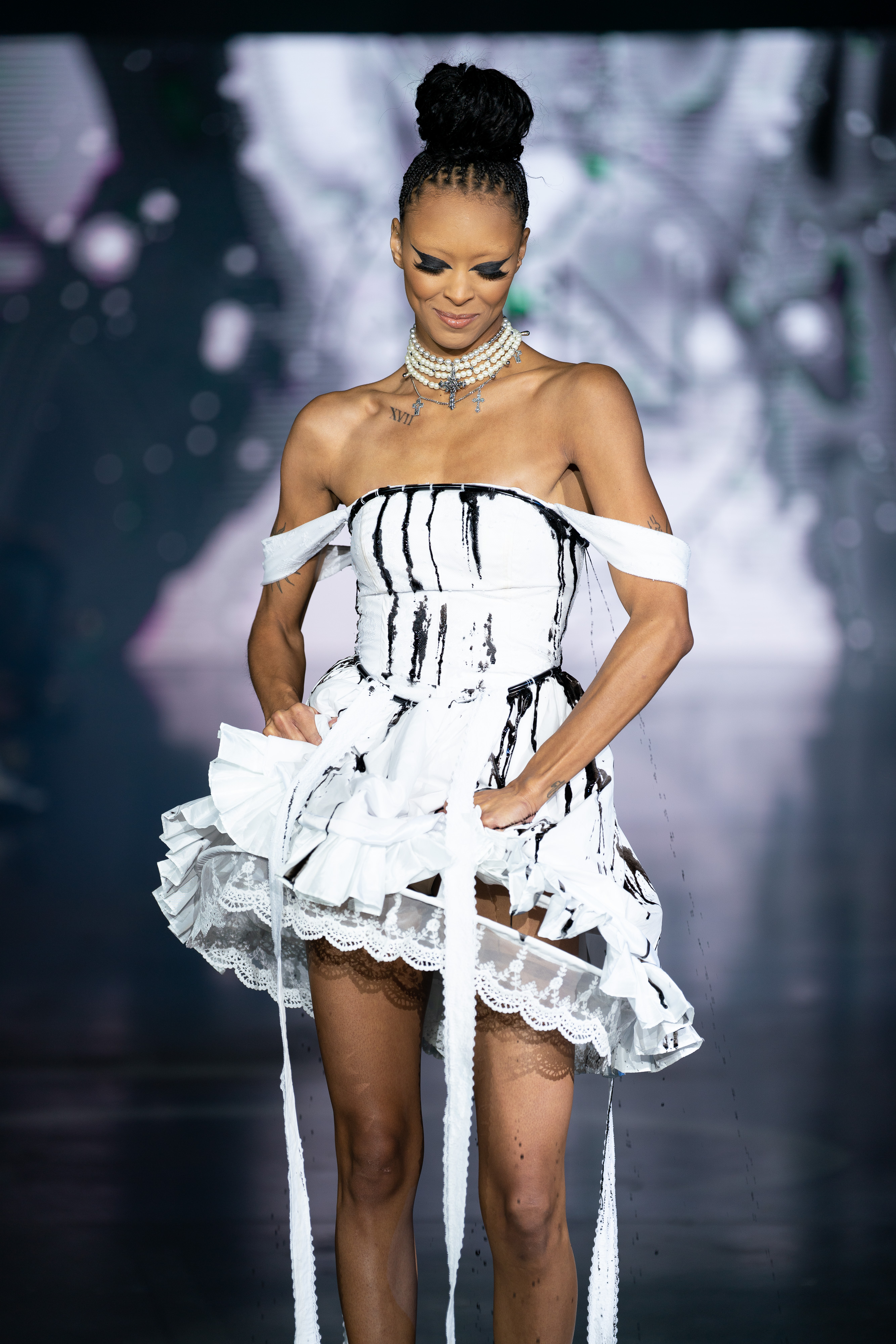
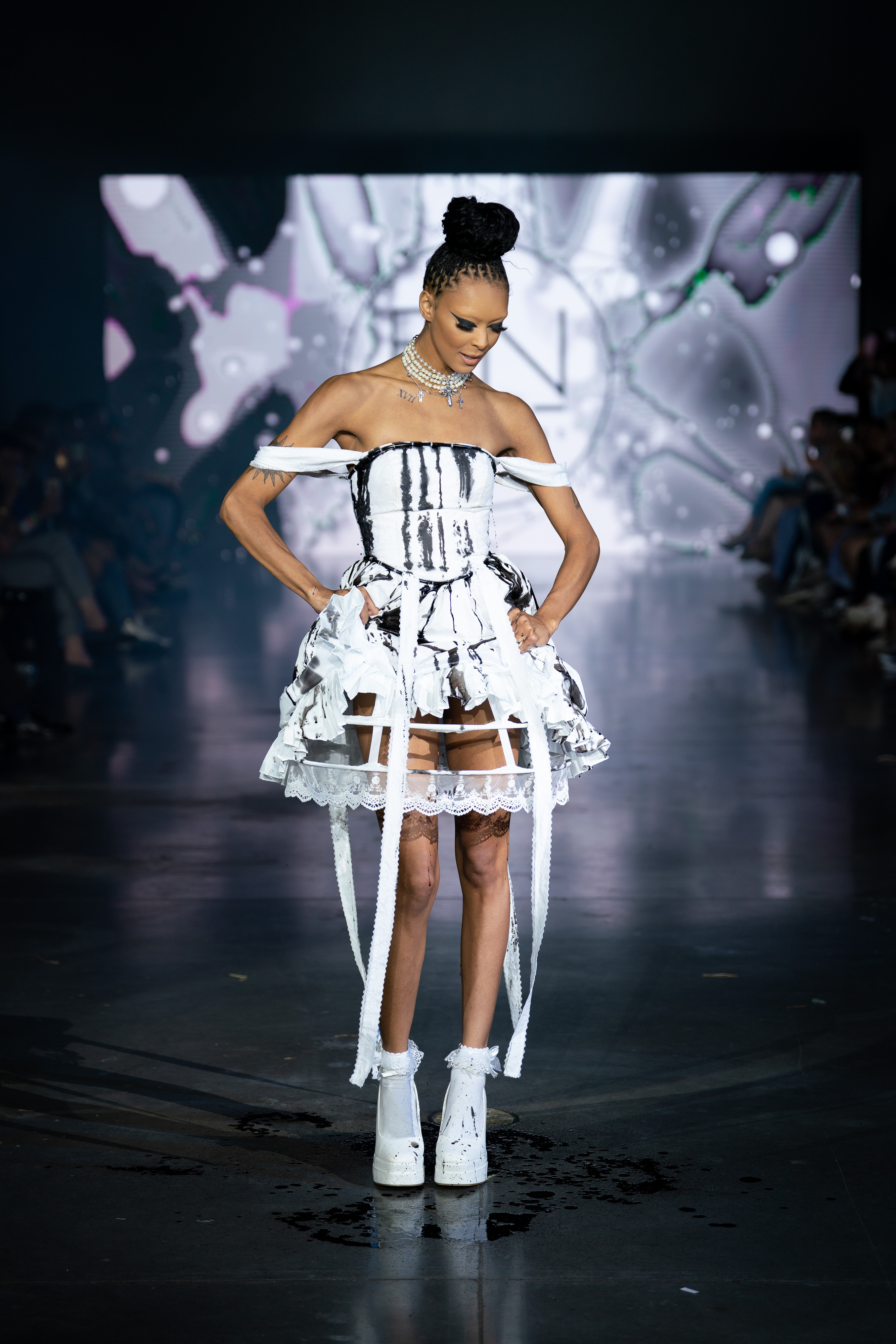
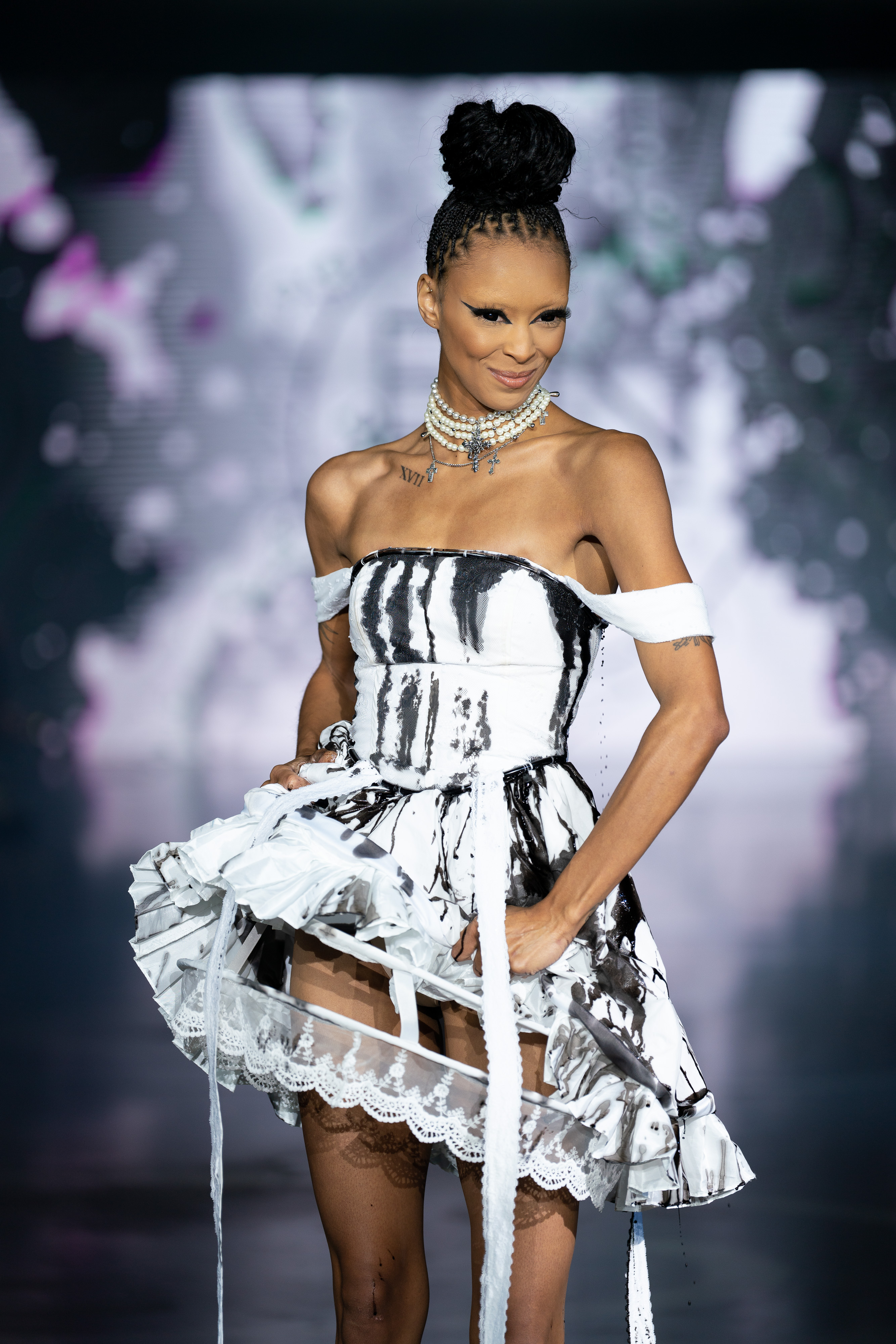
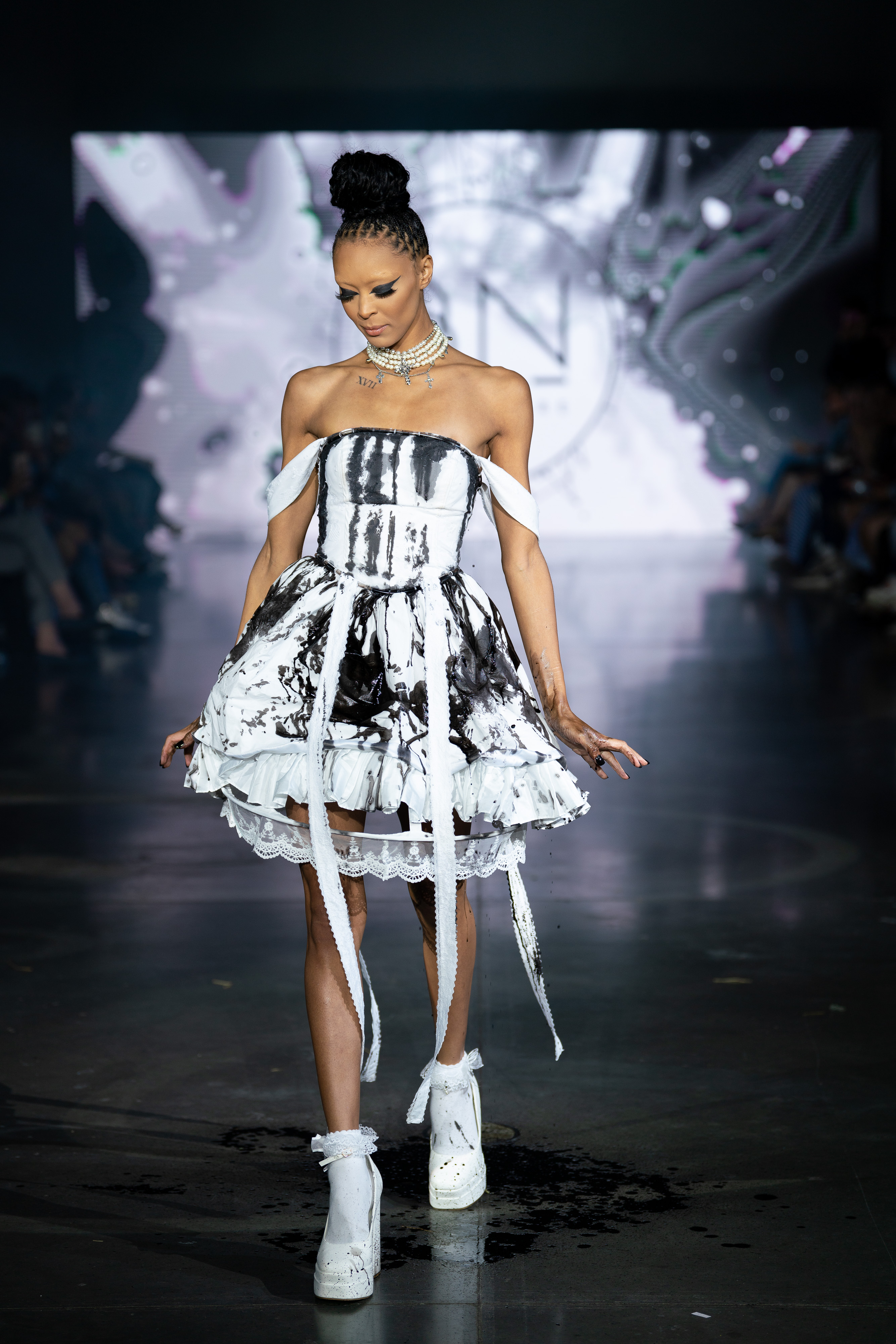
“The whole concept of the show was: the darkness is always going to consume you, so you must find beauty and power in the darkness,” Rau stated. “The white piece was symbolic. You think everything is happy and great now, and it’s not. But it’s so beautiful at the same time.”
In fact, the entire collection turned out to be symbolic to Rau. After the event wrapped that night, Rau felt overwhelming catharsis and a change in perspective. After putting this metaphor on the runway, Rau found that she actually did find the beauty and power in her own darkness.
“For so long – even during making that show – there was almost a part of me that was like ‘C’mon man. There’s always some bullshit going on.’ I had a really hard December leading up to it, but the crazy thing about that is a friend came up to me aftwerward and asked, ‘How did you come up with that?’” Rau recalled.
“And I looked at her and said “Girl, I’m fucked up.’ And we laughed, but I realized in that moment that there’s no way I could ever create that without what I went through.“
The show may have ended with the darkness overtaking the final gown, but for Rau, it was a release — and, unexpectedly, a turning point. For a designer whose work is rooted in personal experience, this collection felt different. More than just a metaphor played out on the runway, it was a culmination of years spent recognizing her darkness as something beautiful.
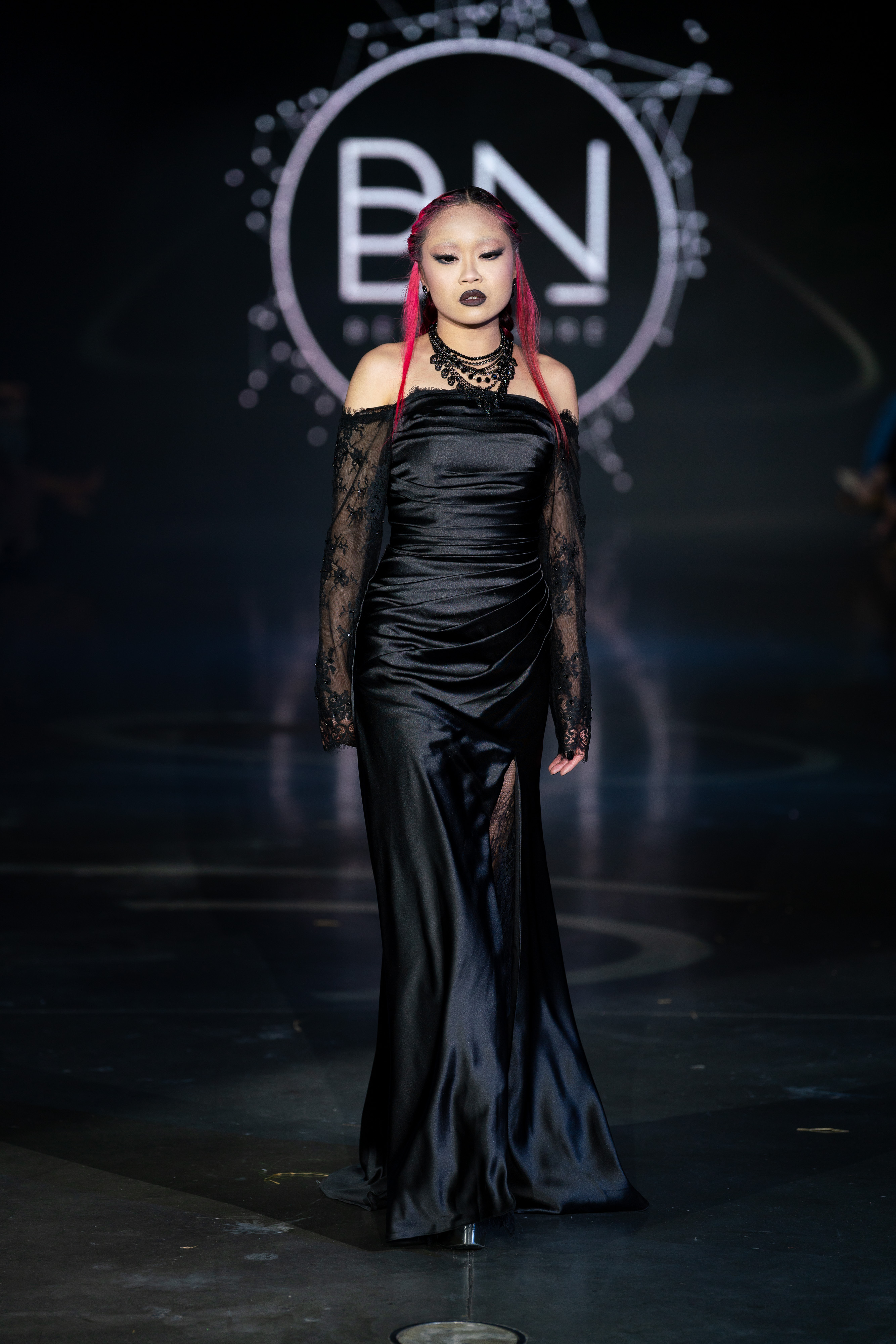
“The darkness that I have experienced is my ultimate power,” she said. “People are always looking for that thing that makes their art — how do you do this? Could you bottle it? Could you teach me? And I have to say, ‘I don’t know.’”
Rau has never tried to sanitize her work or make it easier to digest. The grief, anger and alienation she’s carried with her since childhood are stitched into every project, not for shock value but because it’s the most honest and authentic way she knows how to create. “That’s the foundation of it,” she said. “To me, [those experiences] are the foundation of good art.”
But something shifted after this show. “From that Spring show, I have so much gratitude for my life and my past,” she shared. “And my life is shifting now — I don’t feel like bad things are going to happen. Good things are happening now. It was such a metaphorical experience from start to finish.”
And while the final look may have served as a visual climax for the audience, for Rau, it was something quieter and more profound: the moment she realized that darkness and those challenges are her ultimate power.
It was also a technical feat.
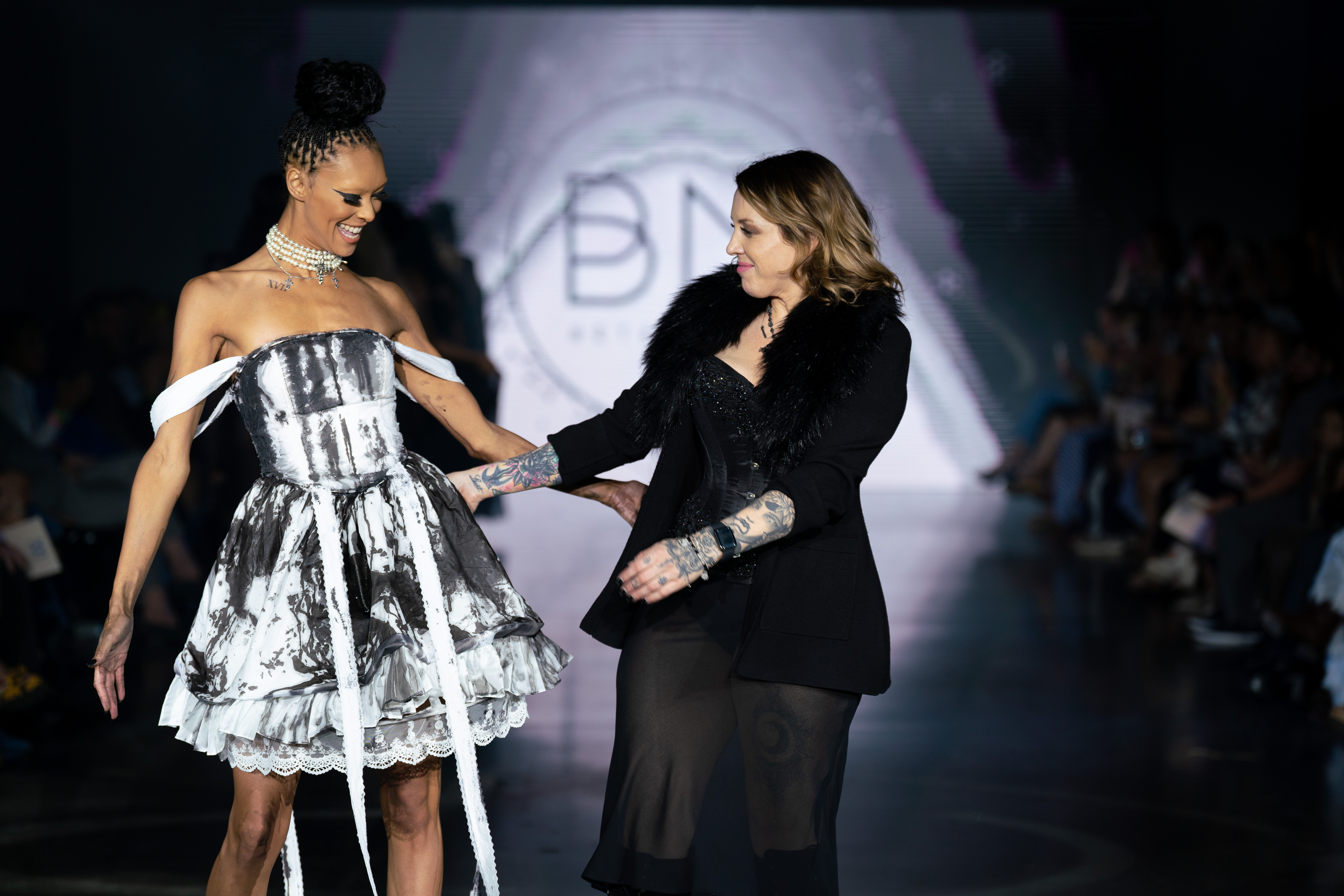
Rau came up with the concept of the bleed-out dress in just two days. The first version, made from satin (despite her husband Dan’s warnings), served as a rough trial. The second was more refined: IV bags were stitched into the (now cotton) skirt, and IV tubing was threaded through the bodice. Dan drilled holes at specific angles to control the flow, and they tested the system with water before showtime. The idea was simple, but executing it took time and precision.
Still, Rau has no interest in keeping the process to herself.
“Some people gatekeep, but being an inspiration to someone is the highest form of flattery,” she said. “I would never do that show again, so why would I ever hold onto that knowledge? I want to see people do it. I’d love to see people take inspiration and do their own take on it.”
The bleeding gown may have been the showstopper, but much of the Eternal Darkness collection was equally intricate. Rau designed and manufactured custom lace in her studio, woven with sacred hearts (a technique originally inspired by a bride who asked her to recreate her husband’s back tattoo on her veil).
“If you look close, lace like that has never been made before,” Rau said. “It’s still considered lace because of the threads that are woven into the fabric. It’s basically just embroidery through the fabric — but it’s more conducive to actual wear because it’s woven in on tulle, so it doesn’t get caught on your rings.”
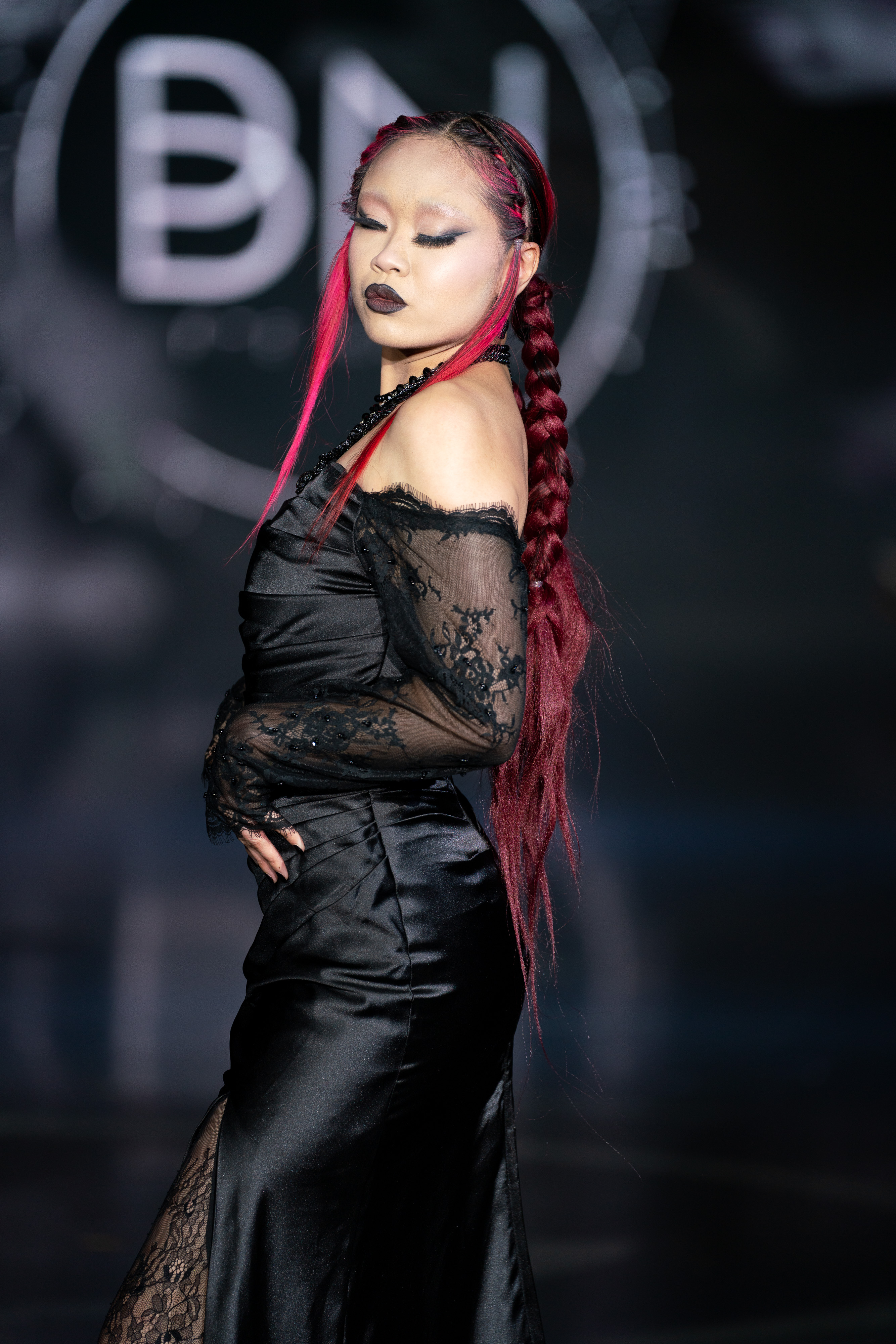
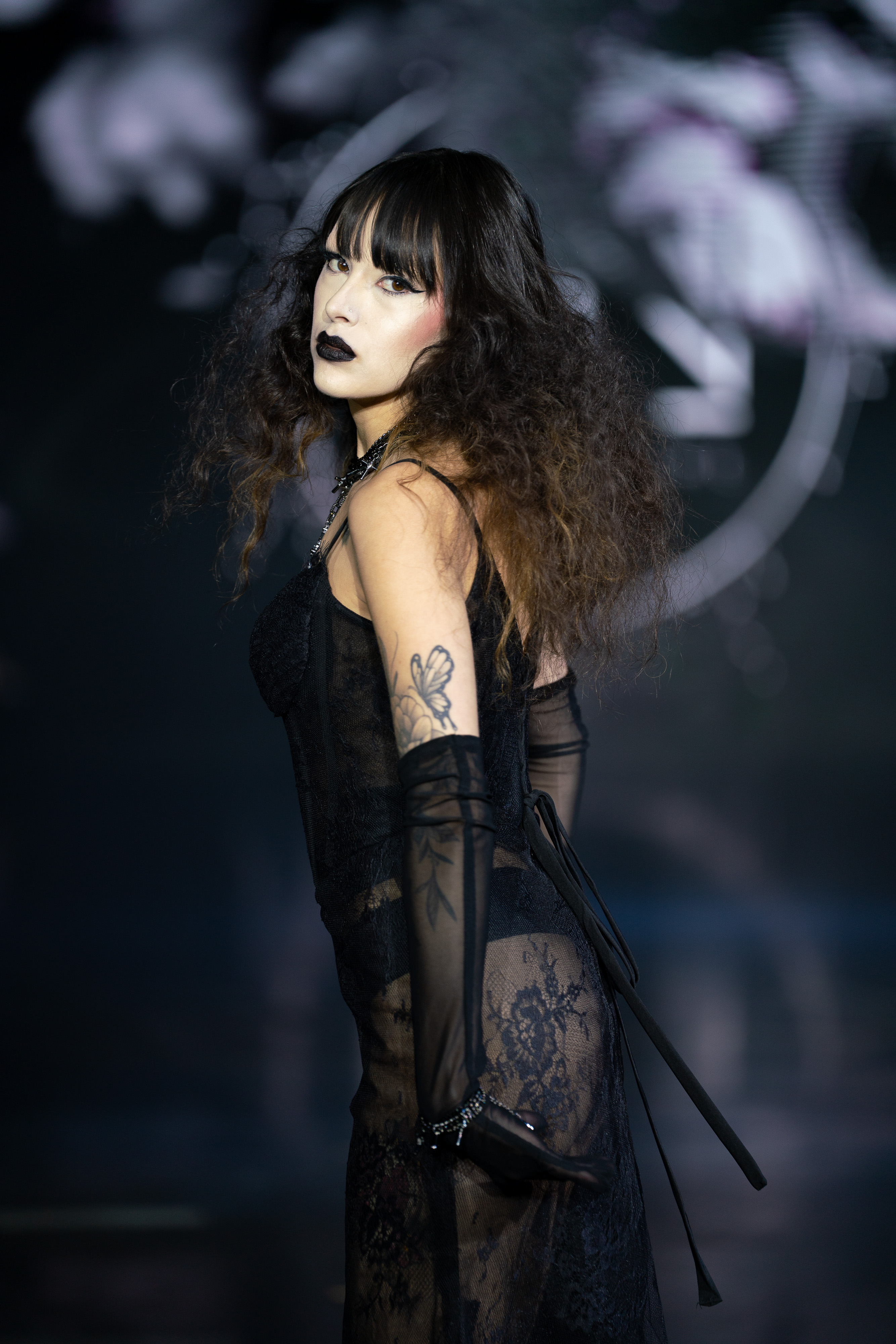
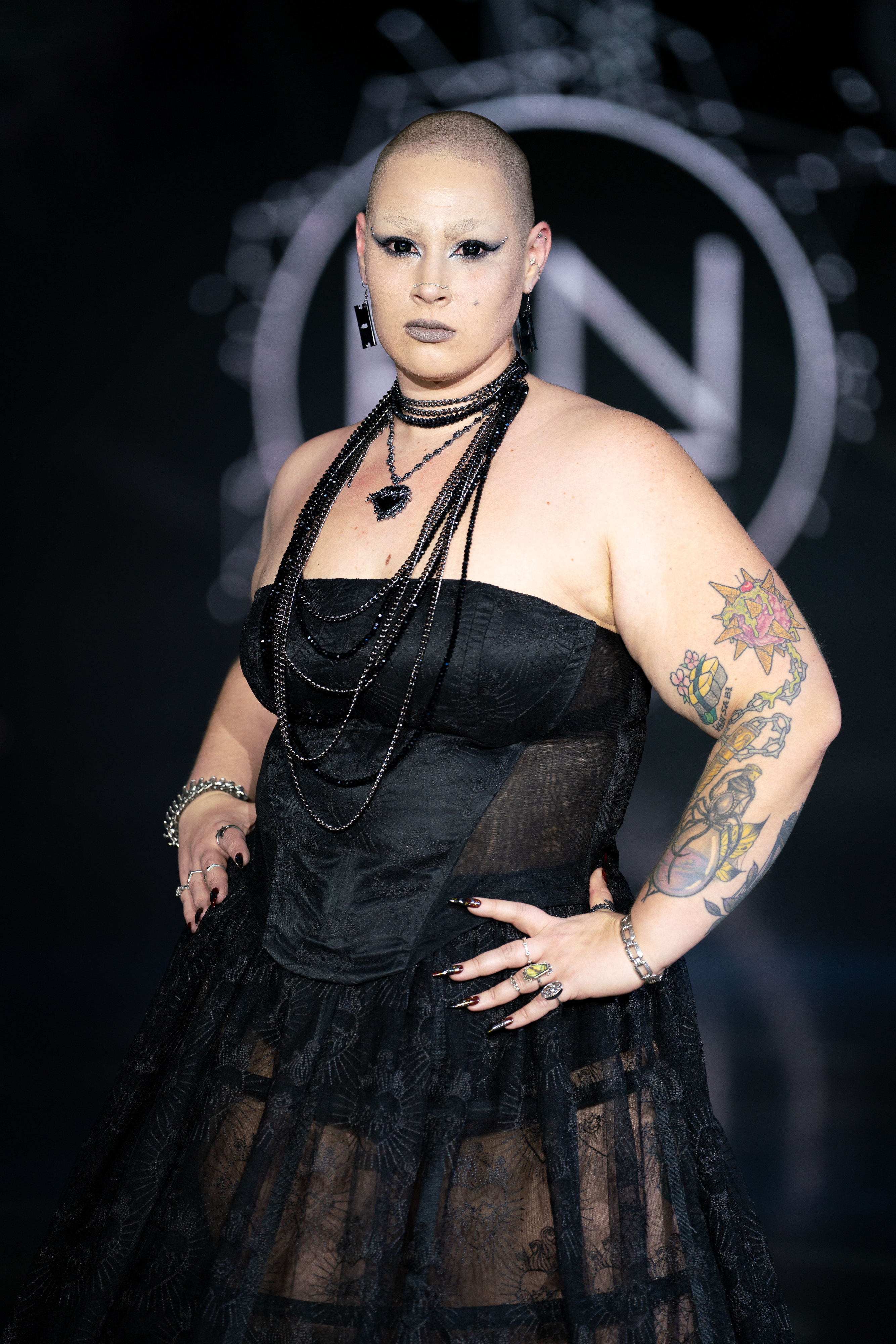
Alicia Rau has always done things her own way: deliberately non-traditional and unapologetically authentic. While others encouraged her to lean into fast fashion and traditional marketing, Rau made a name for herself with high-quality, slow-made garments that reflect her unique vision.
In Bête Noire’s future, Rau hopes to continue doing just that. She wants to expand her ready to wear line of quality alternative garments and start selling her custom lace by the yard (even to her competitors). After all, in Rau’s eyes, what makes Denver Fashion Week special is the refusal to conform to the designer-eat-designer aggression that’s so widespread in the industry.
“There’s something very authentic about the energy in Denver and I think that also starts with the people that are at the core,” she said. “We can all share a space here because it doesn’t feel like a competition. It’s just a showcase of wonderful art.”
READ: Not Your Average Fashion Week: DeWitt and Urmann Make Space For Weirdos (And Everyone Else) at DFW
And now that Rau has learned to harness her power, she’s enthusiastic to see others do the same. Her advice for those who recognize themselves in her story — the outcasts, the weirdos, the creatives — is clear: “Trust yourself. Authenticity is your strongest asset. In a world overflowing with trends, staying true to your vision can feel isolating, but it’s what will set you apart.”
Pieces from Bête Noire’s Eternal Darkness collection are now available for purchase. All photography by Weston Mosburg.