



When Chef Toshi Kizaki and his brother, Yasu, opened Sushi Den in 1984, South Pearl Street was a very different place. Denver was a very different city, and its restaurant scene was sparsely populated with few if any restaurants worth discussing at all, let alone sushi spots of note. But all that has changed in the more than 40 years since the brothers’ flagship eatery broke ground, breaking the mold in the process of Denver’s space in the culinary landscape.
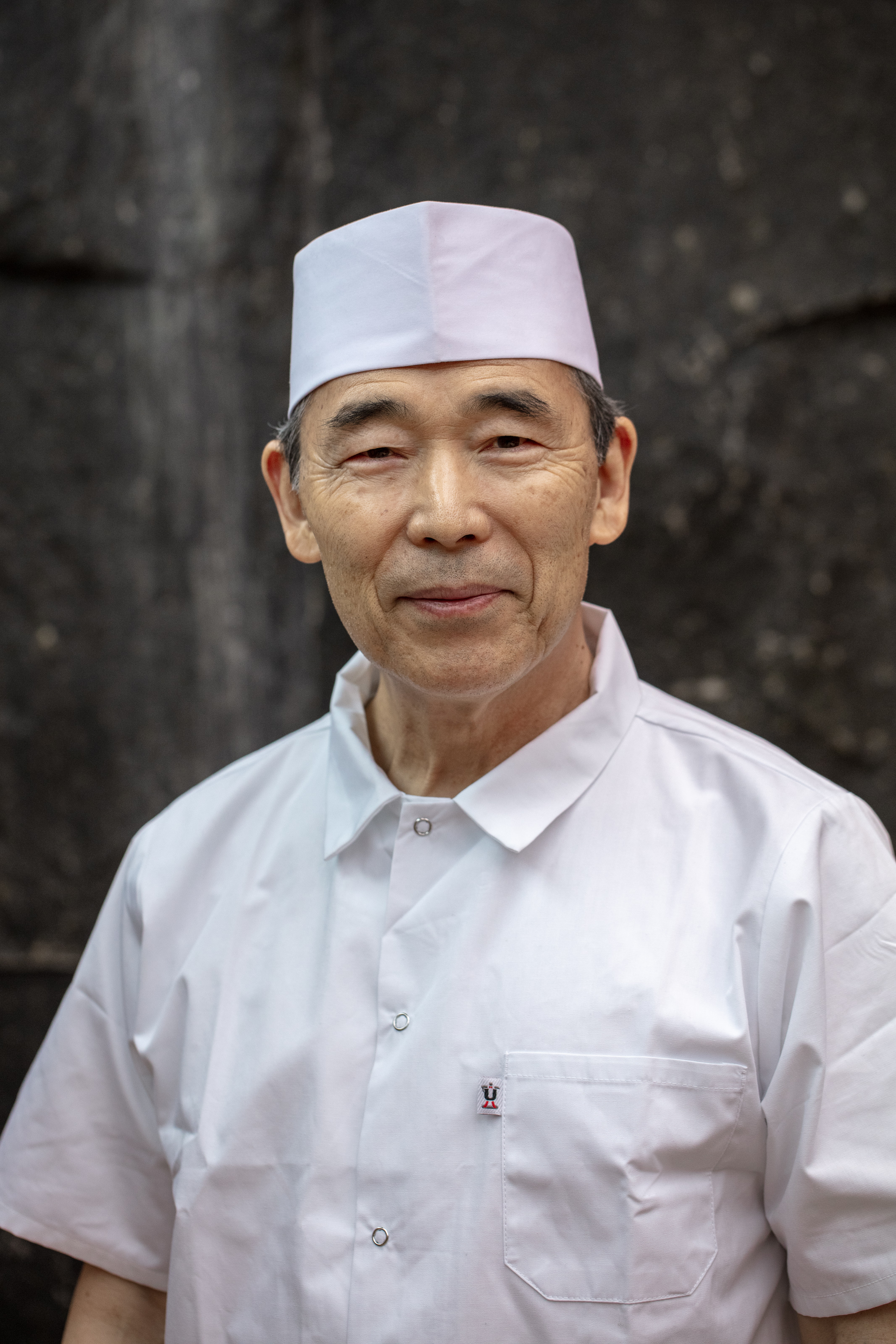
“Sushi Den didn’t used to look like it does now,” explained Kyle Kim – the Kizaki cook whose transformative role throughout the 23-course omakase menu also bestows upon him the unspoken titles of host, translator and teacher to the guest. “Toshi likes to say it used to look a lot more like this,” he continued, motioning from one end of the nine-seat counter to the other.
Bathed in warm light that catches glints of Japanese steel and shimmering ice blocks, built of bamboo and Siberian Elm and brought to life by the subtle sounds of cuts and sushi rice being pressed into a palm, Kizaki’s design is a celebration of the understated perfectionism that underlines the cuisine at hand. There are ceramic koi fish ice buckets for presenting selections from the unparalleled sake menu – curated by sake sommelier, Yuki Minakawa. There is a koi painting on the wall to match. The olive-green tile behind the range, behind the four-person team of cooks – which includes Chef Toshi himself – is the only other source of non-wood-tone color. The color then comes from the fish.
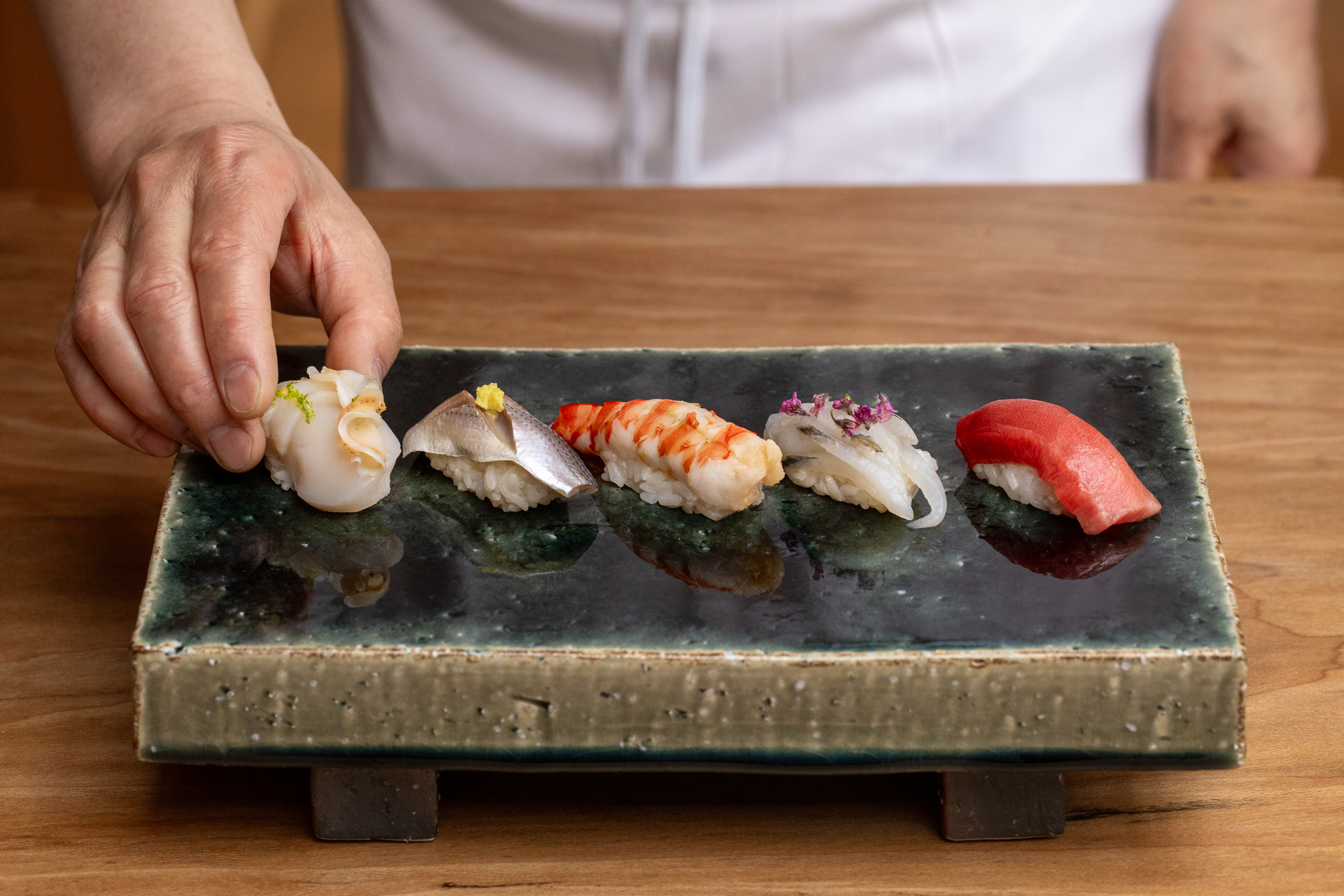
Like the design of the restaurant itself, and as the cuisine’s tenets intend, the experience is in service of the highest quality ingredients that only comes together properly when allowing the fish to speak for itself. That was the goal from the beginning. For 40 years, Sushi Den – and subsequently Izakaya Den, OTOTO and Temaki Den – have been an image of defiance against the notion that you can’t get good seafood this far from the ocean. Flying in fish handpicked by Toshi and Yasu’s youngest brother multiple times every week from – among other places – the famed Nagahama Fish Market in Southern Japan, the ideals at the heart of Sushi Den’s now extensive kingdom have long proven the naysayers wrong, and have since the beginning been influential on the makeup and evolution of Denver’s food scene.
Today’s map dotted with fine dining restaurants and starred by Michelin wouldn’t have found its way to such prominence if two brothers from Japan hadn’t risked it all to serve their food. Now, chef Toshi is bringing it back to where he started in hopes of earning the Sushi Den name – the Kizaki name – the very accolades his perseverance and perfectionism helped bring to the city.
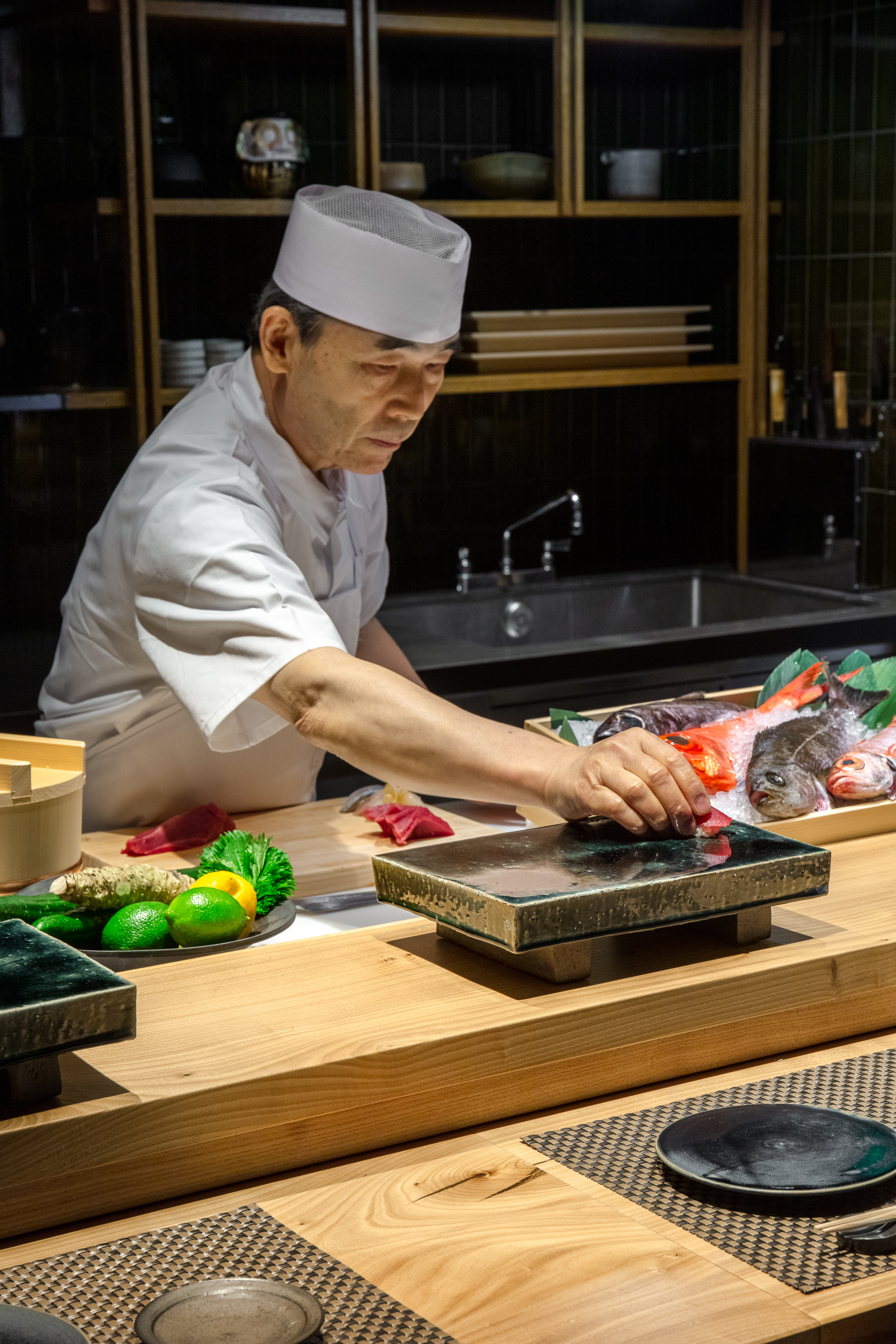
Kizaki’s menu – like that of Sushi Den and Izakaya Den – adjusts with the seasonality of fish. But generally, it aims to serve about twenty courses through a progression in the spirit of Tokyo’s old village roots – Edomae. Some hot, but predominantly chilled, mostly fish and no other sources of meat, the omakase rolls through a series of waves building towards crescendo, collapsing back to something minimal and pure before building again.
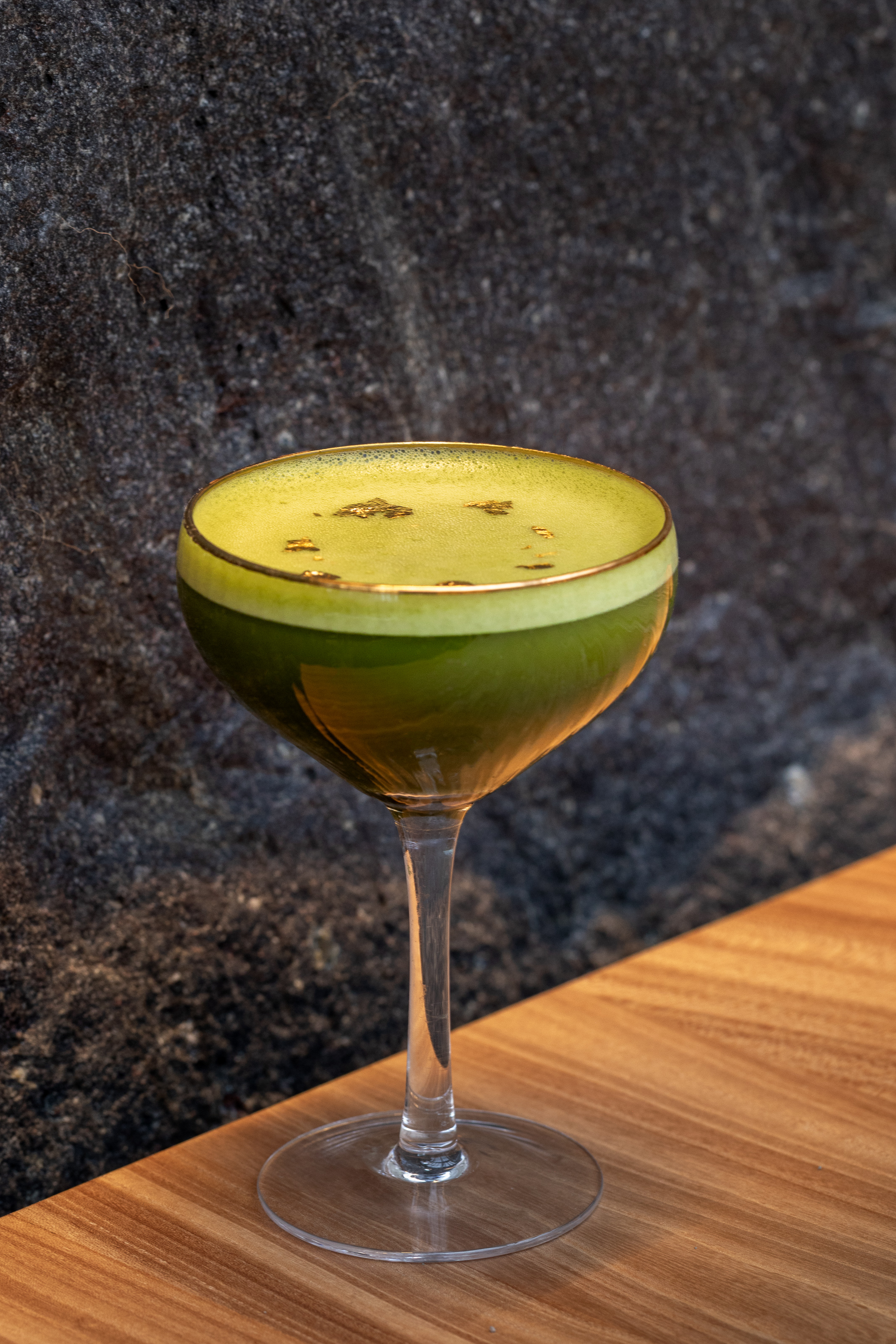
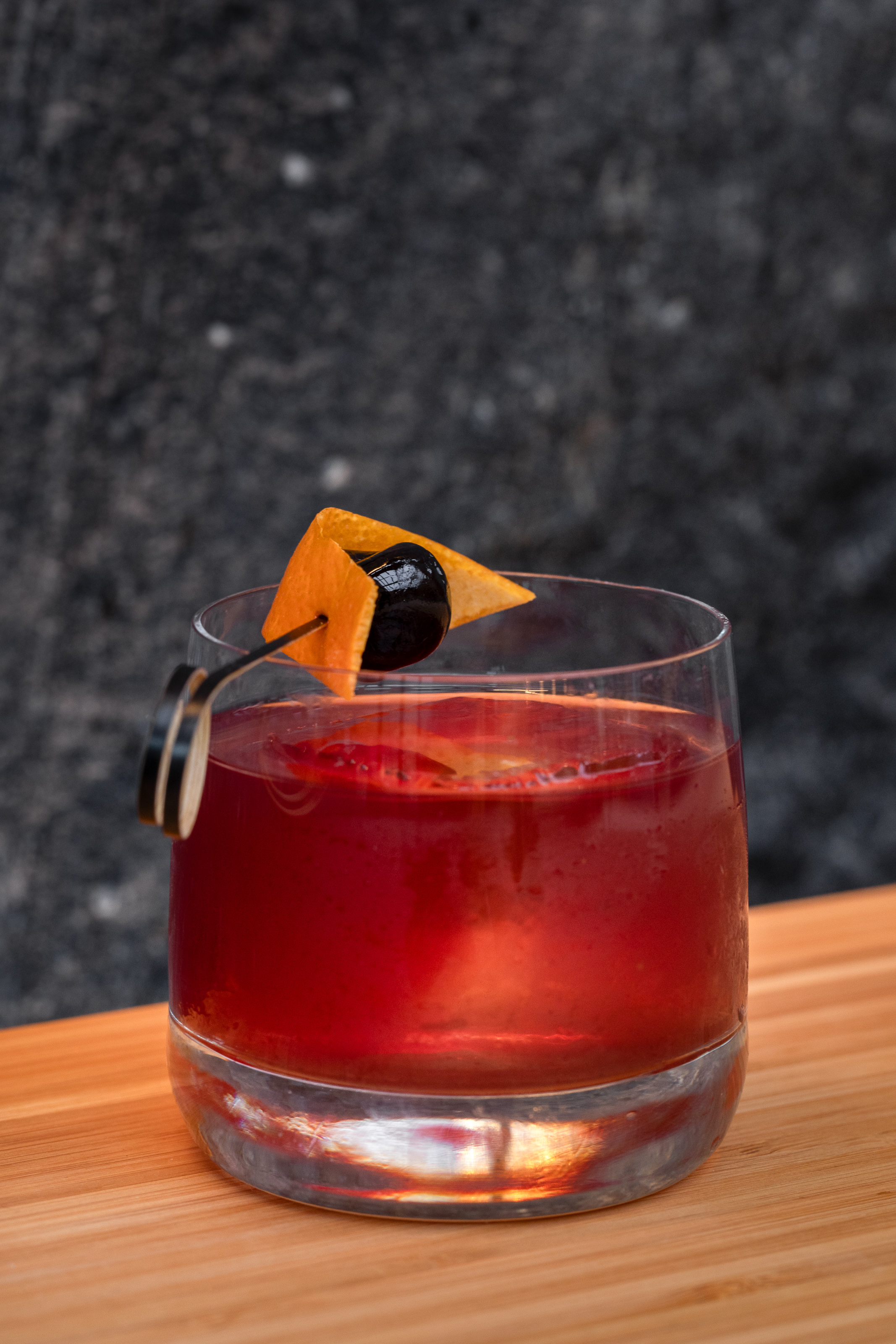
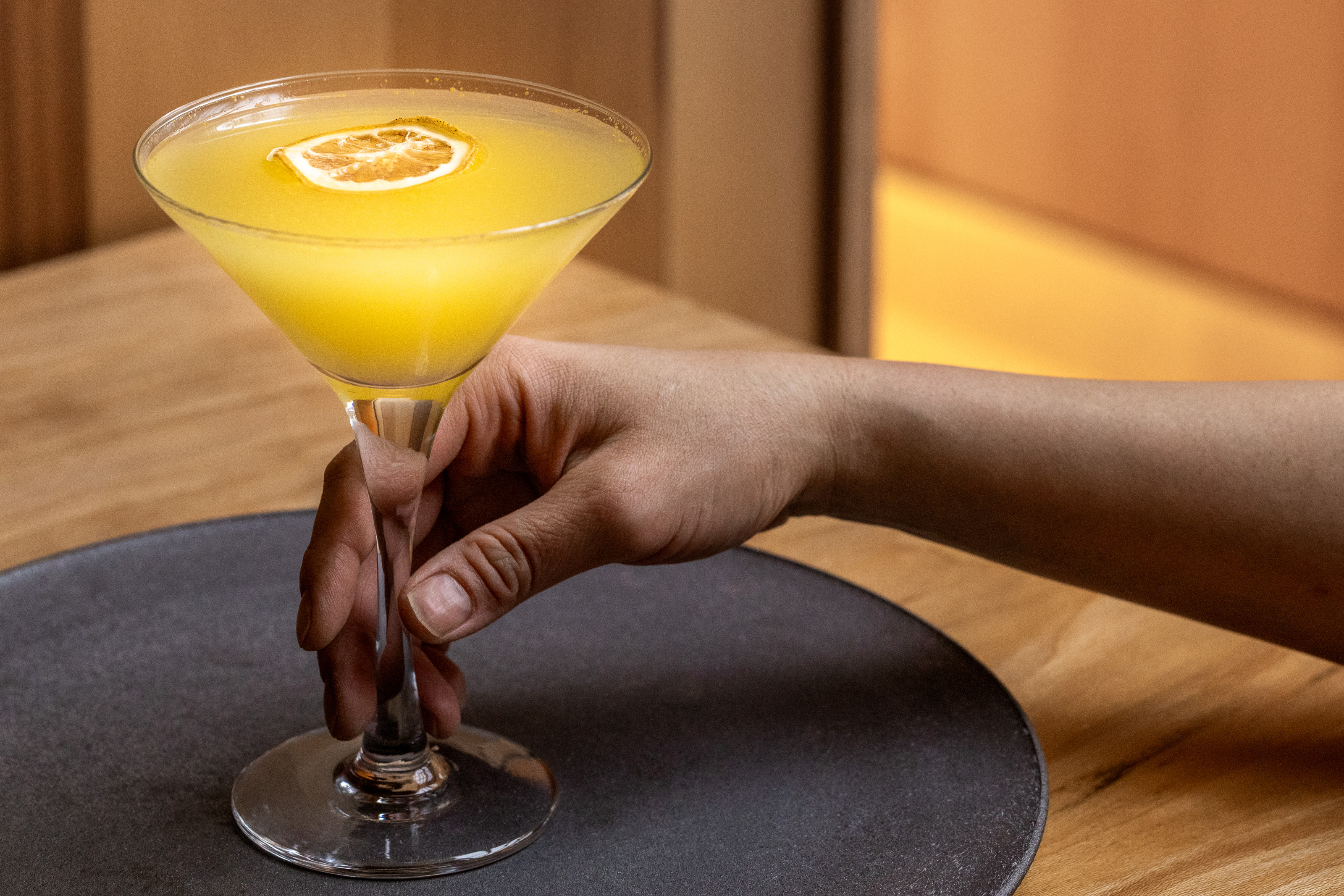
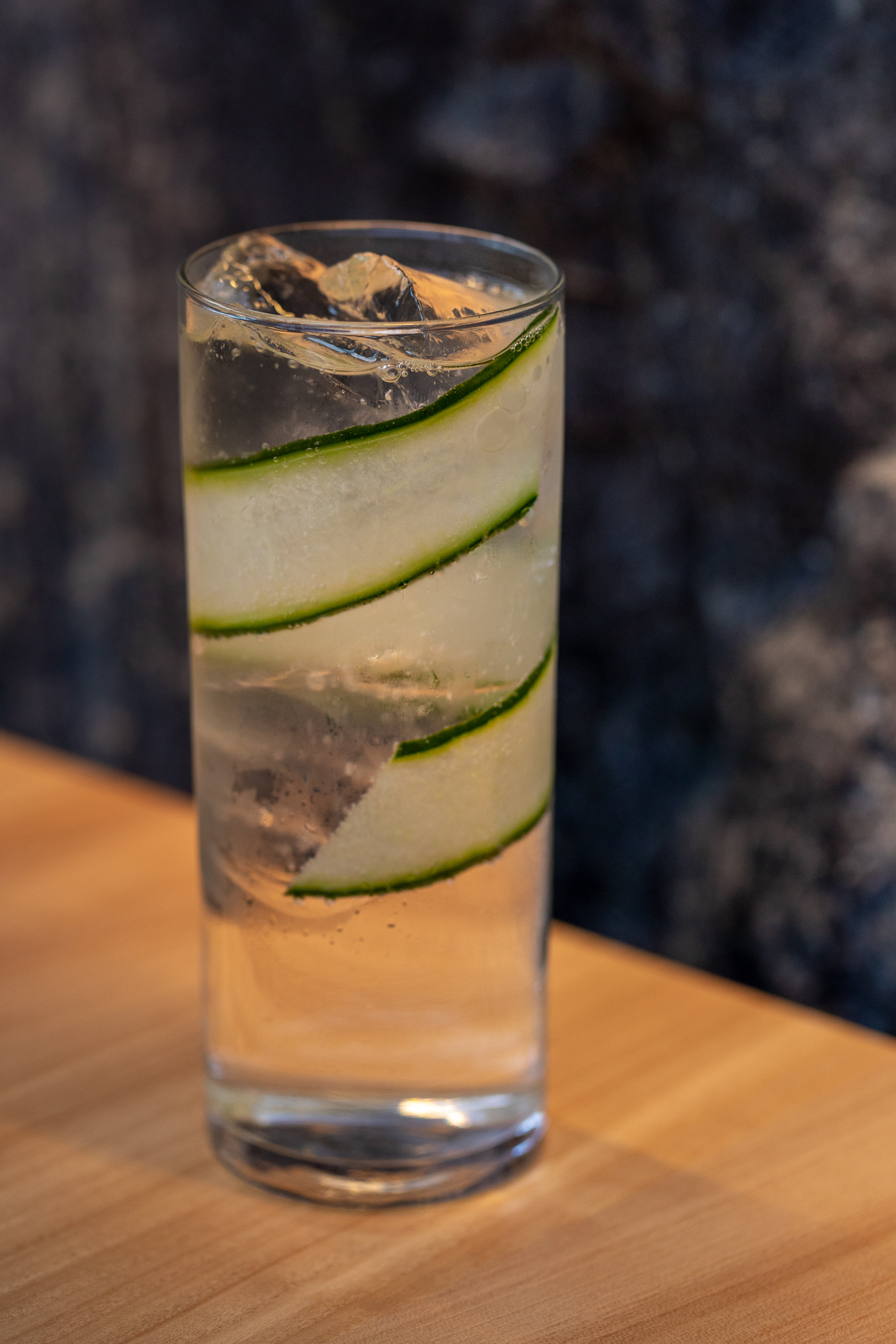
After a Saketini and a Yuzu Martini at Denchu – a brightly designed South Pearl Street-facing space flooded with natural light and now partially serving as home to Chef Justin Fulton’s Margot restaurant after a run as a pop-up at Uptown’s Coperta – guests are brought into the much more dimly lit and intimate Kizaki counter to begin their omakase experience. There are both wine and sake pairing options available from the bar, as well.
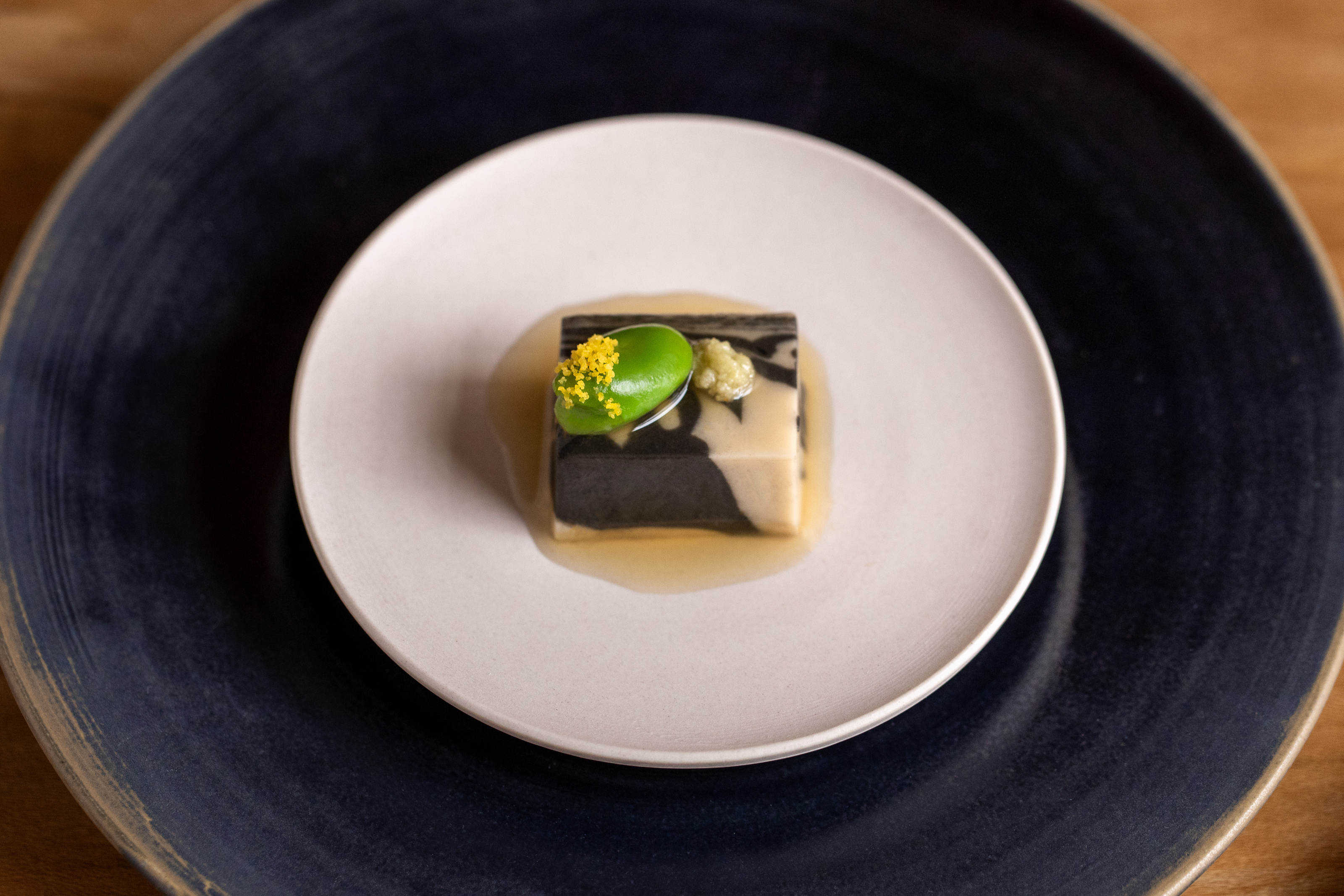
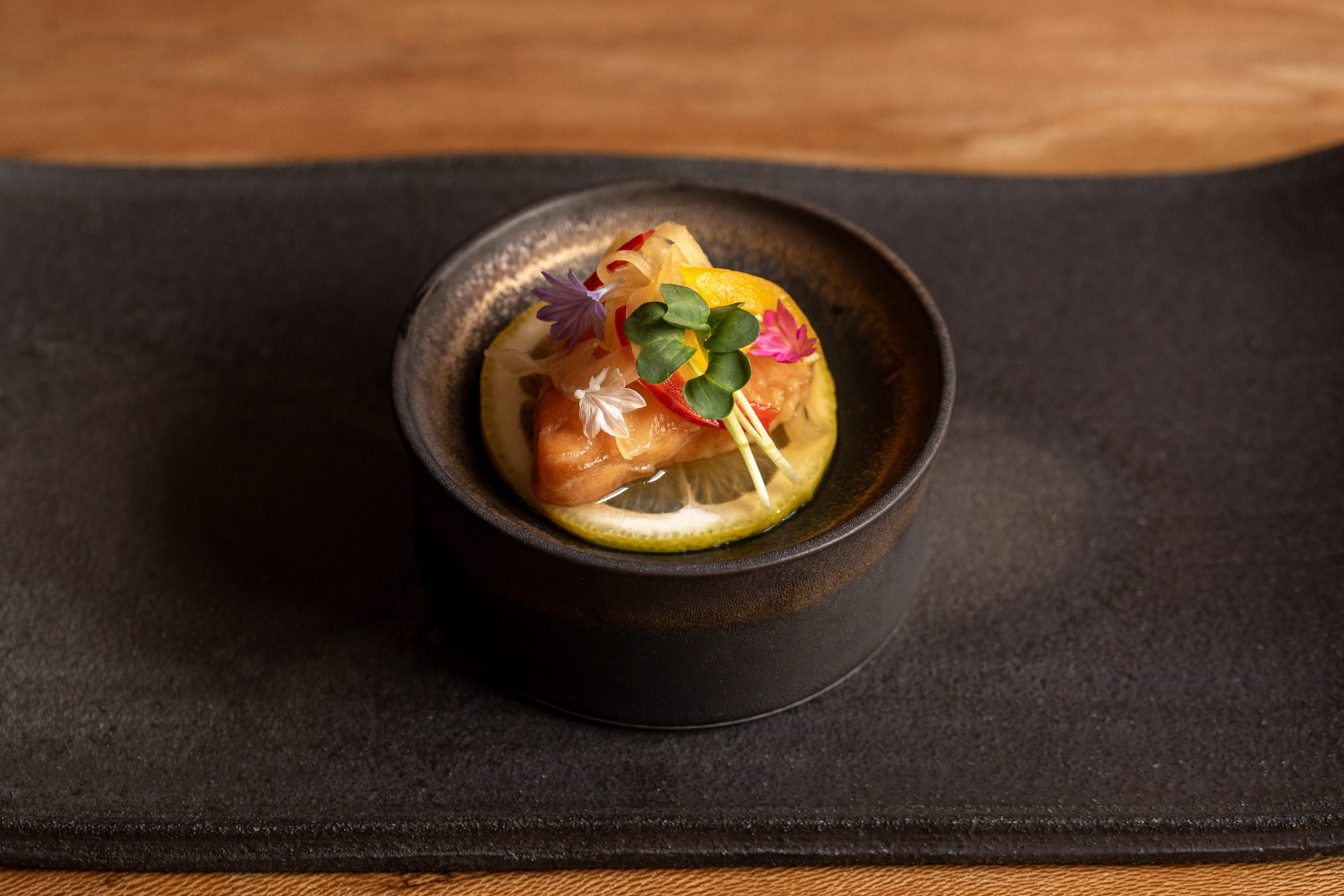
To begin, a delicate, hot Ichiban Dashi. The warm fish broth opens the palette to seafood while finding some bright spice with freshly chopped negi – Japanese spring onion. Handing the palette right back, the sweet, earthy creaminess of Unryu Tofu marbled from black and white sesame and topped with a fava bean. Tara no Nanbankuze – pieces of Alaskan Cod Filet lightly fried after being marinated – brings the palette higher with bright sour notes and flaky texture before a Sashimi of lean cut Blue Fin Tuna garnished with Potherbs and acidified with pickled mushroom builds towards the progression’s first apex.
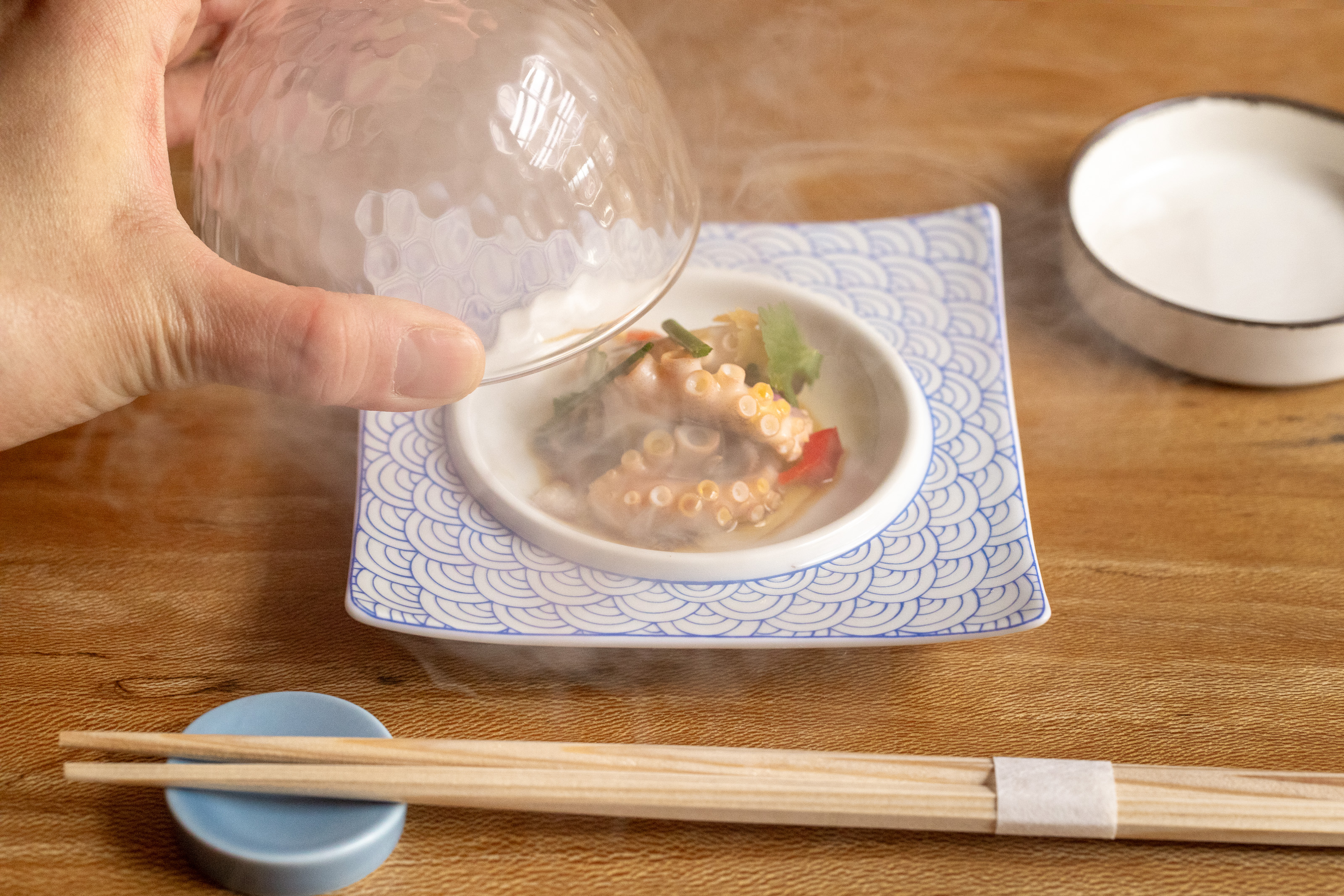
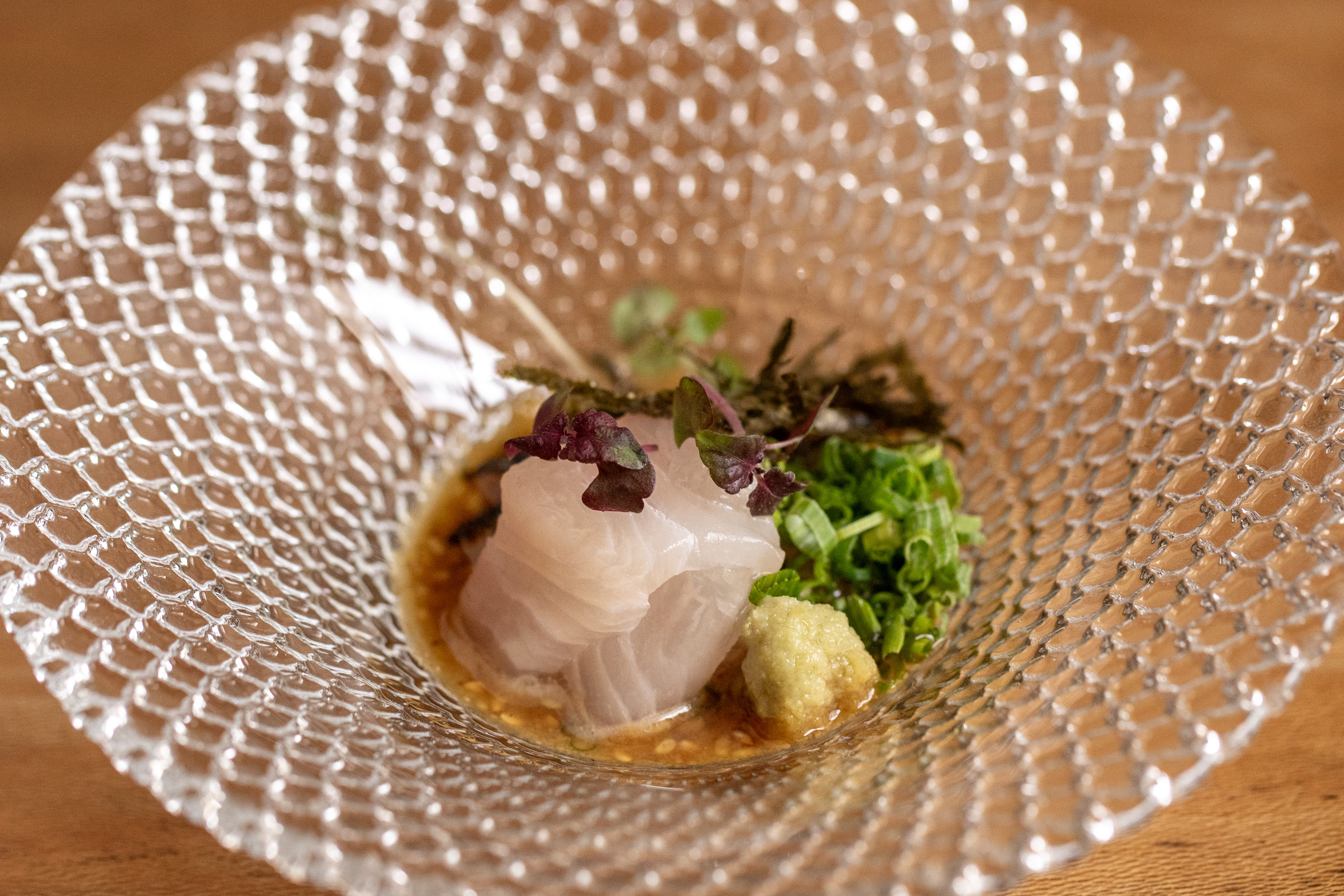
Back to simple flavors and an exhibition of Sushi Den’s ethos, Hawaiian Kanpachi is dressed with sesame and served with bites of mandarin and purple micro-shiso while a handroll of Bluefin Toro, negi and caviar is passed over the counter directly from Chef Toshi, meant to be eaten immediately to preserve the crispiness of the nori. Once the temaki have made the rounds, Chef Toshi picks up a fin and collar of Bluefin tuna for presentation, explaining that the next bite – a Maguro Kamayaki – is grilled and then smoked to break down the muscular texture of the cut of the fish. Unveiled from its smoky cloche and served with the bright acid of a finger lime, it’s meltier and more decadent than a filet mignon.
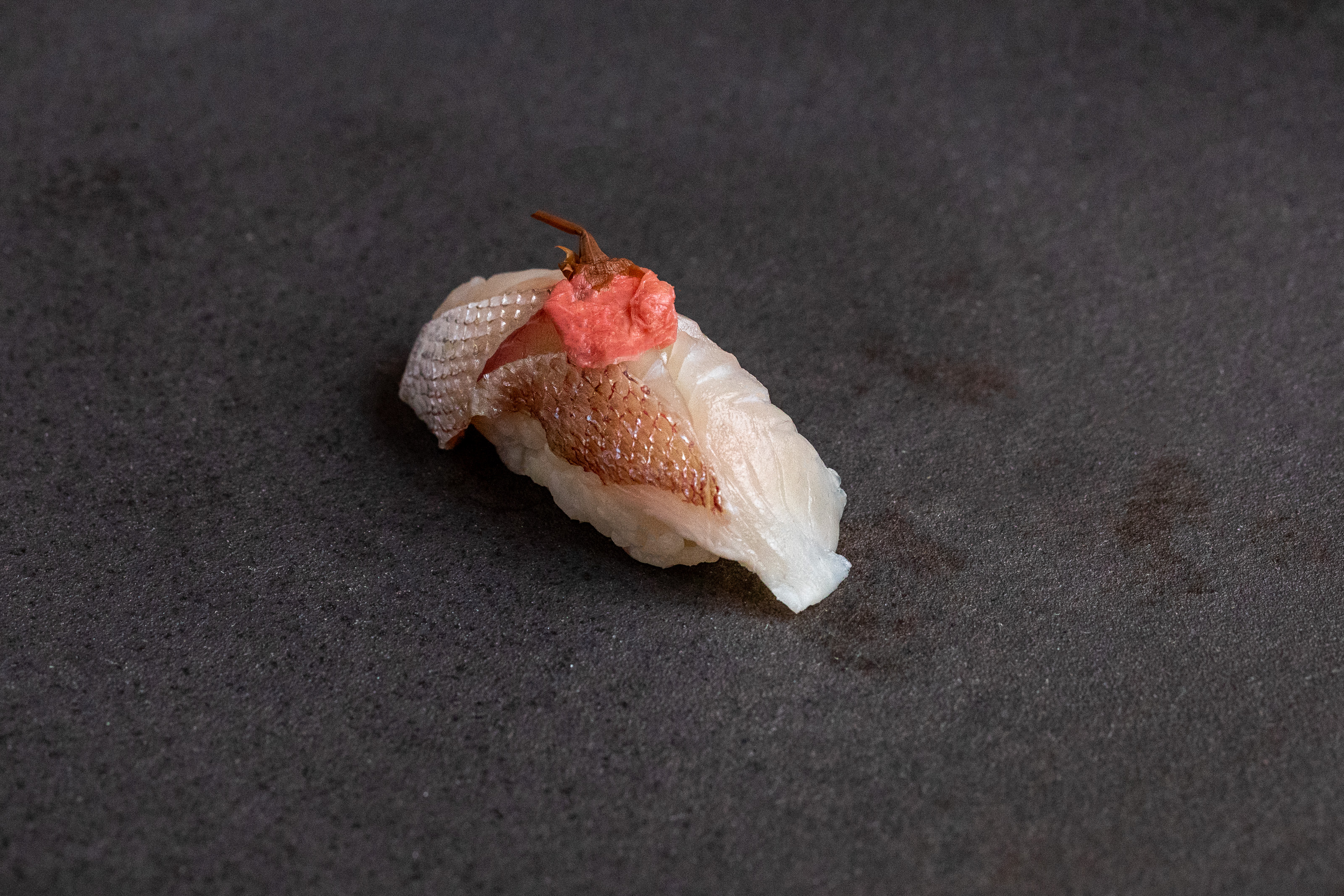
Waves of nigiri come next. Light, salty and sweet Golden Eye Snapper, briny, sharp and savory Horse Mackerel, fresh, succulent and sweet Japanese Tiger Prawn, and a light sear on the fatty cut of a Black Throat Sea Perch that was cured in salt water and sea kelp. Amadai no Wafukoso Pankoyaki – a Lightly Breaded Tilefish is served to stamp this wave complete before the next swells in.
Smoky, sweet Seared Hokkaido Scallop, New Zealand King Salmon garnished with pops of Gold Trout Roe, and the polarizing Uni – sweet and sentimental of ocean memory passed over by some in favor of Torched Aburi Lobster. Zuwaigani no Chuwanmushi – a signature Japanese Egg Custard elevated with Snow Crab, bites of Lilly and mushroom warms the palette with nostalgic flavors once more.
Melty, sweet Bluefin Toro, flavorful and unique Magurozuke marinating in soy, sake and mirin since the beginning of the omakase and topped with bleu cheese, and Aburi Toro seared to charred and melty perfection before a flamed Eel and Avocado Maki sweetened with house made Amadare serves as exclamation point for the end of the sushi courses.
To help digest, and more importantly to help process any alcohol consumed, a Miso Soup elevated with the cleansing powers of Minila Clams is served. “If you finish your soup, you can have another drink,” laughs the usually stoic and focused Chef Toshi. “It’s probably a good idea.”
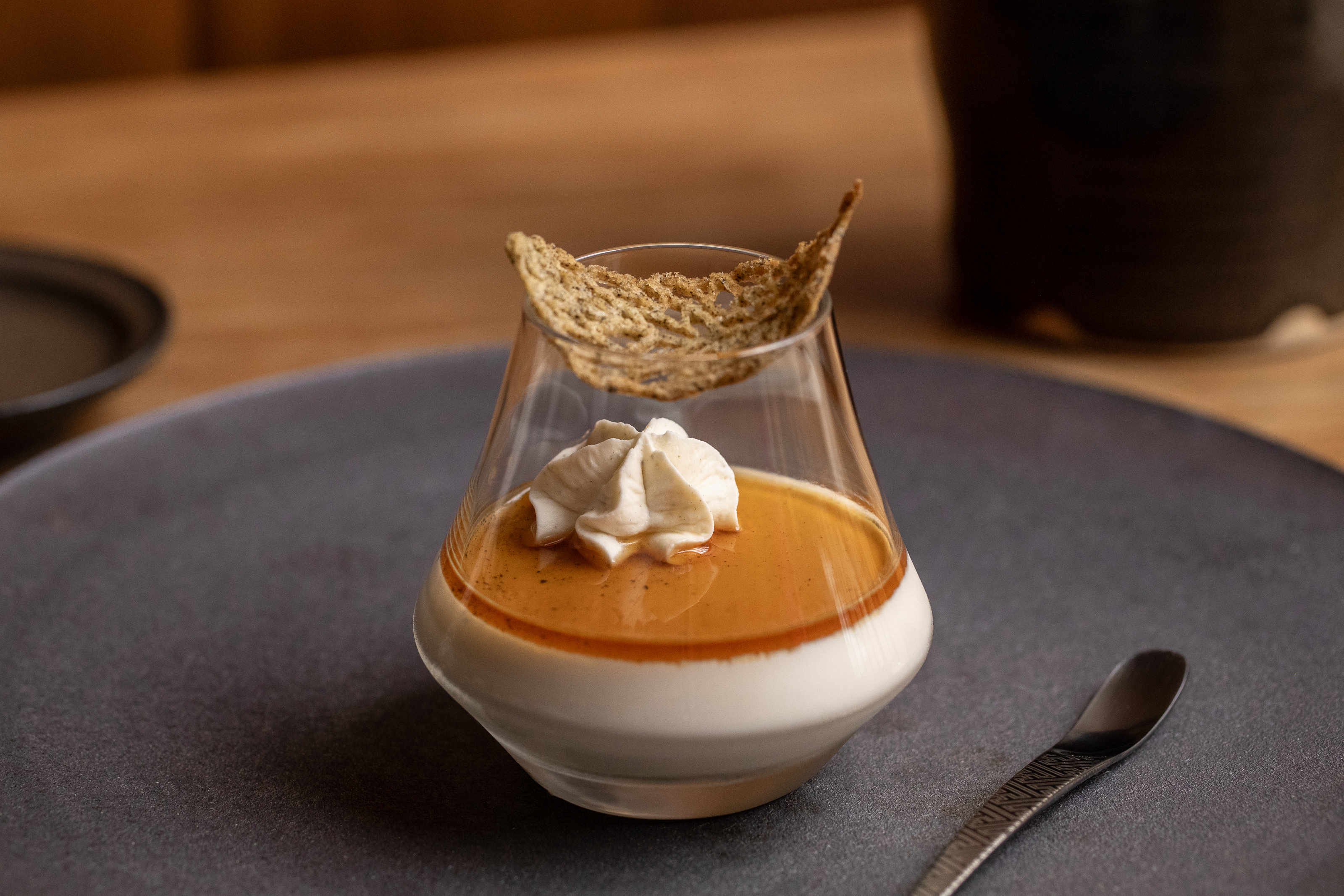
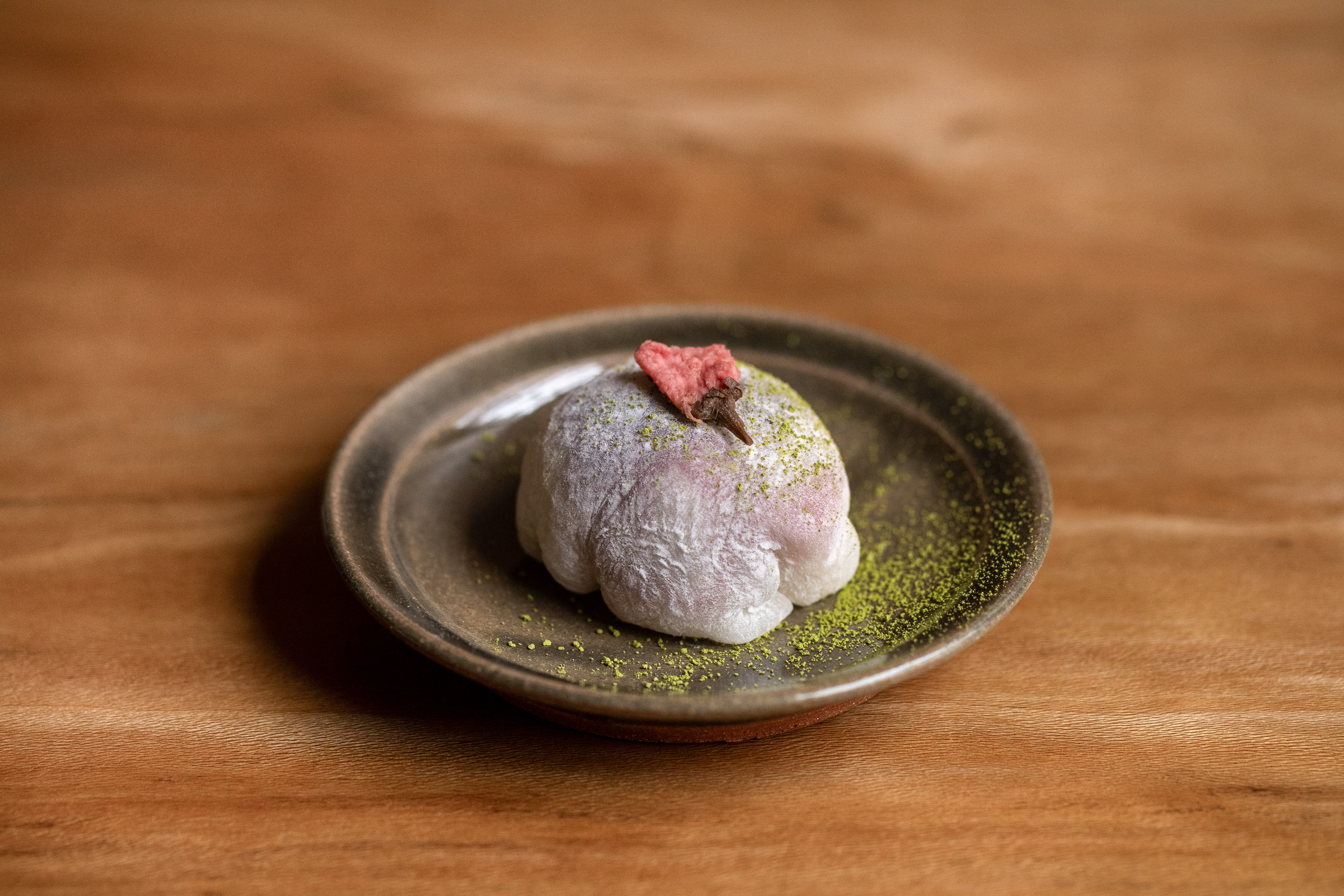
Taking his advice, a pour of Akashi Ume Japanese Whisky, plum sweet and immeasurably satisfying on what can only be described as a stomach with just enough room for dessert. Served alongside one another, an Ichigo Daifuku and a Hojicha Pudding, the former a sticky, sweet Strawberry Mochi Pastry, the latter an earthy, subtle Roasted Green Tea Pudding topped with a Sesame Tuille. Both are unlike any desserts to be found elsewhere in Denver. Of course, a choice of tea to finish. The Soba Cha – a Buckwheat Tea is of particular recommendation.
Meticulously signing menus in his native script as the first seating of the night comes to a close, and less than fifteen minutes before the second seating begins, Chef Toshi Kizaki seems calm and content. “I lost my passion,” he had explained earlier on in the tasting when asked why he had waited so long to open the omakase concept he had been plotting for more than a decade. “But now my passion is back.”
The thoughtfulness of piecing together a 23-course menu where guests leave satisfied and learned rather than stuffed to the gills is the kind of dedication that can only come from the right ratio of experience, skill and indeed passion. Doing so where every course is balanced yet flavorfully bountiful and uniquely exciting can only come from hard work and at least a little virtuosity. Four decades of cultivating a love for cooking and masterful skill, of battling through the normal challenges of the restaurant industry and the abnormal hurdles of the pandemic, of building a renowned concept empire while simultaneously pushing the city’s food scene around it to heights that were unimaginable in 1984, Chef Toshi Kizaki – standing behind a counter, slicing fish and making nigiri – is in some meaningful way right back where he started, albeit with his sites set on something shiny and new.

Kizaki is located at 1551 S. Pearl St., Denver
Seatings are available at 5 p.m. and 8 p.m. Thursday – Sunday. Reservations can be made through OpenTable.
All photography by James Florio.