



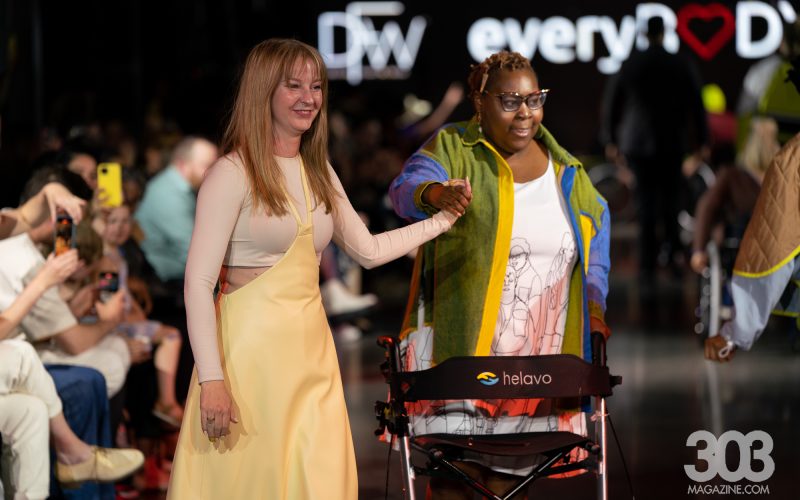
This spring, Guided By Humanity returns to Denver Fashion Week to host the highly anticipated Adaptive Night on May 12 — a runway show dedicated to celebrating accessibility, empowerment and authentic representation in fashion.
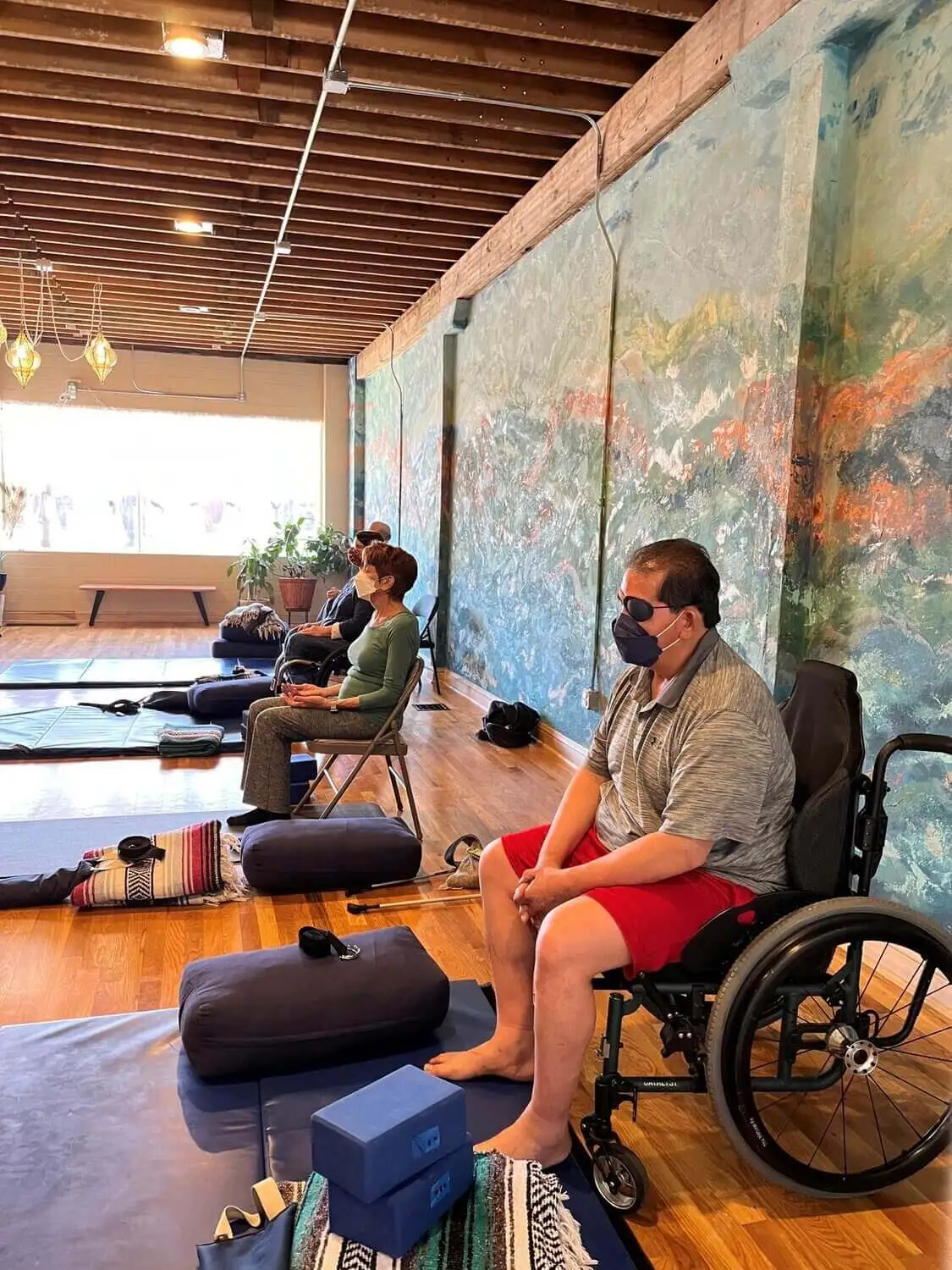
Guided By Humanity is a community focused non-profit organization founded on the mission that every BODY and every ABILITY deserves radically inclusive and equitable health and wellness care. Since their start in 2017, Guided By Humanity has worked to fill in the gaps in our society by offering holistic services — such as yoga classes, community workshops and support groups — for individuals across every ability.
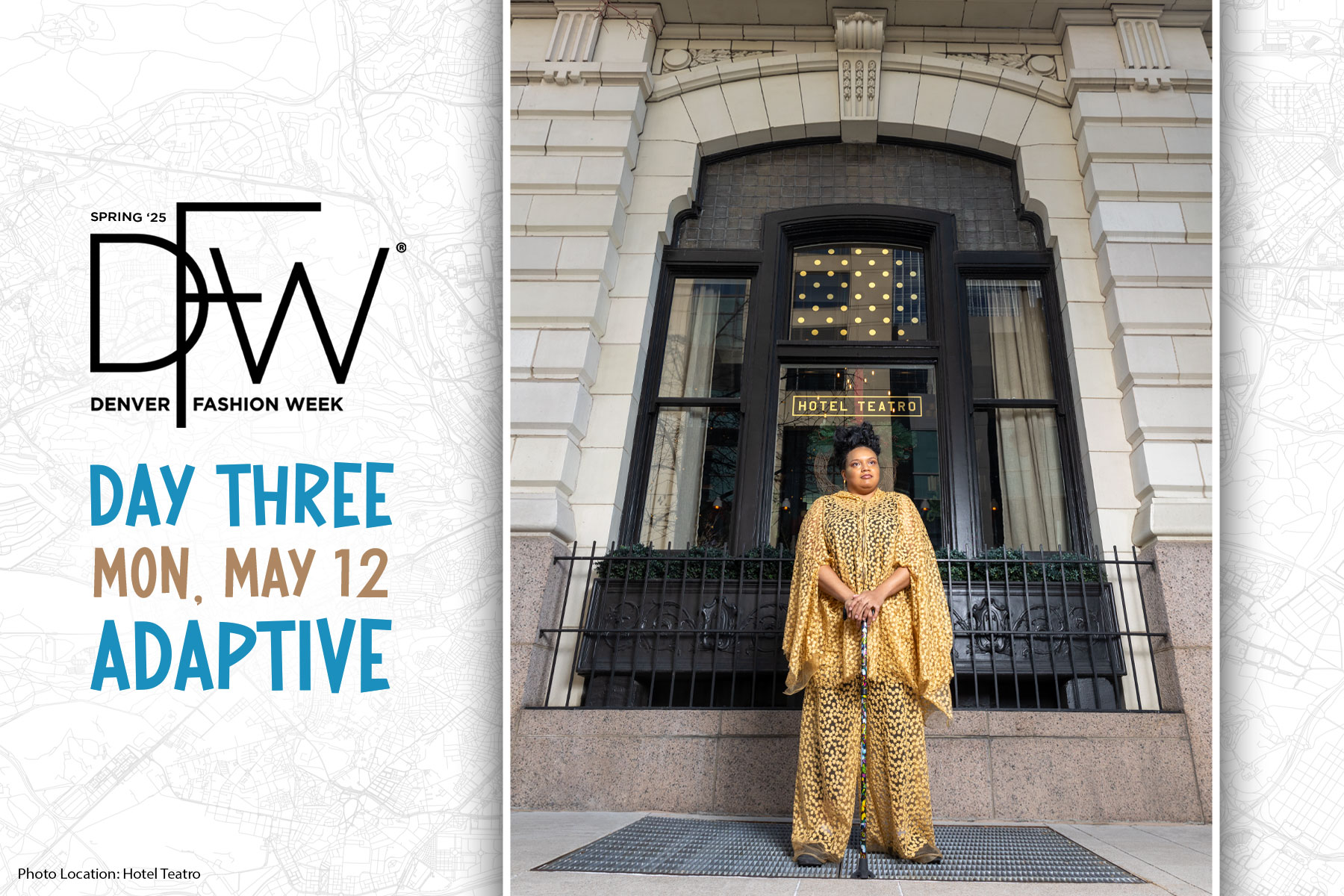
GET DENVER FASHION WEEK TICKETS
At Denver Fashion Week, Guided By Humanity is not only serving as host: they’re also showing two collections: one, a collaboration with Andrea Fischer and the other from their accessible athleisure apparel line everyBODY. These collections will be joined on the runway by designers Quana Madison and SKYEAIRE.
At the heart of this organization is Mary Medellin Sims, founder and executive director of Guided By Humanity, whose leadership champions inclusion through community-driven programming, education and advocacy. Sims sat down with 303 Magazine to share what’s in store for the Spring 2025 show and why adaptive fashion is more than a trend: it’s a movement.
303 Magazine: Guided By Humanity is hosting Denver Fashion Week’s Adaptive night this season. Can you tell us about the guiding mission and vision for the Spring 2025 Adaptive show?
Mary Medellin Sims: At the heart of the Spring 2025 Adaptive Show is love — love for our community, for inclusion and for the beautiful diversity of everyBODY and every story.
This show is about more than fashion — it’s about belonging. It’s about showing the world that disability is not something to be hidden but something to honor, center and embrace. We envision a runway filled with joy, pride, and connection — where each model brings their full authentic self, unapologetically.
Through adaptive fashion, we’re not just sharing clothing — we’re sharing power, creativity, and identity. We want our community to know: you are worthy, you are beautiful and you belong right here.
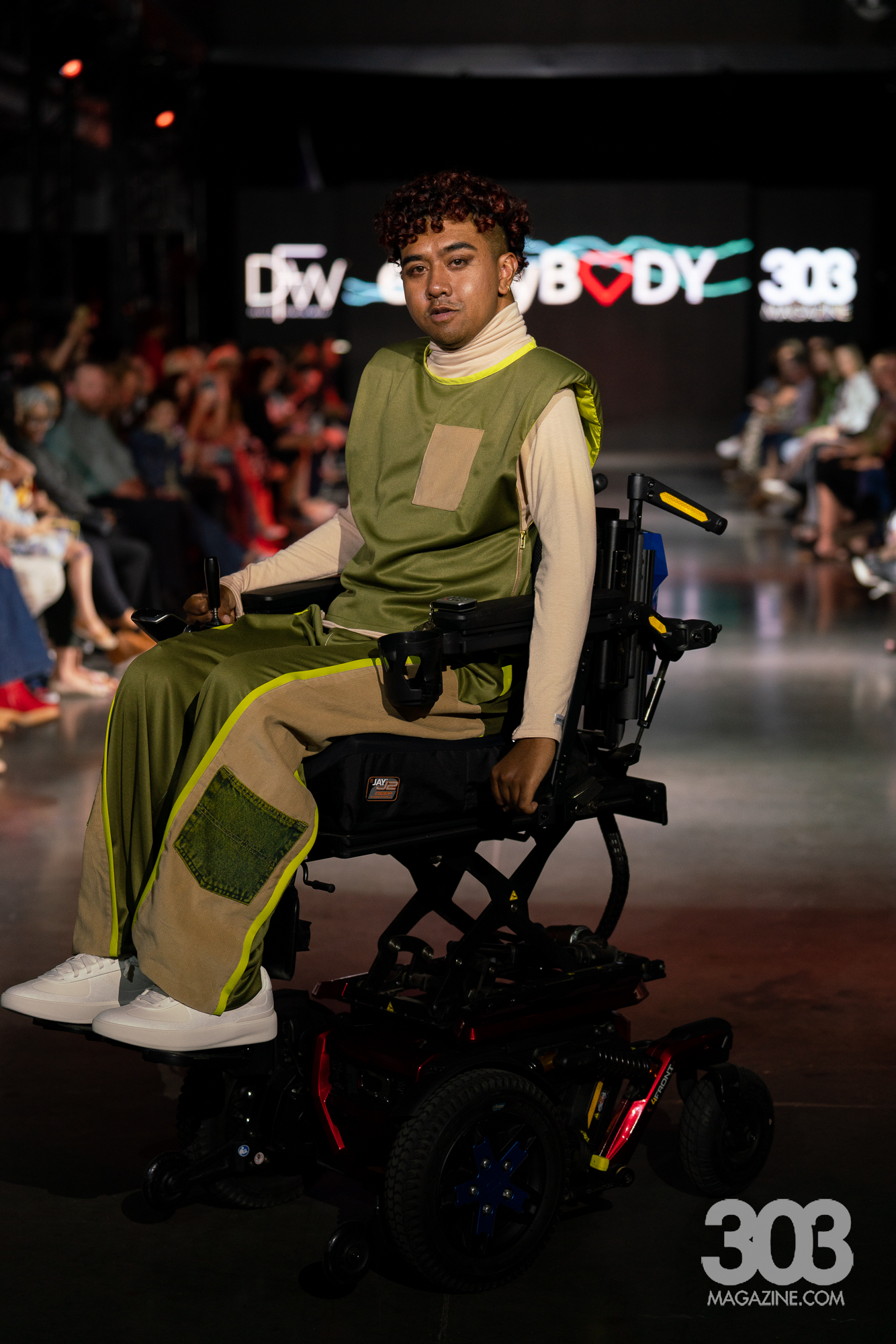
This show is our love letter to the disability community and a call to action for the world to see what we’ve always known — that inclusion is not optional, it’s essential. Inclusion matters.
303: Compared to previous seasons, what makes this spring’s Adaptive show different? How has this theme changed since the original “Inclusive” show?
Sims: One exciting new element this season is our partnership with Jansport, who has generously donated adaptive backpacks and crossbody bags to be featured by our designers. This collaboration helps showcase how adaptive design can extend beyond clothing into everyday essentials — supporting both form and function. It’s a beautiful example of how mainstream brands can step up and become part of this movement in meaningful ways.
By shifting our theme from “Inclusive” to “Adaptive,” we’re highlighting the functionality, creativity and innovation that adaptive fashion brings to the table for Denver Fashion Week. This show is a celebration of a genre — a fashion movement that centers real needs, real bodies and real lives.
Adaptive clothing is designed with purpose, comfort, and accessibility in mind. It supports people with disabilities and people without, because when we design for the margins, we improve life for everyone.
This season, we’re not just saying, “You’re included.” We’re saying, “This was made with YOU in mind.”
This shift also challenges the fashion industry to think beyond aesthetics. We’re honoring form and function, and proving that accessibility and style are not mutually exclusive — they’re beautifully intertwined.
We will be discussing this topic more at our ‘Strut and Roll’ event on April 26th from 11-3pm at our favorite brewery, Brewability. Kate Nelson, our very own everyBODY model as well as the First WheelChair user to roll down the runway at Denver Fashion Week will be facilitating the discussion, along with Fashionista Brandi McMichael who will give tips and tricks for building your self confidence on the runway and a practice runway for aspiring models, former models and new models.
303: While GBH is hosting the event, you mentioned in a previous conversation that you’re supported by community initiatives, such as an advisory council. Can you share a little about this council and how you’ve implemented their feedback into the Spring show?
Sims: Our advisory council is made up of passionate community members who bring their lived experiences, creativity and wisdom to the table. Their voices help guide every aspect of making this event a truly accessible one.
What makes this show truly meaningful is that it’s not built for the disability community — it’s built with them.
Their feedback has helped us rethink the layout of the venue, ensure sensory-friendly spaces and prioritize a welcoming environment for models, guests and volunteers alike. Even the language we use in our marketing and during the show has been guided by the council, to reflect dignity, accuracy and love.
In many ways, the advisory council is our compass. They keep us grounded in purpose and ensure that this show remains a reflection of the people it’s meant to serve. We’re endlessly grateful for their time, honesty and heart — and this show is truly a tribute to their leadership.
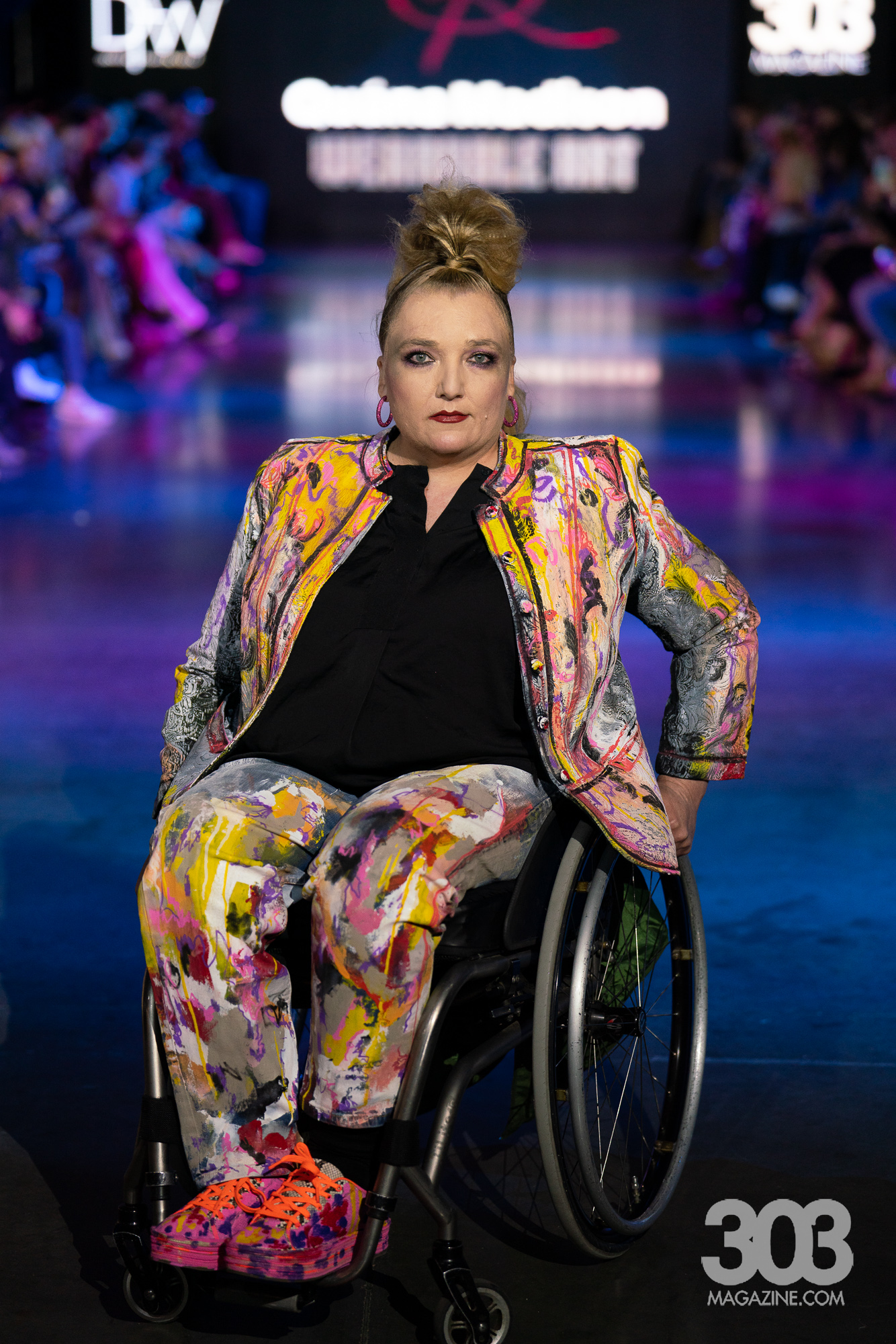
303: What is a common misconception about Adaptive fashion that you’d like to disrupt?
Sims: One of the biggest misconceptions about adaptive fashion is that it’s only for people with disabilities — or that it’s strictly medical or utilitarian. That couldn’t be further from the truth.
Adaptive fashion is for everyone. It’s about comfort, dignity, ease and freedom of expression. It’s about designing clothing that honors different bodies, supports different ways of moving through the world and respects individual needs. When clothing is created with real people in mind, it becomes more accessible, more intuitive and more empowering for all of us.
Another misconception is that adaptive clothing can’t be stylish or expressive. There’s this outdated idea that if something is functional, it has to be plain. We’re here to change that. Adaptive fashion can be BOLD, elegant, edgy, soft, fun—whatever the person wearing it wants it to be.
READ: Denver Fashion Week Announces Spring 2025 Line Up and New Themes
Our goal is to help people see adaptive fashion not as a niche, but as a necessary evolution in the fashion industry. Because when fashion is truly adaptive, no one is excluded — and that’s a world we’re proud to help create.
303: From your perspective, what are some things the fashion industry needs to adjust to move toward universal accessibility?
The fashion industry has an incredible opportunity — and responsibility — to become more inclusive by embracing universal accessibility. That starts with listening deeply to the disability community and designing with intention, not just adaptation after the fact.
First, we need to center lived experience. Disabled voices belong at every stage — design, production, marketing and leadership. Accessibility can’t be an afterthought; it has to be embedded from the start.
Second, the industry must expand its idea of what fashion looks like and who it’s for. That means redefining beauty standards, diversifying body types and mobility in campaigns and celebrating different ways of being in the world. Representation should be real, not tokenized.
Next, we need to prioritize functional design — features like magnetic closures, adjustable fits, flat seams and easy dressing shouldn’t be seen as “special.” They should be part of mainstream collections because they benefit everyone.
And finally, accessibility isn’t just in the clothing — it’s in the shopping experience too. That includes wheelchair-accessible dressing rooms, sensory-friendly environments, clear signage and inclusive online platforms with screen reader compatibility and visual descriptions.
At its core, universal accessibility is about love in action. It’s about recognizing that everyone deserves to feel seen, comfortable, and confident in what they wear. The more the industry opens its heart to truth, the better it becomes — for all of us.
303: Is there anything I didn’t ask about that you want to share about Guided By Humanity and DFW’s Adaptive night?
Absolutely — what we really want people to know is that this night is about so much more than fashion. It’s about community, connection, and representation. Adaptive Night is a celebration of humanity in all its forms — and an invitation for everyone to be part of a more compassionate, inclusive future.
At Guided By Humanity, we believe in centering people who are too often pushed to the margins. Through wellness, education and Community Initiatives like this, we’re creating spaces where people with disabilities can thrive, not just survive.
DFW’s Adaptive Night is one beautiful expression of that mission. It’s a night where models reclaim the runway, stories take center stage and our community shows up — loud, proud, and full of heart.
We want everyone walking or rolling away from this experience — whether they’re in the audience, behind the scenes, or on the runway — to feel empowered and deeply connected. Because when we move together with empathy and purpose, we don’t just change fashion — we change the world.
Adaptive at Denver Fashion Week Spring 2025 will take place Monday, May 12 at The Brighton. Tickets can be purchased here.