



Denver-founded nonprofit Boredomfighters seeks to provide safe spaces where those who may not feel as if they fit in can harness their creativity and create something beautiful. They do this by harnessing the music industry and using it to further music education. Beginning as renegade pop-up installations at music festivals such as Sonic Bloom, Boredomfighters creates “instrument gardens,” collaborative spaces filled with instruments where people may come together and craft songs in an organic environment. While the model does not adhere to any specific age, Boredomfighters has recognized the good that they can do by bringing their instrument gardens to schools around the country. In a time when music and arts programs are being defunded en masse throughout the United States, Boredomfighters’ mission has never been more important. Young people need spaces to express themselves. They need to feel safe being themselves and encouraged to embrace all that they are, quirks and all. They have to learn that creation is an act of self-love, a lesson that will fill their lives with color, enrich them in ways that wouldn’t be possible otherwise. In the years since COVID, Boredomfighters has truly taken off, finding themselves working with hundreds of schools nationwide and that number is only growing.
However, as the organization continues to grow, so do the difficulties inherent in running a nonprofit. Now more than ever, Boredomfighters needs help in order to continue doing the beautiful work they’re doing. As such, they’ve recently launched their “Next Stage” initiative, a project focused on growing the number of music industry leaders who partner with them in order to increase the organization’s visibility and help with revenue. They’ve begun by partnering with the beloved Cervantes’ Masterpiece Ballroom, Sub.Misson, and Ticketing Co. but are looking to add at least 9 more “champions” to help them as they expand.
303 Magazine recently sat down with Boredomfighters’ Co-Founder, Tyler Manning, to discuss everything that Boredomfighters is doing, the “Next Stage” initiative, the importance of providing creative spaces for young people, what the future holds and much more.
READ: 8 Colorado-based Musical Nonprofits to Consider for Colorado Gives Day 2023
*This interview has been edited for grammar and clarity.
303 Magazine: Hello! I usually like to start these off by having you introduce yourself and tell me a little bit about what you do in your own words.
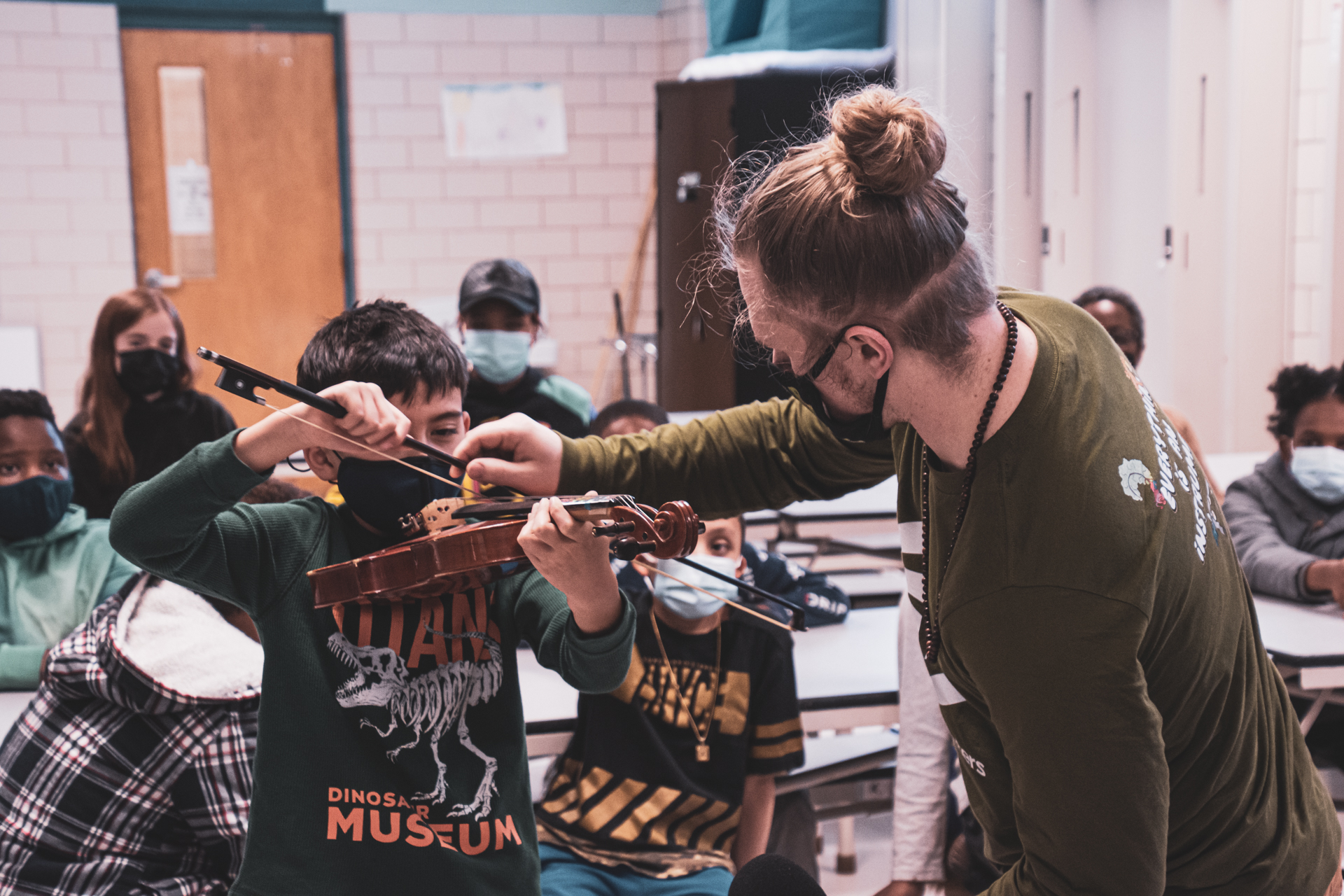
Tyler Manning: Cool, yeah. I’m Tyler Manning, Executive Director and Co-Founder of Boredomfighters. We’ve been going for six years now, setting up studios in places and helping people get access to music-making experiences. That’s usually by connecting with different music makers and event promoters and people in the music industry and working with them to bridge the gap in music education by using bands and activations in the schools and different creative forms of music-making experiences.
We’re often using electronic music and hip-hop music modalities to explore music-making in a new way, especially in music education. If schools don’t have a music program, we come in and make music with the kids for a day, and they still get some access to it. So we’re kind of building the infrastructure now in that I spend most of my time working on infrastructure outreach, helping create a network of people.
It all comes from a lot of work in the industry. In 2015, I started a production company called Forward Momentum or Formo. At ForMo, we threw a bunch of shows and started managing artists and doing record label stuff. Then we ended up separating the brand to MorFlo which became the label, and ForMo was the event company. Those networks that we built through that, through music festivals, managing artists, and building a music platform, introduced us to all these folks in the industry. So when we got asked to come to a school as music industry people, we realized the power of making beats in the classroom.
So then I stepped aside from those two businesses and started Boredomfighters and took all those resources, went all in on that, and let other people be in charge of MorFlo, which is poppin’ now as Mersiv’s label. They just sold out Red Rocks for the second year in a row. It’s been really cool to see that go and they’ve been a huge help with what we’re up to. Now I’m here in Detroit, just on the phone, making music myself and helping other people make music.
303: It’s cool to see that trajectory going from working in the music industry to actually realizing that you can use music for something so positive. How did Boredomfighters itself evolve from what you were doing previously? And can you explain exactly what your mission statement is?
TM: The mission statement, I think, in general, is bridging the gap in music education with the music industry and implementing electronic music and hip hop music education into that to fill that gap. I’m still trying to figure out the right words to actually express that. We’re not teaching sheet music. We’re filling the gap in music education, but we’re doing it using very alternative styles and trying to bring in a new age of what’s going on in modern music education. So yeah, the mission statement is evolving, but it’s basically bridging the gap in music education by partnering with the music industry.
303: You began in Denver but have been able to open chapters all over Colorado as well as in Long Beach, Detroit, and Grand Rapids. Can you tell me a little bit about what it was like to grow the organization as much as you have over that amount of time? Besides size, how has the organization evolved or grown in that time? Any major lessons learned?
Yeah, it’s been interesting. As the organization gains more attention and visibility, more people are like, “Wow, I want this in my town,” and I just want to help them make it happen in their town. But it’s gotten to a point where we’ve reached a mental capacity. It’s like, “Do we have the resources in place to support these chapters?”
It got started by us being invited into the classroom when we were making music at festival campgrounds. That is how it actually started. The instrument garden happened at a festival we produced and then we did it at Sonic Bloom as a renegade thing in the campground just making music with people and we were like, “Okay, wow, there’s something to setting up studios in places other than our basement.”
Then we’re setting up studios in places all over the country, doing all the festivals, meeting all these people in other states. We sit at the studio at a festival, then we come home and we set up in a school and we are putting out content of us doing this work. The people that we met at these festivals are like, “I want to do this.” So now it’s been a battle. It’s a fight on the bottleneck of my own mental capacity. Blake (Honderman), also the Co-Founder, has been a really big part of this, and now Jordan (Dale, Longmont chapter leader) and Mike (McTernan, Fort Collins chapter leader) and all these different chapter leaders as well.
It should be disclosed that technical difficulties regarding internet connection occurred at this moment. Manning had been speaking from inside a refurbished van. As he moved indoors to get a better connection, we spoke about the van’s importance to Boredomfighters’ growth before returning to our conversation regarding Boredomfighters’ expansion into a chapter model. The first paragraphs of the next section regard the van.
TM: This van, dude. In 2019, we started getting some wind in our sails with all these programs and realized that schools everywhere don’t have music programs. It was really starting to hit. We were like, “Alright, we’re gonna bring music production everywhere.” We were on this huge push to go to 50 schools around the United States and we lined up a 4-month tour, going to these schools for free, zero charge to the school. I was going to drive to all these places with the studio gear and do workshops and live out of the van for 4 months instead of paying for hotels to make the tour happen. It was the same cost to build a van out. We fundraised for this van to get built out, put a studio in it, and now it’s a livable studio van.
We spent a year fundraising and planning this tour out and calling all these schools. I cold called schools for like at least 500 hours, lining up all these workshops. Then, in March 2020, we did the first day of the tour. We did four back-to-back assemblies right out of the van, with 100 kids in each assembly. We did it on no sleep because we had finished the van just in time to get to where we needed to go. The tour started about 4 hours south of Denver, and then the next day, COVID hit, and all the schools called us and canceled.
Now, all the schools in the country are ready for our workshops. That’s been another push for the chapter model, too. We said, “Okay, that was going to require a lot of resources for me to go in a van and drive around the country for four months straight. But if I can just pull up to a community, do a couple of assemblies, and teach the local producers how to do the workshops and have resources to support them ongoing, then they can do this stuff themselves.” So that’s the shift that’s been going on now as we’re building these committees to support the chapters.
When someone says, “Hey, I want to start doing music production workshops with the schools in my community,” the chapter model allows us to respond with a curriculum and a team of people that help with events. It’s also allowed us to put together a team to produce a bunch of content and assets to promote and do outreach, as well as somebody to help write grants. We’ve got this team that we’re building for committee support. So that way, you can call us up if you’re in, say, Texas and you want to start a chapter, there’s an SOP (Standard Operating Procedure) and a whole team of people and resources to support you. That’s the push, dude.
We’re also realizing that we’ve been volunteering. We’ve all been doing this for free for a long time and we’ve been paying artists to do these workshops as much as we can. We pay the producer to do a workshop, and that’s just been all solely off of revenue from doing the paid workshops, small fundraisers, and donors. We have some backers that will give us $1,000 here and there. But until this year, we haven’t had any large backers. It’s all just been grassroots figuring it out. Which is why we’re highlighting our “Champions.”
303: For those who may not know, what exactly is an instrument garden?
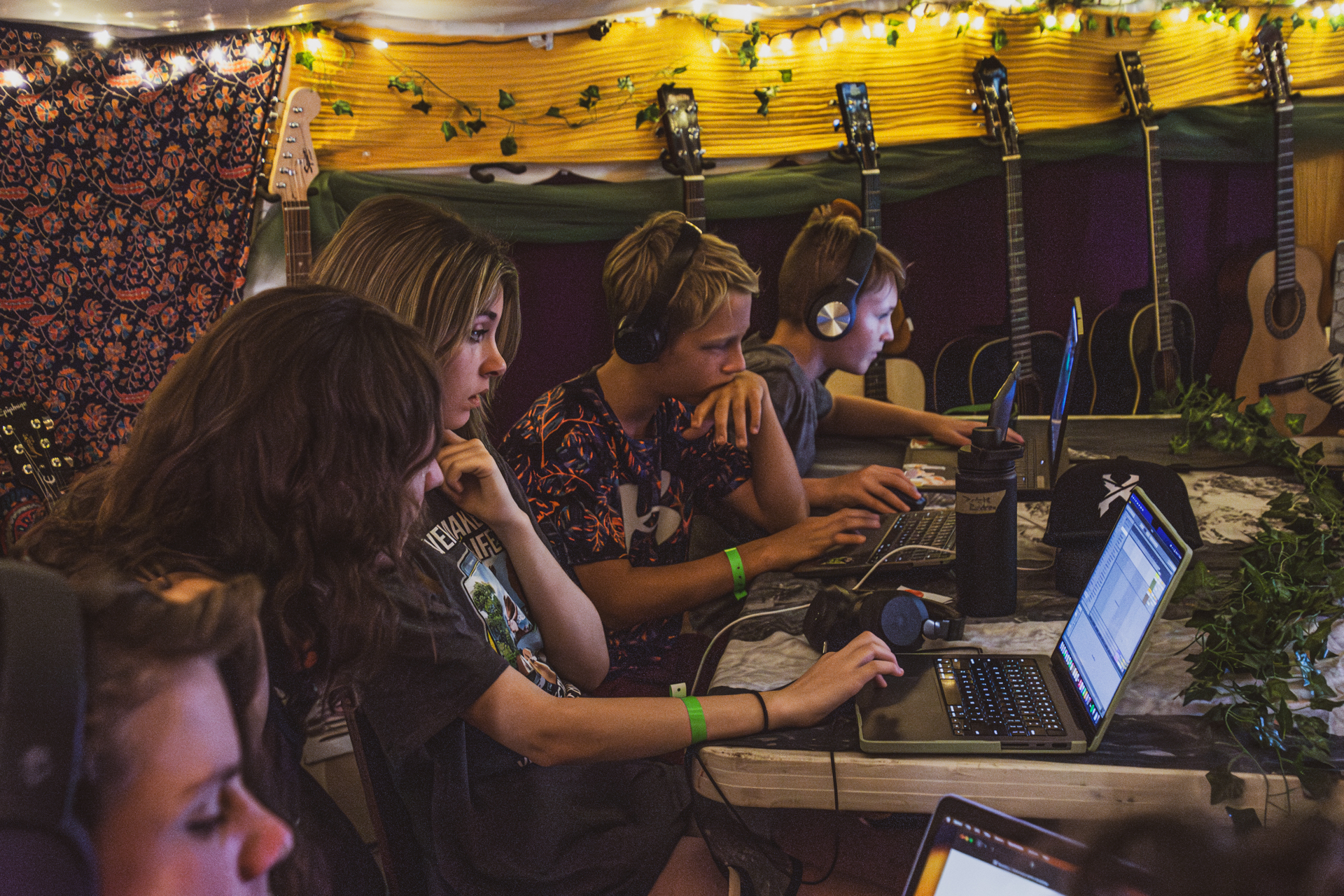
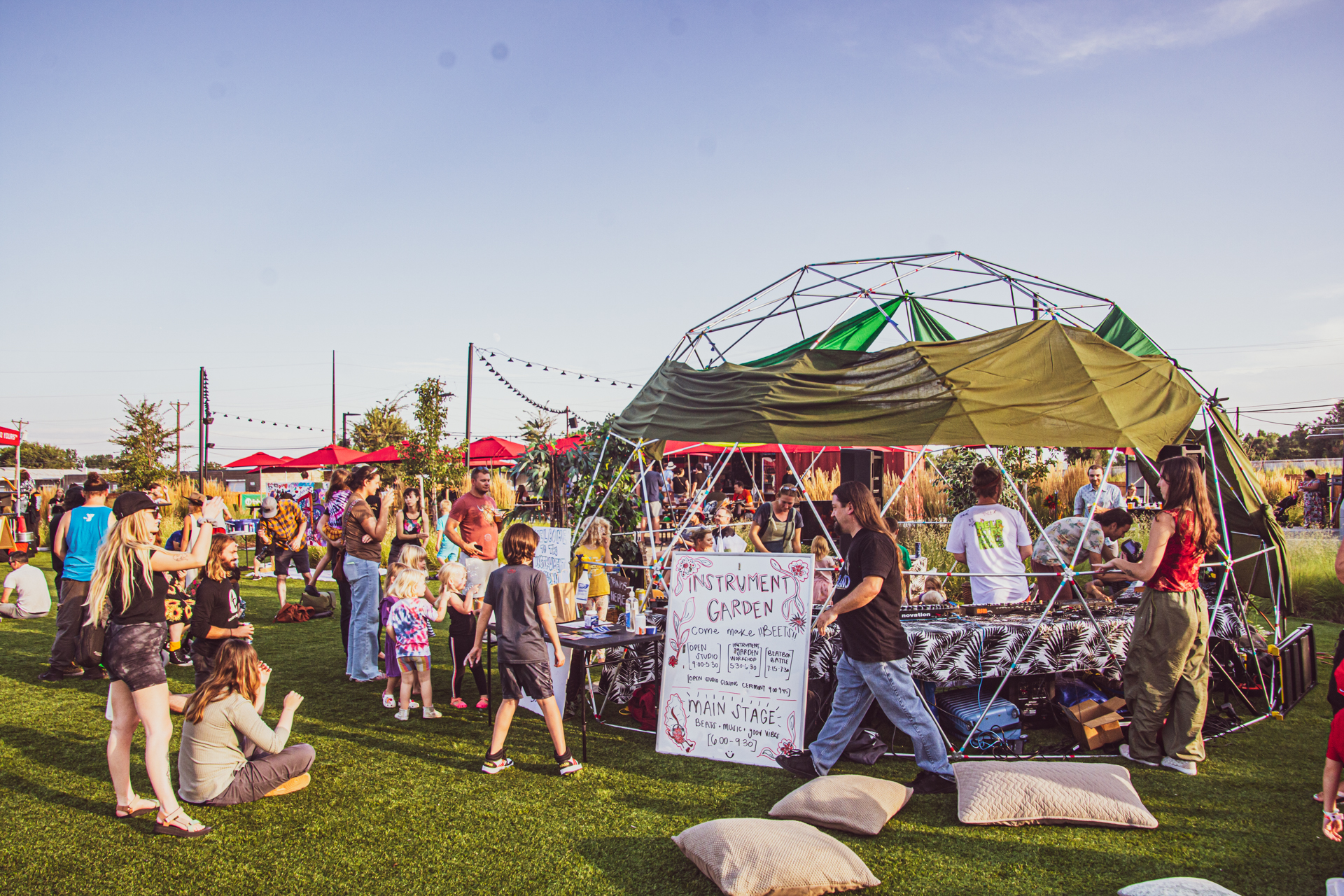
That’s the studio experience. “Instrument garden installation” is the phrase that people in the festival community are used to. Similar to an art installation, we set up the studio in a geodesic dome and fill it with a bunch of plants and instruments. The instrument garden is a place where everyone within is a musician, everything is an instrument, and it’s a safe place to create. But it’s morphed into the “instrument garden workshop,” which is where we’re guiding people on this adventure through beats, melodies and vocals. It’s a formulaic process.
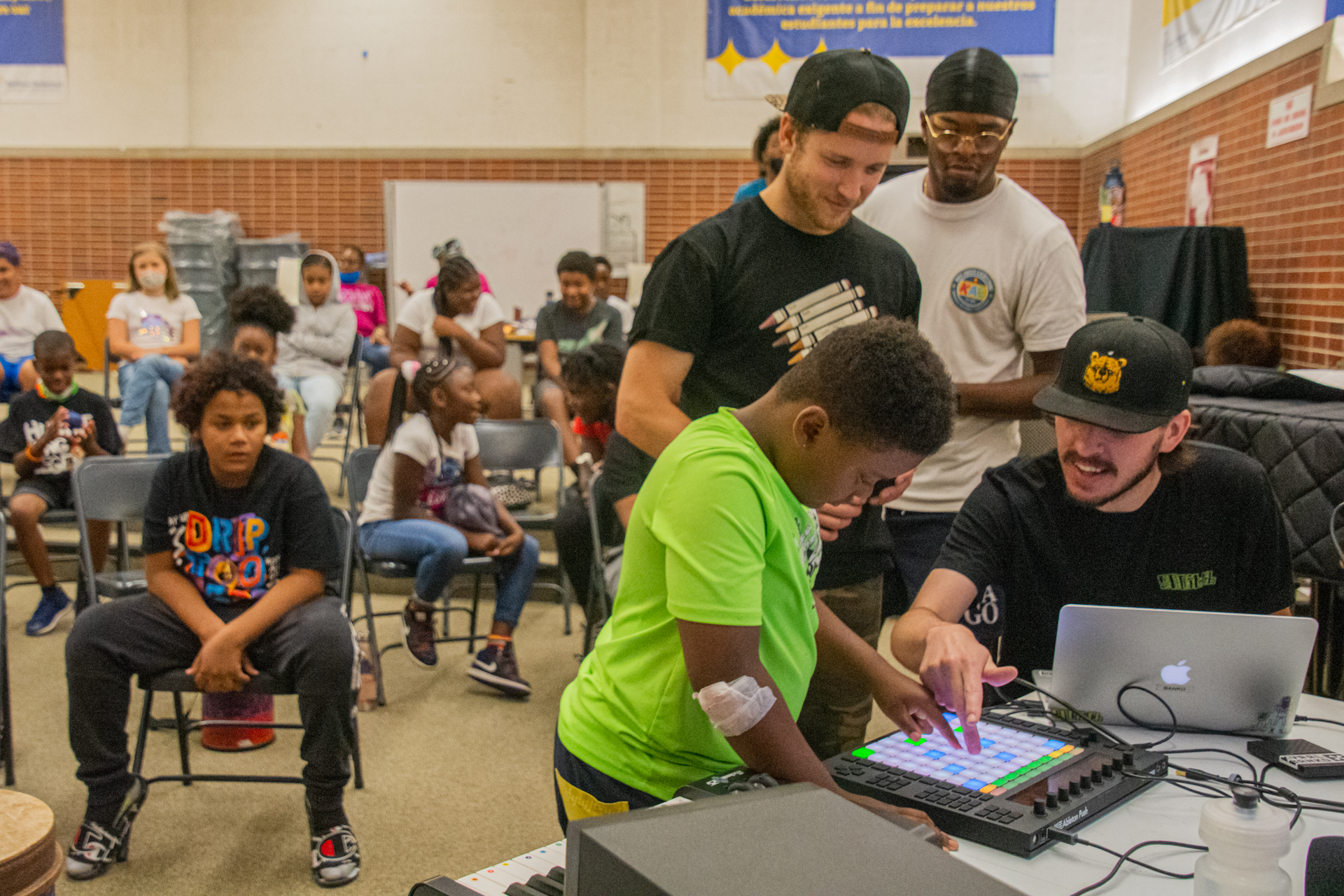
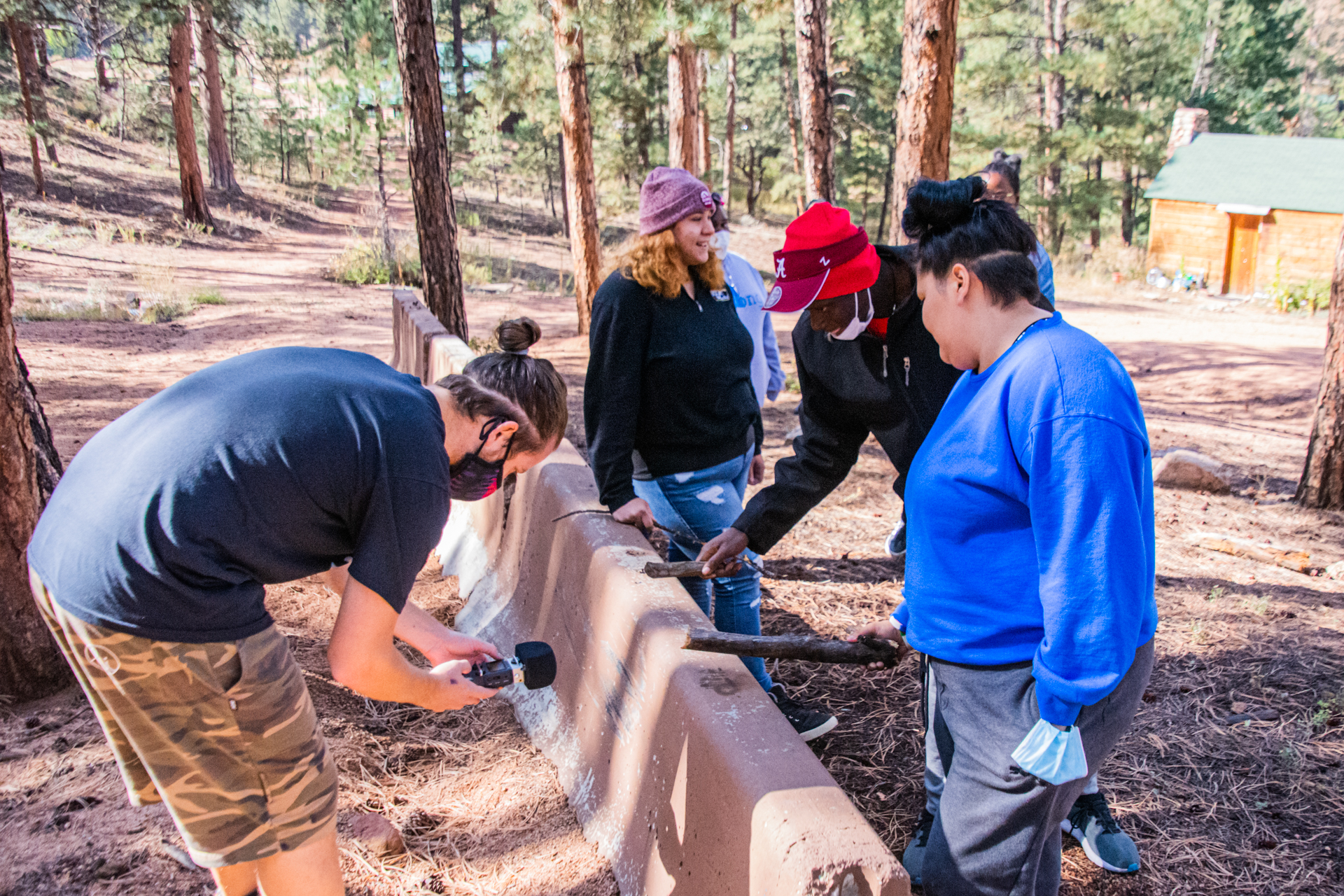
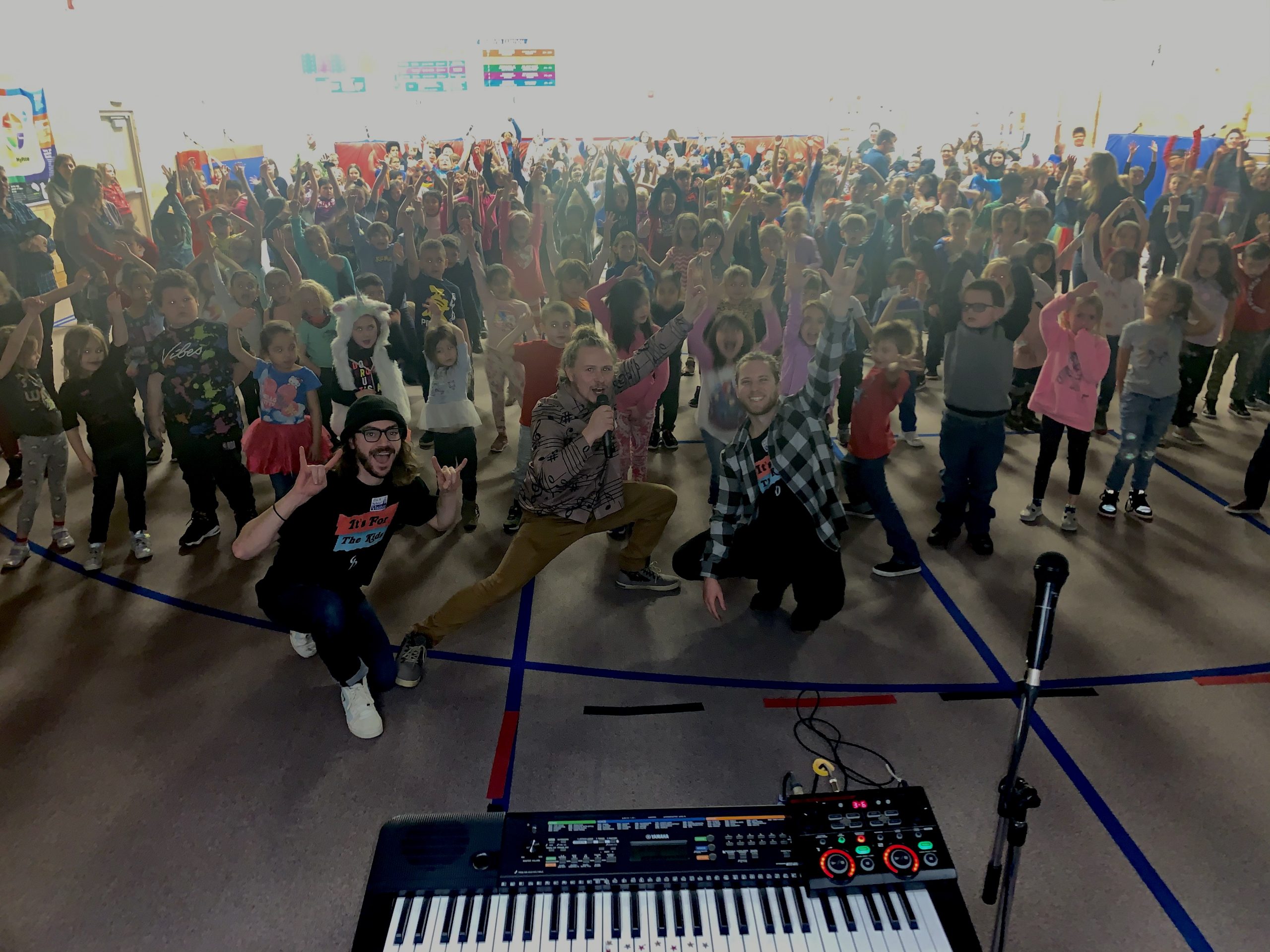
Basically, we’re making a beat out of the sounds of the environment, whether that’s somebody’s keys, a chair in the school, the pencil sharpeners, or whatever. It’s very much based on the space we’re in and we make a beat out of that. We have all these instruments so then we add melodies to the beat. We create these layers, and with each new layer, we invite someone up. We’re empowering them to create. We’re being silly and trying to lower the barriers of expression through our empowerment practices. “Alright, everybody, come on up.” We get to a point where we’ve found the groove and everybody’s got the rhythm and “chicken neckin’,” as we call it. “All right, now come up and play an instrument” and eventually, we’re looping. We have Ableton up on the screen. We’re like, “Now, here’s your piano melody. Now, watch us pick the part. What part do you like, Oh, you like this part. All right, great. We’re gonna loop this, check this out.” We loop it out, and then they can see it. “All right, now let’s add another instrument.” Someone comes up. We do stuff to it. Now we have an instrumental. Now, we have our beats and melodies. “Okay, now let’s write a hook together.” And we all write a hook. Everybody sings it. Everyone gets on the track, hundreds of kids all singing whatever they come up with.
After the hook, we’ll invite people to write their own verses, and kids will usually line up at the mic. We just take, take, take, take, and then we just listen, listen, boom, boom, boom. The kids see it all happen. By the end of one hour, we have a demo.
This is something we’ve done in hundreds of schools. We’ve done it as a performance at festivals on stage in between sets. We did an opening for Josh Teed at Meow Wolf and it will be done in conferences and team building retreats and exercises like that. It’s all ages, all sizes of groups and that’s like our key tool for the work because we’re either going into a place and we’re showing people the magic of music production by hosting this workshop or we’re setting up an installation where they’re just stumbling into it. They don’t have to be there for any set period of time. It can be five minutes, or some people hang out there all night.
At times, we’re extrapolating the workshop with an ongoing curriculum. For example, we’ll install a studio and producers in a school who are there every week teaching kids how to actually produce themselves. That’s the third layer of our work here now: this “longevity curriculum.”
We also have our camp starting next week. This is our sixth year on that, too. We’re doing a week of “Discovery Camp” and a week of “Advanced Camp,” so the advanced kids are all coming with the plates already. They’re already whipping up crazy, crazy tracks, dude. These kids are showing up with like 30 bangers ready to rinse them on the functions.
303: I think that resonates with me personally because I grew up doing music camps and they taught me a lot about who I was and the power of just being able to be creative in such collaborative environments. Why do you think it’s so important for kids — especially in this day and age where arts programs are being cut and defunded — to have access to these creative outlets and feel empowered in a creative space?
TM: I think the main thing is that it just gives out-of-the-box people a safe space to feel welcome and a purpose to get out of bed. That’s really what it all comes from. The whole of Boredomfighters is there’s a lot of people waking up after they’re kids, once they’re getting into their careers, that are waking up depressed because they’re going to do this thing that they don’t really feel they fit into, but they just have to do it to keep the roof over their head. No one in school is telling these kids you actually could throw events and build community and play music for people and have a sustainable life. Yeah, it’s hard. It’s harder than having somebody tell you what to do every day. But you also don’t have to be told what to do every day. You can be weird and different and be celebrated for that. I just think that I personally have had a lot of help in my life because I was willing to be creative and different in an environment that didn’t seem accepted. It gave me purpose and throwing events and being in music gave me a reason to keep doing what I’m doing, to be alive and collaborate with my friends. I think that it worked for me and works for a lot of people who work with us. It seems like once we get past the veil of what people think music education should be, it resonates in the same way with other people. That’s really the important part for me.
303: I agree, I think those spaces that feel safe to be creative within are so important. But now, I’d like to move on to talk about the “Next Stage” Initiative. Can you tell me what exactly the initiative is and what it’s ultimate goal is?
TM: Touching back on this limited resources, grassroots kind of thing we’ve been doing. We’ve become more aware in the last year or two that we’re draining a lot of resources and we’re running ourselves broke. We’re burning out our team members and we need more resources for this to work, especially as now the demand is rising and people are calling and hitting us up. Literally, I’m not kidding you, Thomas, people are calling us and saying, “Hey, I heard that you guys helped create a sense of belonging in the classroom. We’re really struggling with struggling with that. Can you help?” We’re like, “Yeah, actually, we can.” I’m spending a lot of time just trying to keep up with the inbound requests alongside processing what we’re already working on and making sure that our projects are getting where they need to go.
We’re running out of resources by doing bootstrapping and grassroots and we spend all of our own money on it. We need real support. We’ve gotten some great support from some folks, and there are a lot of community members who have put in what they could. But we really need those people who have a large audience that can use their platform to make a larger impact and help us meet what we need just to survive for the organization.
Right now, ideally, on a minimal scale, our organization has a $100,000 yearly budget that we can use to pay our team and for resources to support the chapters. If we can get 12 people to pay for one month of our operating expenses and pledge that they’ll cover that for a year, that’s the goal. So the model that we’re trying to build is we’re trying to get 12 champions to sponsor a month of our operating expenses. That way, we can survive. We can stop operating like we’re coming from a scarcity mindset. All the other donations and revenues that we raise can go directly back to the programs, expanding the programs, and keeping our lights are on, making sure everybody’s taken care. It just makes more and more sense every day.
You got these artists out here that are doing hard ticket shows and they’re having 10,000 people show up to those shows. If they could just take $1 off of each of those tickets for one show, that’s gonna alleviate so much pressure for the organization. It’s going to motivate people to want to buy tickets to that show more anyway because they know that that show is helping kids make beats. The goal now is to find these organizations.
Cervantes’ was the first one to come on. The Ticketing Co ticketing platform is on and they are using their platform and they donated a straight amount. They’re also adding in the roundup opportunities and asking all of their event promoters to do benefit events for us. That’s been a really cool opportunity to just connect with a lot more festivals and stuff.
Then Sub.Mission is using the venue and we’re on their agency now with the instrument garden. So they’re donating their agency fees and they have the roundup option on all their shows. They’re also doing a couple of events to help raise funding. That’s the thing, man, these people can set their own initiatives, where they’re like, “Alright, community, we need to raise $8,300 for Boredomfighters, here’s what we’re going to do to raise it.” Now they have some skin in the game and their community sees the goal we need to meet. We just have to find 9 more artists or promoters or successful music industry adjacent entities for whom $8,000 isn’t that big of a deal, and they can use it as a tax cut.
303: I’d like to focus on Cervantes’ for a second. It’s such a beloved venue in Denver. What attracted you to Cervantes’ in the first place? What excites you about working with them? And what exactly does it mean to be a “Champion Donor?“
TM: Cervantes’ and River Beats have been dope with a lot of stuff that they’ve been doing with the SHIFT Thursdays and they’ve been supporting us for a while. Greg (Glassman, event coordinator for River Beats) and Shawn (Schmidt, co-owner of River Beats), those guys have supported us in a lot of ways over the years and have always seemed to be big fans of the work that we’re doing. They were reaching out about some other work to do together and we had just finalized the proposal to get Champions with the board. The next day, they hit me up about something, and I asked, “What if you guys were our champions?” They were like, “Well, we’re doing this Deep series, and this could be the way to raise it.” It all worked out with the timing of the ask and the thing that they’re working on already with the Deep series so we decided to use the Deep as a way to raise their pledge. Everybody wins. It just seemed to make sense in that way. It was really good to get that support from such a long-running, established venue that sees that value in our work. That really helps. I feel like it gives us a new layer of credibility.
303: Well, Tyler, I want to thank you for a great conversation. Before I let you go, is there anything else on the horizon for you that you’re excited about? Anything else you’d like to mention?
TM: It’s really exciting, a lot of things going on. I have a lot of things in the pipeline. We all have a lot of things in the pipeline, but camp next week is gonna be epic. Dude, we got David Satori from Beats Antique and Dirtwire coming out to teach. We have a lot of really cool producers that we’ve been working with for a long time, including M.Port, Nyquist, and Bloomerian, and all these people are just great friends now. So I’m stoked for camp.
Visit Boredom Fighters’ website to find out how to get involved!
[give_form id="772002"]