



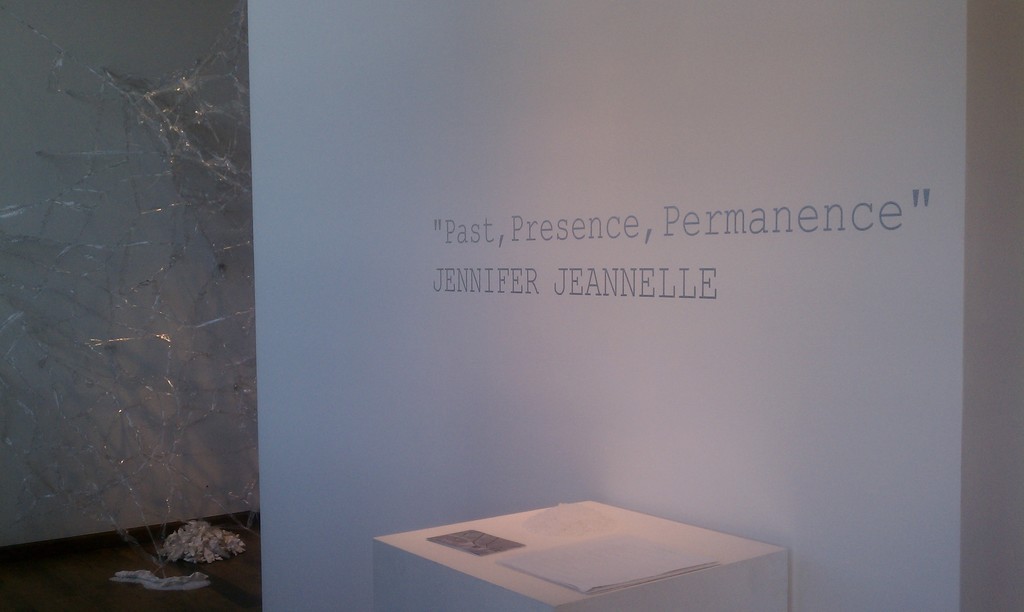
 Plastic. Whether we would like to admit it or not, the clear substance has become a staple of everyday life. From our cars to our phones, it is virtually impossible to go a day without coming into contact with plastic. But what happens when humans no longer exist? What will be left behind? That’s where artist Jennifer Jeannelle comes in. Questioning the implications of permanence, Jeannelle creates a confrontational installation in her exhibition Past, Presence, Permanence.
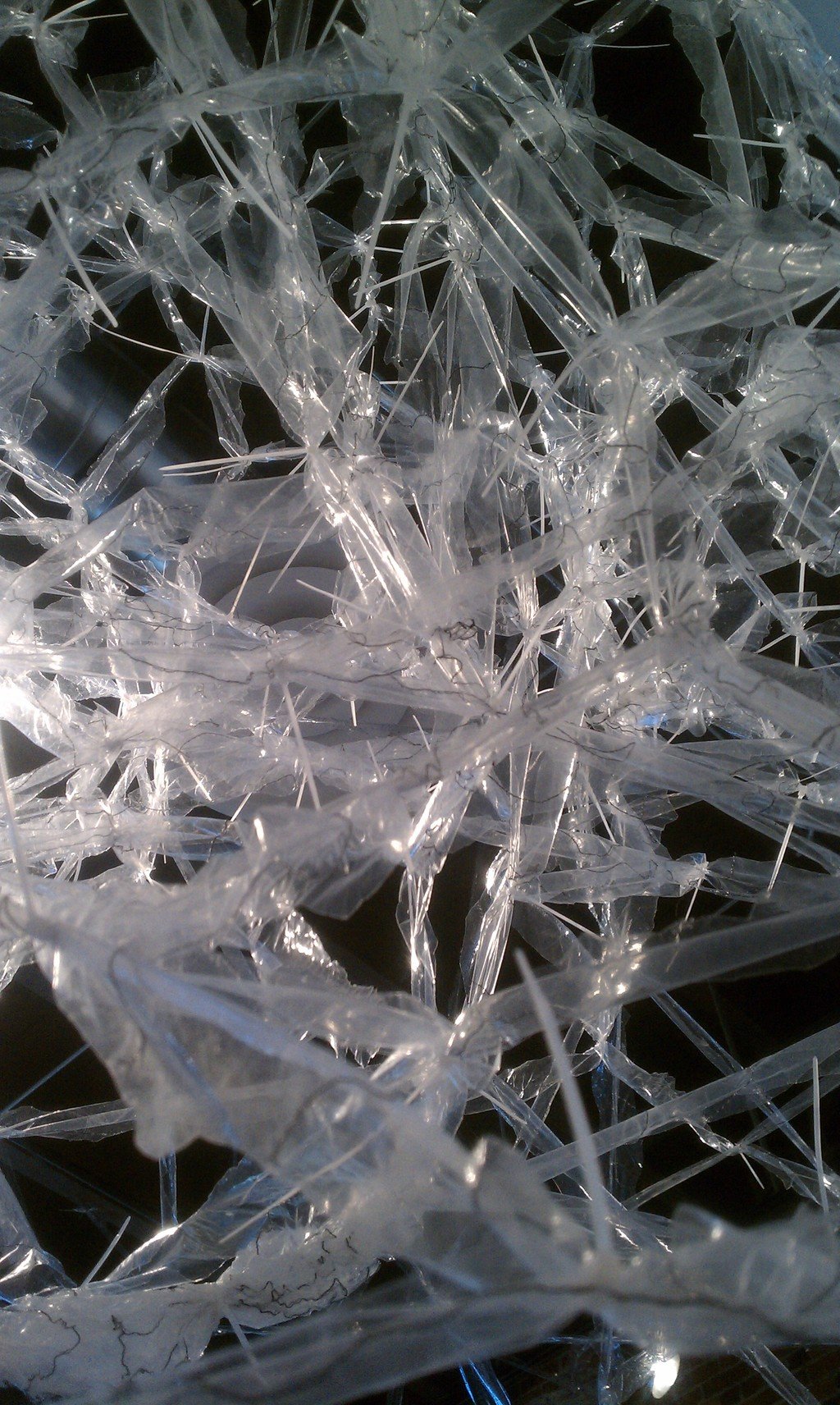 Now on display at Ice Cube Gallery, the installation features a mile of plastic shower curtains connected with zip ties (6000 to be exact) tangled in web-like formations. “The imagery comes from microscopic images of brain cells and the sinuous looking tissue that connects the body together,” said Jeannelle. Black thread sewn through each strand of plastic creates a pattern that flows through the interior space.
Shadow boxes filled with clay pods (or “prefossils” as Jeannelle calls them) of all shapes and sizes frame the exterior of the installation. “When clay is fired it takes on a molecular structure similar to fossils so they have the potential of lasting for millions of years,” said Jeannelle. Reminiscent of dinosaur bones and teeth, these figures provide a gateway into the past.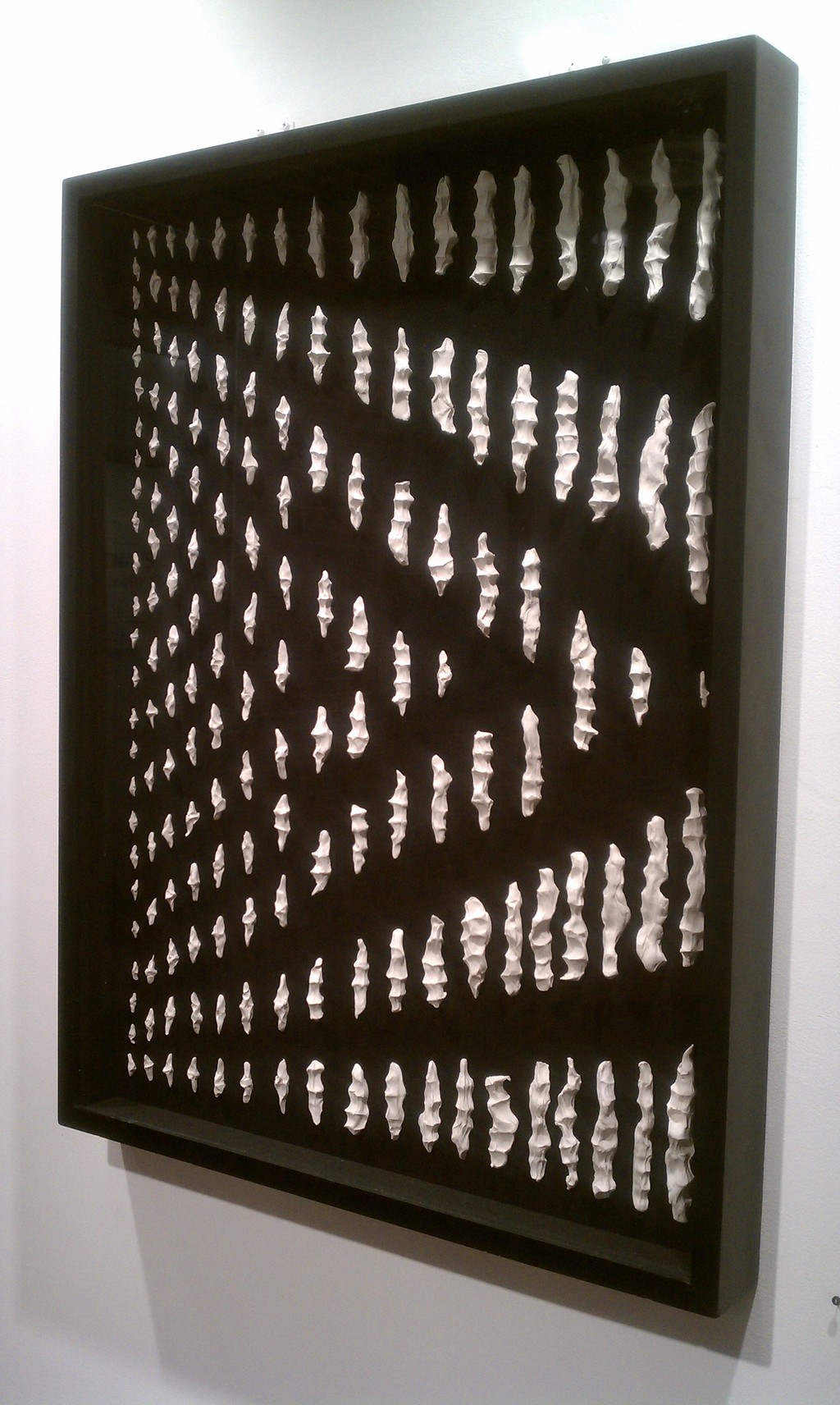
Stepping into the installation itself, the same “prefossils” featured in the shadow boxes are strewn across the gallery floor. Surrounded in rock salt, the “prefossils” guide the viewer through the mass of plastic. Appearing as elongated, snake-like figures, these “prefossils” represent what will be left over when humans no longer exist. “I have these ideas about what is going to be living in millions of years and who is going to find these fossils if they survive,” said Jeannelle.
While some “prefossils” stand alone in the rock salt, others are grouped together or even placed in piles. In one corner, a group of “prefossils” with wire jutting from their backs crawl up the side of the wall. In another stands a pile of mangled “prefossils” wrapped in plastic. But regardless of their placement, all of the “prefossils” contain a notable human element: fingerprint impressions. These markings add an almost eerie quality to the installation, as they serve as the only clue (other than the plastic) of our existence.
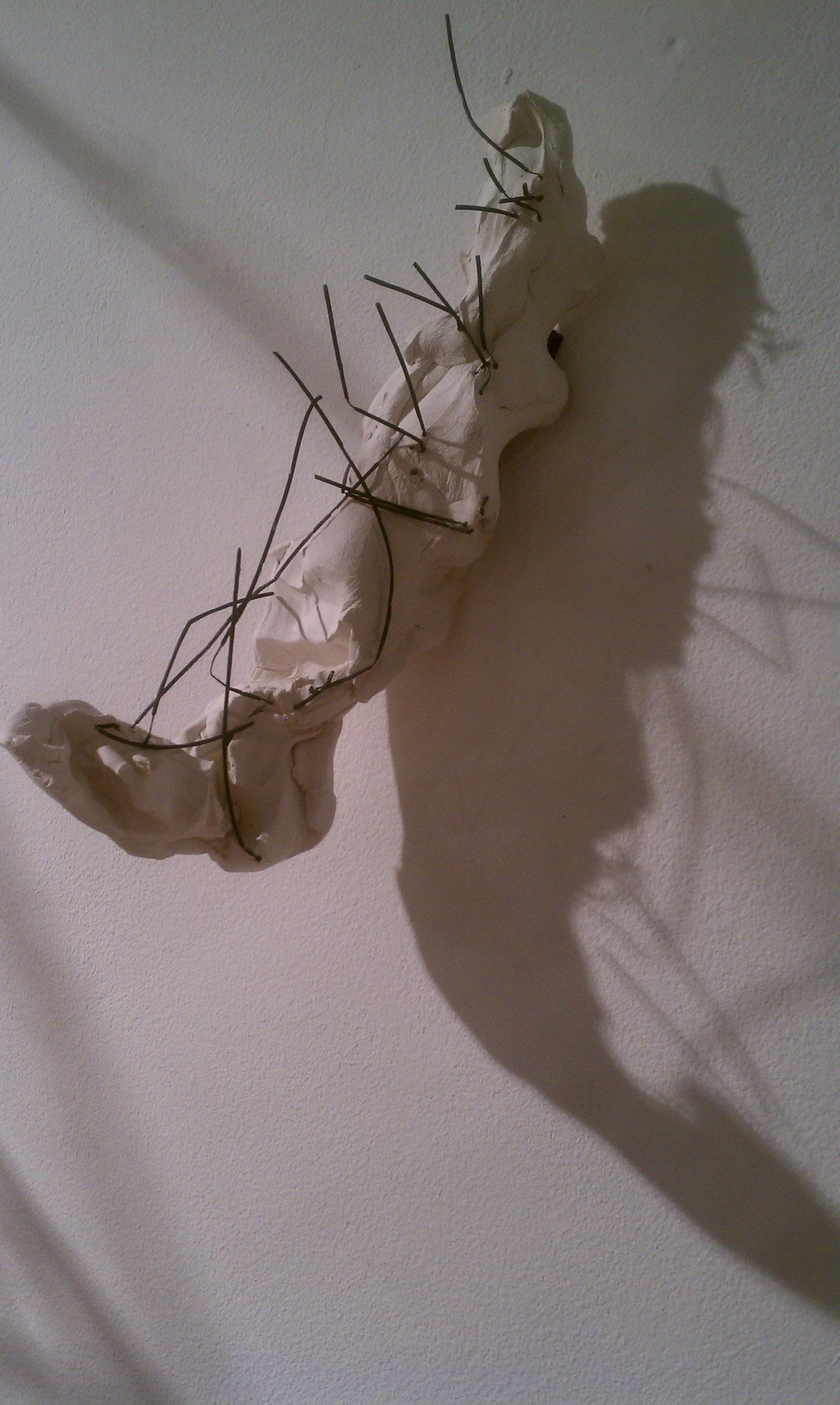 The pattern of the rock salt also tells a story. While it is placed (for the most part) uniformly throughout the installation, there are areas where the rock salt is sparse, exposing the gallery floor. “I call the rock salt ‘oil spills’ because they resemble an amoeba-like form, and when oil moves it separates,” said Jeannelle. “Oil is also the material plastic is made from.”
But even though these details provide temporary relief from the jumble of plastic—the viewer is constantly reminded of its presence— as the substance virtually springs forth from the areas where the rock salt and “prefossils” are placed. In addition, the plastic is hung in such a way that one is forced to navigate through it.
Crouching through the tangle of plastic, seating areas become visible. Placed on either side of the space, these alcoves allow the viewer to sit down and take in the installation. One corner contains a white block outfitted with pillows sewn with the same pattern found in the plastic shower curtains. At the other end, “sitting stools” stitched in a similar fashion provide another area to sit. Commercial fishing line (made out of plastic of course) that was tangled at sea frames this space. “If you get close to it you can smell the ocean, and you might see a hook or two,” said Jeannelle.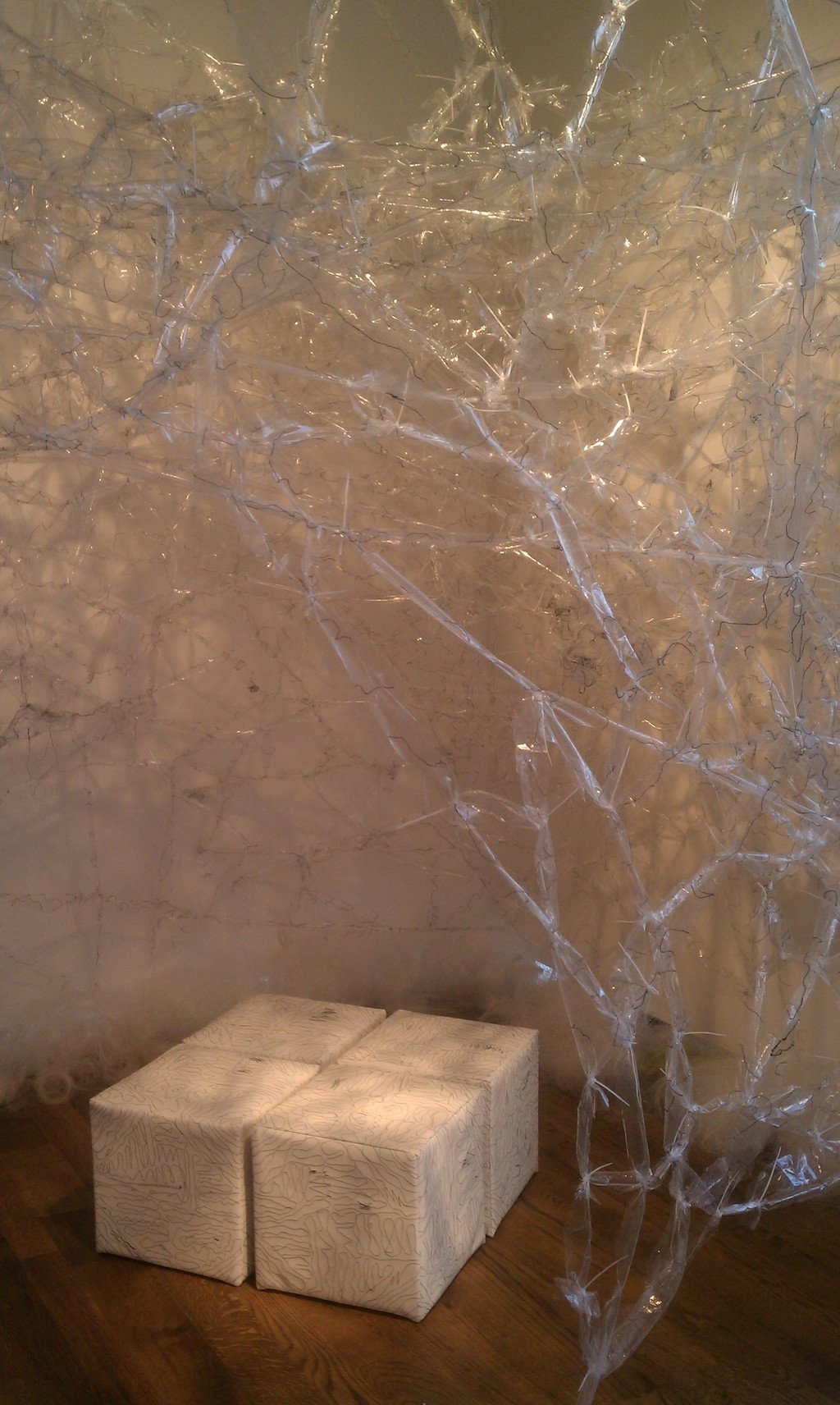
With so much plastic, you would think that the installation would be overwhelming (and that was Jeannelle’s original intention), but weaving through the space and sitting in the various alcoves provides an almost therapeutic experience. Using one of the strands of plastic as a guide, the viewer’s gaze is drawn toward areas where the plastic isn’t very tangled. In that moment, clarity appears through the chaos.
Reminding one of the past but looking forward into the future, Past, Presence, Permanence invites the viewer to reflect on our existence. To experience Past, Presence, Permanence visit Ice Cube Gallery open Thursdays from 12 p.m. to 5 p.m., Fridays from 12 p.m. to 9 p.m. and Saturdays from 12 p.m. to 5 p.m. The show runs through August 11. All pieces of the installation are for sale.
 Jessica Kleinman is an art and culture intern/writer for 303 Magazine. She is currently studying journalism at the University of Colorado at Boulder. Follow her posts on Twitter.
[give_form id="772002"]